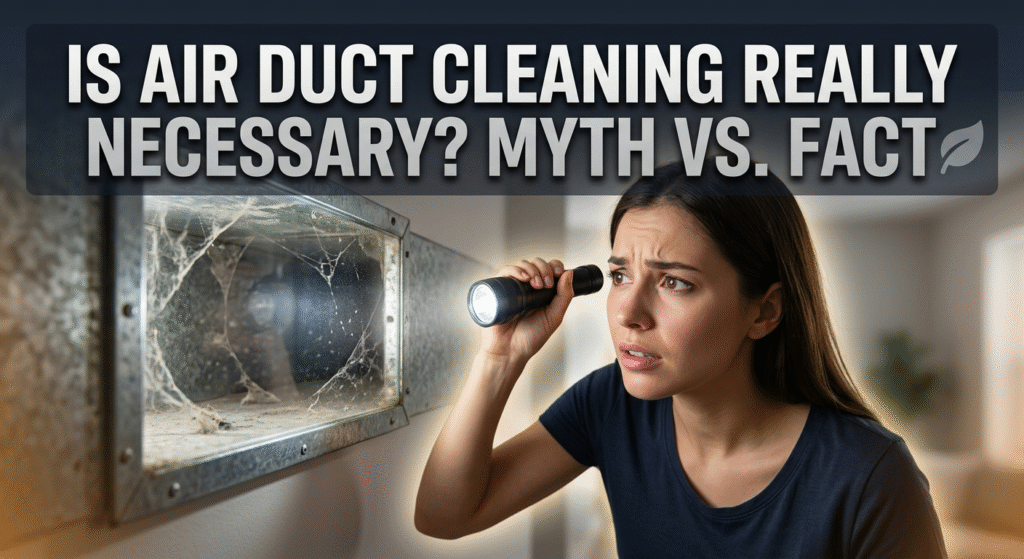
You have probably seen ads for air duct cleaning. They promise better air and lower energy bills. But is it really necessary? Some people say it is essential. Others call it a scam. The truth lies somewhere in between. This guide separates duct cleaning myth vs fact. You will learn when cleaning helps and when it does not.
What Is Air Duct Cleaning?
Air duct cleaning removes dust and debris from your HVAC system. Professionals use special tools to loosen buildup. Then they use powerful vacuums to pull it out. They also clean supply and return registers. The goal is to improve airflow and indoor air quality. But the process is not always needed.
Myth 1: You Need Air Duct Cleaning Every Year
This is one of the most common duct cleaning misconceptions. Steam Rite push annual cleaning. They say it is standard maintenance. The truth is different. Most homes do not need yearly cleaning. The EPA says duct cleaning is not routine maintenance. It is only necessary in specific situations.
What Does the EPA Say?
The EPA does not recommend regular duct cleaning. They say there is no evidence it prevents health problems. They also note that dirty ducts do not always mean dirty air. The EPA recommends cleaning only when certain conditions exist. These include visible mold growth or vermin infestation. Routine cleaning is not the answer for most homes.
How Often Should You Really Clean?
Most homes need duct cleaning every 3 to 5 years. Some homes can go longer. It depends on several factors. Pets, smoking, and recent renovations all matter. Homes in dusty areas may need more frequent service. But yearly cleaning is almost never necessary. Anyone pushing annual cleaning is likely selling unnecessary work.
Myth 2: Duct Cleaning Improves Air Quality Significantly
This myth sounds logical. Clean ducts should mean clean air. But research does not support this. The EPA states that duct cleaning has not been shown to improve air quality. Particles that settle in ducts tend to stay there. They do not blow into your living space.
Why Does Dust Stay in Ducts?
Air moves through ducts quickly. It does not stir up settled dust. The dust sticks to duct walls and stays put. It does not circulate into your home. So cleaning the ducts removes that dust. But it does not change the air you breathe. The air you breathe comes from outside and your living space.
What Actually Affects Indoor Air Quality?
Indoor air quality depends on several factors. Cooking and cleaning release particles. Pets shed dander and hair. Pollen enters through open windows. HVAC filters trap some of these particles. But no filter catches everything. Regular filter changes improve air quality more than duct cleaning. So focus on your filter first.
Myth 3: Duct Cleaning Lowers Energy Bills
Some companies claim cleaning lowers energy costs. They say dirty ducts restrict airflow. Clean ducts let air flow freely. This makes your system run more efficiently. This can be true in extreme cases. But for most homes, the savings are tiny.
When Does Cleaning Affect Efficiency?
Heavy buildup can restrict airflow. This makes your system work harder. But that takes years of neglect. A light layer of dust does not matter. The EPA says the impact on efficiency is minimal. You are better off sealing leaky ducts. Leaks cause much more energy loss than dirty ducts.
What Is the Real Energy Saver?
Sealing duct leaks is the real win. Leaks let conditioned air escape into attics or crawl spaces. This wastes up to 30 percent of your energy. Cleaning ducts does not fix leaks. Focus on sealing and insulation first. That will save you real money.
Myth 4: All Duct Cleaning Companies Are the Same
This is a dangerous myth. Many companies offer duct cleaning. They are not all equal. Some use poor equipment. Others use scare tactics to sell services. Some even cause damage while cleaning. Choosing the wrong company can cost you.
How to Spot a Scam
Be careful of companies that call you unsolicited. They often offer cheap prices. Then they upsell you on extra services. Some use fake demonstrations of dirty vents. They show you a dusty register and claim your whole system is contaminated. Check reviews online. Look for complaints or patterns of questionable practices.
What Should a Reputable Company Do?
A good company offers a free inspection first. They explain their process and pricing. They use specialized equipment like rotating brushes and powerful vacuums. They also check for mold or vermin. They do not make exaggerated health claims. They focus on specific problems you actually have.
Myth 5: Mold in Ducts Is Always Dangerous
Mold is a scary word. People panic when they see or hear about it. But not all mold is dangerous. Most household molds are harmless. They are part of the natural environment. Mold spores are everywhere. They only cause problems under certain conditions.
When Is Mold a Problem?
Mold becomes an issue when it grows actively. Large visible growth is a concern. Mold indicates moisture problems. That needs to be fixed first. Small spots may not need cleaning. The EPA recommends duct cleaning only if mold is growing on hard surfaces inside the ducts. Not all discoloration is mold. Some is just dirt and dust.
What If You Have Allergies?
People with allergies may be more sensitive. Mold can trigger symptoms. In that case, cleaning might help. But consult an allergist first. They can test you for mold sensitivity. This prevents unnecessary cleaning costs.
Myth 6: Duct Cleaning Prevents Respiratory Illness
Some companies claim cleaning prevents asthma and colds. They say cleaner ducts mean healthier lungs. This claim is not backed by science. The EPA has found no evidence of health benefits. Duct cleaning does not prevent illness.
What Does Scientific Research Say?
Studies on duct cleaning are limited. The EPA reviewed available research. They found no clear health benefits. The particles in ducts are not usually airborne. They do not reach your lungs. The research simply does not support health claims.
What Actually Improves Respiratory Health?
Address the sources of indoor pollution. Stop smoking indoors. Reduce pet dander with regular grooming. Use exhaust fans in kitchens and bathrooms. Change your HVAC filter every 1 to 3 months. These steps improve air quality more than duct cleaning ever could.
Myth 7: DIY Duct Cleaning Is Just as Good
Some people buy brush kits and try to do it themselves. They think they save money. But DIY duct cleaning is risky. You can damage your ductwork. You can push debris further into the system. You might even create new problems.
What Are the Risks?
DIY brushes can detach and get stuck. They can puncture flexible ducts. You may not have adequate vacuum power. The debris you break loose stays in the system. It can blow into your living space. Steamrite professional cleaning equipment is designed specifically for this job. Professional methods used by Steamrite ensure proper containment and thorough extraction. DIY methods rarely match professional standards and can leave contaminants behind in the system.
How Much Does Professional Cleaning Cost?
A typical home duct cleaning costs $300 to $500. The final cost depends on system size and accessibility. This is not cheap. But it is cheaper than repairing damaged ducts. It also gives you peace of mind.
When Is Duct Cleaning Actually Necessary?
There are legitimate times to clean your ducts. The EPA lists specific situations. Visible mold growth on hard surfaces is one. Vermin infestation is another. Ducts clogged with debris from renovations also need cleaning. If you have none of these problems, you likely do not need cleaning.
What About New Homes or Renovations?
New construction creates lots of dust. Drywall sanding and sawing release particles into the air. Some of that settles in ducts. A good contractor seals off vents during work. But some dust may still get in. In this case, cleaning may be worth it. Just avoid companies that recommend it for every home.
Does a Musty Smell Mean You Need Cleaning?
A musty smell from your vents suggests moisture. This could mean mold in your ducts. But it could also be a dirty evaporator coil. Or it could be a clogged drain pan. Have a professional investigate. They can find the true source of the smell. Do not assume duct cleaning is the answer.
How to Choose the Right Duct Cleaning Company
If you decide cleaning is necessary, choose wisely. Get multiple quotes. Ask about their equipment and process. Check for NADCA certification. This shows professional training. Also ask for references from past clients. Trustworthy companies provide them gladly.
What Questions Should You Ask?
Ask how long they have been in business. Inquire about their cleaning method. Find out if they are licensed and insured. Ask if they inspect before quoting. A reputable company will check your ducts first. They will not give a quote over the phone.
Why Local Matters in Longmont
Local companies understand Colorado homes. They know about the Front Range dust and dry climate. They are accountable to your community. A national chain may send inexperienced technicians. A steamrite cleaning company about its reputation. That gives you more confidence in their work.
Frequently Asked Questions
Is air duct cleaning a scam?
No, but some companies make false claims. Legitimate cleaning is helpful in specific situations. If you have mold, vermin, or visible debris, cleaning is valid. Avoid companies that pressure you into annual cleanings without inspection.
How often should air ducts be cleaned?
Most homes need cleaning every 3 to 5 years. The EPA does not recommend routine cleaning. Clean only when there is visible mold, vermin, or excessive debris. Annual cleaning is almost never necessary.
Does cleaning air ducts reduce allergies?
There is no strong evidence of this. Dust in ducts usually stays settled. It does not circulate into your living space. Changing your HVAC filter regularly is more effective. Address the sources of indoor pollution for real results.
How can I tell if my air ducts need cleaning?
Look for visible mold on hard surfaces inside ducts. Check for vermin or pest droppings. Notice if dust or debris is blowing out of vents. Otherwise, you likely do not need cleaning. An inspection can confirm the condition of your ducts.
Does air duct cleaning help with energy bills?
The savings are minimal for most homes. Heavy buildup can restrict airflow slightly. But leaky ducts cause the big energy losses. Seal and insulate ducts first for better efficiency.
What is the average cost of air duct cleaning in Longmont?
Expect to pay $300 to $500 for a standard home. The cost depends on the number of vents and system size. Always get an in-person inspection before finalizing. Avoid companies that quote by phone without seeing your home.