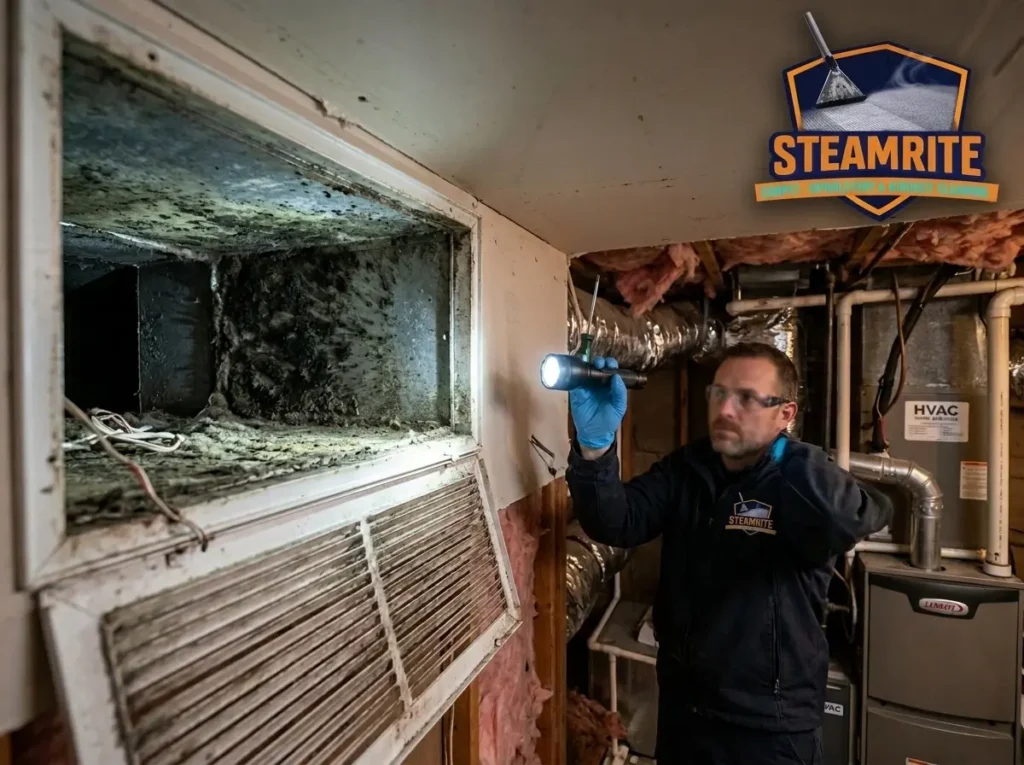
A musty odor from a vent can make you uneasy. You may wonder if the smell points to mold. You may also see dark dust on a grille or near a return vent. These signs need a closer look, but they do not prove that mold fills the duct system. Dust, soot, old sealant, and wet insulation can look similar. The smell may even come from a drain pan or damp wall near the unit. The best first step is a full check of the HVAC system. This guide explains how to spot possible mold in air ducts, what causes it, and what to do next.
Aurora homes use heat during cold months and cooling during warm days. That steady use can expose leaks, blocked drains, and cold surfaces where water may form. Mold needs moisture to grow, so the water source matters more than the stain color. You will learn when testing may help, when duct material may need replacement, and how a trained crew handles cleanup. You will also see why sprays alone are not a real fix. SteamRite can inspect the system and explain the choices in plain words. The goal is to help you act without fear, avoid weak claims, and choose work that fits your home.
What Causes Mold Inside Air Ducts?
Mold needs water, food, and time. Dust can give it food. A leak or steady condensation can give it water. Common sources include a clogged drain line, a wet drain pan, a leaking cooling coil, or loose duct joints. A roof or plumbing leak may also wet nearby ducts. In some homes, warm air meets a cold duct and forms small drops of water. This is more likely when ducts pass through an attic, garage, or crawl space. A dirty or poorly set humidifier can add extra moisture too. Once a surface stays damp, mold growing in ductwork may begin. EPA says moisture control is the main way to stop mold from coming back.
What Signs Point to a Mold Problem?
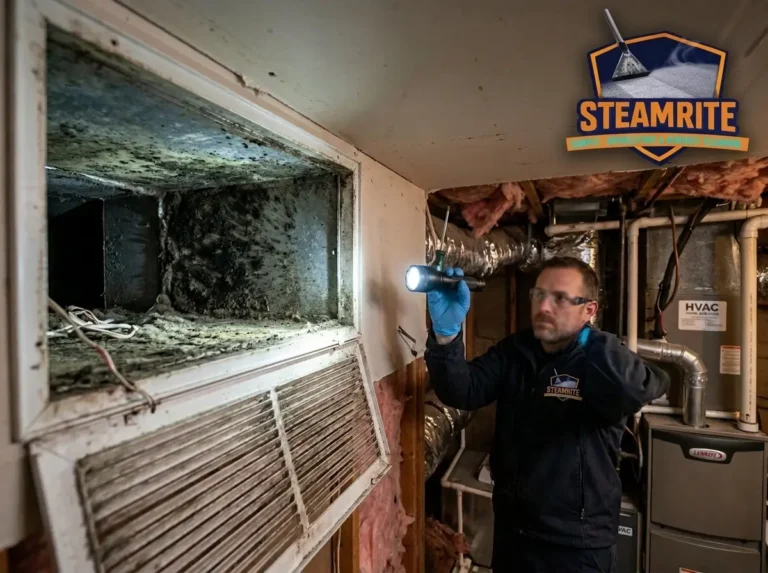
A moldy smell from vents is one common clue. The odor may grow stronger when the blower starts. You may also see fuzzy spots, water marks, or wet dust near a vent. A damp filter or standing water near the air handler also needs attention. Still, color does not tell you what the growth is. Dark marks are not always “black mold.” Dirt, rust, soot, and old glue can all look dark. Ask the technician to show the exact area and explain why it may be mold. Hidden parts can be hard to reach, so photos or a small camera may help. Do not approve full cleanup from a smell alone.
Why Does Mold in the HVAC System Matter?
This issue matters for both your home and the people in it. Damp or moldy areas can cause odor and damage nearby insulation, wood, or drywall. Mold can also release small spores into the air. Some people may have a stuffy nose, cough, sore throat, itchy eyes, or skin irritation. People with asthma or mold allergies may react more strongly. These signs can also come from many other causes, so an HVAC visit cannot diagnose a health problem. Talk with a health care professional about new, strong, or lasting symptoms. For the home, the key job is to find and stop the water. If moisture stays, mold in air ducts can return after cleaning.
Do You Need Mold Testing?
Not every home needs a mold test. When growth is easy to see and the wet source is clear, testing may not change the plan. EPA says there are no federal safe limits for mold in home air. A test cannot simply label a home safe or unsafe. Testing may help when the source is hidden, the material is hard to identify, or people disagree about the cleanup result. A trained person should choose where and how to sample. They should also explain what the result will change. Avoid cheap test kits that give a number without context. Money is often better spent on finding the leak, drying the area, and fixing damaged material.
How Does Air Duct Mold Removal Work?
A proper air duct mold removal aurora visit starts with an inspection. The crew should check the air handler, cooling coil, drain pan, filter area, supply ducts, and return ducts. It should also look for roof, plumbing, or wall leaks near the system. If the HVAC system may be contaminated, EPA warns against running it because moving air may spread mold. The crew may isolate the work area and use HEPA-filtered tools. Hard metal surfaces can sometimes be cleaned when they are sound and easy to reach. Wet or moldy duct liner is different. EPA says wet or moldy insulated ducts cannot be cleaned well and should be removed and replaced. The water source must be fixed before new material goes in.
Should You Clean, Repair, or Replace the Ducts?
Cleaning works best when the duct is hard, dry, and still in good shape. A small open joint may need sealing. A torn or crushed flex duct may need repair or a new section. Wet fiberglass liner often needs replacement because mold can grow deep inside it. Ask for clear photos before you agree to extra work. The quote should list cleaning, repair, removal, disposal, and new material as separate items. It should also name the parts that will stay in place. No “mold-resistant” material can solve a leak by itself. Good material still needs dry conditions, correct sealing, and proper airflow. A fair air duct mold removal aurora plan explains why each part can be saved or why it must go.
Why Does Moisture Control Matter Most?
Cleanup will not last if the system stays wet. Start with the drain pan and drain line. Water should flow out without pooling. Check the cooling coil, roof, plumbing, and nearby walls for leaks. Ducts in spaces without heat or cooling may need better sealing or insulation. This can reduce condensation on cold surfaces. Keep return vents open and use the filter size and type advised by the HVAC maker. Replace a wet filter right away. Watch for water marks after storms or plumbing work. If you notice a moldy smell from vents, write down when it happens. The timing may help the technician find the source. EPA says fixing leaks, draining standing water, and stopping condensation are key steps for mold control.
Can You Remove Duct Mold Yourself?
Cleaning a small spot on an open, hard wall is not the same as cleaning an HVAC system. Ducts have hidden runs, sharp edges, moving air, wiring, and soft liners. Brushing a vent may send dust and spores into the room. Pouring bleach or another liquid into a duct can add moisture and harm parts. Fogging a product through the system also does not fix the leak that caused the growth. Call a trained professional when the suspected mold is inside the duct system, covers a large area, follows dirty floodwater, or affects a person with serious health risks. EPA also says not to run a system that may have mold contamination.
How Should You Choose a Local Mold Service?
Ask for proof before you buy a cleanup plan. The company should show the suspected growth, name the duct material, and point out the moisture source. Get a written scope for air duct mold removal aurora. It should cover work zones, dust control, tools, repairs, replacement, and the final check. Ask if testing is needed and how it would change the job. Be careful with promises to make the home “mold-free.” Mold spores exist in indoor and outdoor air, so no company can remove every spore. Also avoid a plan built around one spray. A spray may hide odor for a time, but it does not dry wet material or repair a leak. SteamRite should explain each step before work starts.
Make a Clear Plan for Your Aurora Home
Do not let a musty odor push you into a fast choice. Start with a full HVAC and moisture check. Ask where the growth is, what caused it, and which material is wet. Then compare cleaning, repair, and replacement. Proper care for mold in air ducts means more than wiping a vent. It includes stopping the water, removing damaged material, cleaning parts that can be saved, and checking the finished work. SteamRite can help Aurora homeowners review the ductwork and build a clear plan. Quick action is useful when water is still present, but the work should still be based on proof. A calm, clear process protects your home and helps prevent the same problem from returning.
Frequently Asked Questions
These short answers cover common questions from Aurora homeowners. Your home may need a different plan based on the duct type, amount of water, and size of the affected area. Ask for photos and a written scope before approving work. The quote should separate cleaning, repair, testing, replacement, and moisture control. It should also explain when the HVAC system can run again. Clear details make it easier to compare companies and check the work after the crew leaves.
What Does Mold in a Vent Look Like?
It may look fuzzy, spotted, or stained. Dust and soot can look much the same. Color alone cannot confirm mold, so ask for a close inspection of the vent and nearby duct.
Why Do My Vents Smell Musty?
A moldy smell from vents may come from wet dust, mold, a drain pan, or damp material near the unit. The system and nearby area should be checked before cleaning begins.
Is Black Mold in Vents More Dangerous?
Dark color does not show how harmful a mold is. Treat any indoor mold as a moisture problem. Remove it safely, fix the water source, and seek medical advice for lasting symptoms.
Do I Need a Mold Test Before Removal?
Not always. Visible growth and a clear water source may be enough to plan the work. Testing can help when the source is hidden or the material is hard to identify.
Can Moldy Insulated Ducts Be Cleaned?
Usually not. EPA says wet or moldy insulated duct material cannot be cleaned well enough. The affected section should be replaced after the leak or moisture source is fixed.
How Can I Keep Mold From Returning?
Keep the HVAC system dry. Repair leaks, clear drain lines, replace wet filters, and control condensation. Regular checks can catch water before mold growing in ductwork starts again.