Every time you walk through your front door, you expect your home to be a safe, clean space for your family. You probably vacuum your carpets, wipe down your counters, and keep your rooms tidy. However, we rarely think about the invisible air we breathe every single day. The truth is, indoor spaces easily trap dust, moisture, and chemicals. Because of this, the air inside your living room or bedroom can actually be much more polluted than the air outside. Since you cannot see or smell most of these pollutants, poor air quality can quietly cause poor sleep, allergies, and fatigue without you ever knowing why. Learning how to check air quality in your home is the first step toward finding these hidden problems and making your living space truly healthy.
If you notice sudden coughing fits, strange musty smells, or a thick layer of dust on your furniture just days after cleaning, your house is trying to tell you something. Learning how to check air quality in home spaces is the best way to protect your family. Instead of waiting for someone to get sick, you can find the problems early and fix them. This complete guide will show you the warning signs of bad air, how to test your home, and easy steps to bring fresh air back into your living space.
Simple Warning Signs of Bad Indoor Air
You do not need expensive laboratory tools to know if your indoor air is dirty. Your body and your house will give you clear warning signs. First, pay attention to how you feel. If you get frequent headaches, watery eyes, or a scratchy throat while you are at home—but those symptoms go away when you leave the house—bad indoor air is likely the cause.
Next, look closely at your rooms. Do you see water droplets on your windows or wallpaper that is starting to peel? This means your home has too much humidity, which helps mold and dust mites grow fast. Also, look at your tables and electronics. If a thick layer of gray dust appears right after you clean, your ventilation system is simply blowing dirt around your rooms instead of trapping it.
How to Test Air Quality in Your Home: The Best Methods
When you want real answers instead of guesses, learning how to test air quality in your home will give you the facts you need. You can choose from a few easy and affordable options.
Use a Digital Air Quality Monitor
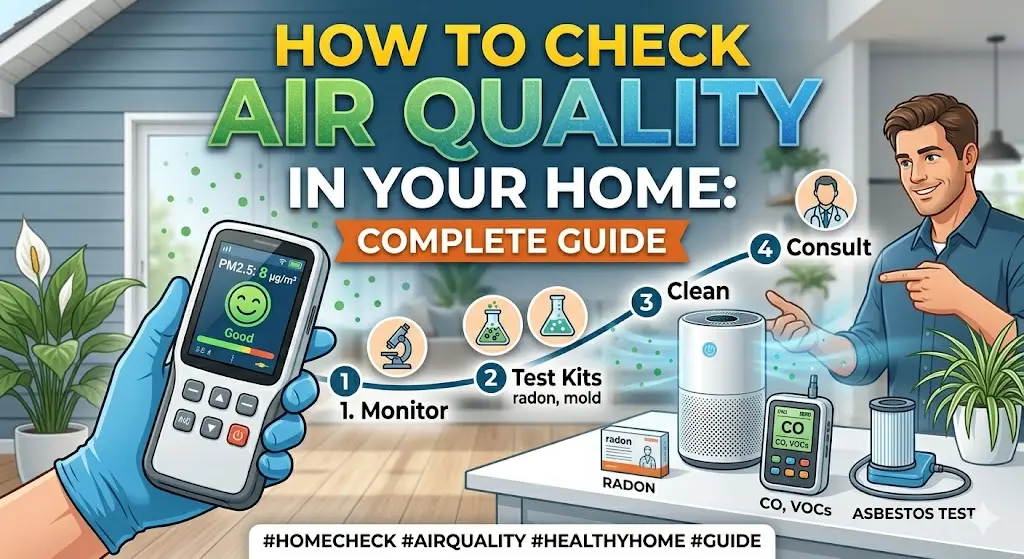
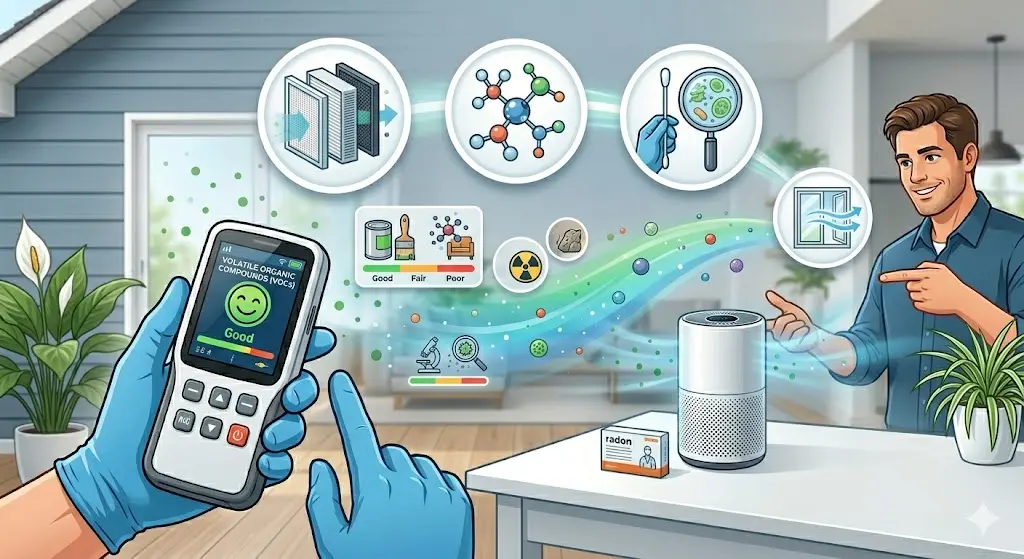
A digital indoor air quality monitor is the easiest way to track your air every day. You just place this small device on a counter or table. It constantly measures the air for invisible threats like dust particles, chemical vapors, carbon monoxide, and humidity. It tells you exactly when your air changes. For example, you might see a spike in chemicals while you clean, or a rise in humidity while you cook, so you can open a window right away.
Buy a Home Air Quality Test Kit
If you are worried about a specific danger like toxic mold, radon gas, or chemicals from new furniture, a home air quality test kit is a perfect choice. These kits come with simple test strips or collection cups. You place them in a room for a few days, seal them up, and mail them to a laboratory. The lab will send you a clear report that shows exactly what types of spores or toxins are hiding in your air.
Do a Quick Visual Inspection
You can start right now by doing a simple walk-through of your property. Walk into every room, including your basement and attic, and use your senses. A musty, damp smell usually points to a hidden water leak or mold growth. A sharp, chemical smell means your cleaning products or furniture are releasing harmful gases. Don’t forget to check your heating and cooling filters. If they look completely black and clogged after just one month, your air is carrying too much dirt.
Common Pollutants Hiding in Your Rooms
To fix your air, you need to know what you are fighting. Several common pollutants enter our homes through daily habits, pets, or building materials.
- Mold and Mildew: Mold loves damp places like bathrooms and basements. It releases tiny spores into the air that cause bad allergies and asthma attacks.
- Dust Mites and Pet Dander: These tiny pests live on dead skin cells and pet fur. They settle deep into your carpets and couches, and they fly back into the air every time you walk across the room.
- Chemical Vapors (VOCs): Aerosol sprays, harsh cleaners, fresh paint, and new furniture release chemicals into the air. These gases can cause dizziness and throat irritation.
- Stove and Heater Gases: Gas stoves, fireplaces, and water heaters can leak dangerous gases like carbon monoxide if you do not maintain them properly.
Easy Steps on How to Improve Air Quality in Home Environments
Once you check the air quality in your home areas and find the problem, you can take action. You do not have to live with stuffy, dirty air. You can use a few simple habits to make your air fresh again.
First, control the moisture in your home. Mold and dust mites cannot survive without water. Use a dehumidifier in damp basements and always turn on your bathroom fan when you shower. Keep your indoor humidity below 50% to stop mold before it starts.
Second, open your windows for just 10 to 15 minutes every day. Even in the winter, a little fresh air will flush out trapped chemicals and stale air. Finally, change your air filters regularly. Buy filters with a MERV 11 or MERV 13 rating. These filters are strong enough to trap tiny pollen, pet dander, and smoke before those particles circulate through your house.
Why Professional Deep Cleaning Makes a Huge Difference
Daily vacuuming and small air purifiers are great, but they cannot reach everything. Over time, heavy dirt sinks deep into your carpet fibers and settles inside your hidden air ducts. Every time your heater or air conditioner turns on, it blows that trapped dust, pet dander, and mold back into your breathing space.
If you want to truly clean your home and test your home air quality effectively, you need professional help. Expert cleaners use high-powered vacuums and special tools to completely clear out your air ducts, carpets, and upholstery. By removing these hidden pockets of dirt, you stop the cycle of dirty air and ensure your daily cleaning actually keeps the air fresh.
Enjoy Fresh, Clean Air in Your Home Today
A healthy home requires more than just clean countertops. True health and comfort depend on the invisible air you breathe with every breath. By choosing professional cleaning services, you can wash away deep allergens, remove stubborn pet odors, and clear out years of dust from your ventilation system. The expert team at SteamRite is ready to refresh your indoor air. Visit SteamRite today to explore our air duct cleaning, carpet washing, and whole-home cleaning services, and schedule your appointment to create a healthier home.
FAQS
How often should I test my indoor air quality?
You should test your air once a year. You should also test it immediately if you smell mold, remodel your home, or experience sudden allergy symptoms.
Can houseplants clean all the air in a room?
No. While plants look beautiful and make a small amount of oxygen, they cannot filter out heavy dust or chemical gases fast enough to clean a modern home.
What is the fastest way to get rid of high humidity?
Turn on your bathroom and kitchen exhaust fans, run a portable dehumidifier, and make sure a professional services your air conditioner regularly.
How do I know if my air ducts are dirty?
If you see dust blowing out of your vents, notice dark lines on the carpet near your walls, or smell a musty odor when the fan turns on, your ducts need a professional cleaning.