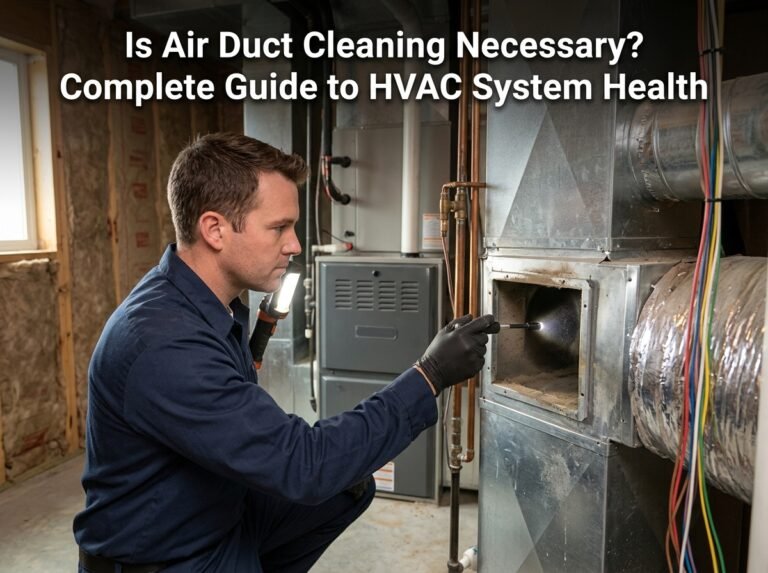
The best time for air duct cleaning is after a specific event or inspection shows that dust, debris, or other material has entered the HVAC system. Good timing can include after a dusty renovation, after construction work, before moving into a home when an inspection finds significant debris, or after HVAC work that exposed the duct system.
Do not schedule cleaning automatically just because a certain number of years has passed. The EPA recommends duct cleaning on an as-needed basis rather than as routine maintenance.
So, when to schedule air duct cleaning depends more on what has happened inside the home than on the calendar.
Should You Schedule Air Duct Cleaning After a Renovation?
Air duct cleaning after renovation can make sense when remodeling produced a lot of dust and there is evidence that the HVAC system was exposed to it.
Drywall cutting, sanding, demolition, flooring work, cabinet installation, and similar projects can create fine particles. If supply and return openings were left uncovered or the HVAC system operated while dusty work was taking place, some of that material may enter the air-distribution system.
EPA guidance recommends sealing supply and return registers during dust-producing construction or renovation and keeping the heating and cooling system off until the dust has been cleaned up.
That gives homeowners a useful sequence to follow.
Finish the dust-producing renovation work first. Clean the rooms and surfaces next. Then inspect the HVAC system for construction debris before deciding whether duct cleaning is needed.
Cleaning the ducts in the middle of an active renovation can be poor timing because more dust may enter the system after the cleaning is complete.
Should Duct Cleaning Happen Before or After Remodeling?
In most cases, evaluate the ducts after dusty remodeling work is complete rather than cleaning them immediately before construction begins.
Suppose you clean the duct system on Monday but sanding, cutting, or demolition continues for another week. If construction dust reaches the HVAC system during that work, the freshly cleaned ducts may be exposed again.
A better order is to protect the system during construction, control dust at the work area, finish the dusty part of the project, clean the surrounding home, and then inspect the HVAC system.
NADCA notes that HVAC systems can collect significant amounts of particulate during construction and recommends verifying the cleanliness of systems affected by construction or renovation before normal operation.
This makes duct cleaning timing part of the renovation plan rather than a separate job scheduled at random.
When Should You Schedule Duct Cleaning After Construction?
You should schedule duct cleaning after construction when the work is complete and an inspection shows that construction material has entered the system.
Look beyond a small amount of ordinary dust on the face of a register. EPA guidance notes that dusty return grilles alone do not prove that the duct system has heavy contamination.
More meaningful signs include visible accumulations inside accessible ductwork, construction material around system openings, or excessive dust and debris within the system.
New construction can also create this issue. Ductwork may be installed before other trades finish sanding, cutting, drilling, or installing interior materials.
NADCA includes home renovation and remodeling among events that can justify evaluating whether HVAC cleaning is appropriate.
The important step is inspection. New construction does not automatically mean dirty ducts, just as an older home does not automatically mean the ducts need cleaning.
Is Before Moving In a Good Time for Air Duct Cleaning?
Air duct cleaning before moving in can be convenient, but it should still be based on the condition of the HVAC system.
An empty home gives technicians easier access to registers, return grilles, the furnace or air handler, and other areas that might otherwise be blocked by furniture. Cleaning before furniture arrives can also simplify room access.
But convenience alone does not prove that cleaning is necessary.
If you are buying or moving into an existing home, look at the available history. Was there recent remodeling? Were major construction projects completed? Is visible debris present inside accessible parts of the system? Has the property been empty during dusty repair work?
NADCA lists prior to occupancy of a new home as one situation in which homeowners may consider HVAC-system cleaning. EPA, however, recommends an as-needed approach rather than automatic routine cleaning. Taken together, inspection before move-in is a sensible first step.
If the system appears reasonably clean, moving in does not by itself create a need for duct cleaning.
Should You Clean Air Ducts After HVAC Replacement?
Not automatically.
Replacing a furnace, air conditioner, air handler, or another HVAC component does not mean the entire duct system suddenly requires cleaning.
The better question is whether the work exposed the ducts to debris or whether the HVAC contractor found significant material inside the system during the project.
Duct cleaning may be worth evaluating when an HVAC project involves opening major sections of ductwork, replacing contaminated components, performing nearby construction, or discovering heavy debris during system access.
The HVAC work should generally be completed before deciding on cleaning, especially if the project itself can produce dust or leave the system open.
If an underlying duct problem needs repair, fix that problem first. Cleaning a system before necessary repairs are complete may mean opening or disturbing the same ductwork again.
What If Renovation Dust Entered the HVAC System?
First, finish the source of the dust.
Do not keep cleaning the duct system while sanding, demolition, drywall work, or another dusty activity is still underway.
Next, clean the surrounding work area and inspect accessible HVAC components, supply registers, return registers, and duct openings.
If significant debris is present inside the system, professional cleaning can then be evaluated.
This sequence matters because duct cleaning removes material already in the system. It does not stop an active renovation from producing more dust.
For future projects, protecting registers and returns before dusty work begins can reduce the amount of material entering the HVAC system. EPA specifically recommends sealing supply and return registers during construction or renovation that produces dust and avoiding HVAC operation until the dust has been cleaned up.
When Should You Schedule Cleaning After a Contamination Event?
A specific contamination event is another reason to inspect the system rather than waiting for a calendar date.
Examples can include a major dust event, debris entering exposed ductwork, pest activity affecting the duct system, or water-related damage near HVAC components.
The first step is not simply booking cleaning. The cause needs to be identified and corrected.
EPA guidance states that when contamination is present, underlying causes should be corrected before cleaning, retrofitting, or replacing ductwork so the same problem does not return.
That creates a useful order: stop the source, repair the related problem, inspect the HVAC system, and then determine whether cleaning is part of the remaining work.
Duct cleaning should not be used as a substitute for repairing an active source of contamination.
Is Visible Debris a Reason to Schedule Air Duct Cleaning?
Visible conditions can be useful, but you need to look in the right place.
A little dust on a return grille is common and can often be cleaned without treating the entire duct system. EPA specifically warns that dusty return registers do not automatically mean the ducts contain heavy deposits.
A stronger reason for further evaluation is excessive debris inside accessible ductwork or particles being released from supply registers.
If you can safely see into an accessible register opening, visual inspection can help determine whether the issue appears limited to the grille or extends farther into the duct.
Do not assume that every dark mark is contamination or that every dusty vent means full-system cleaning is required.
The condition of the system should drive the decision.
Should You Schedule Air Duct Cleaning Before Other Contractors Arrive?
Usually, complete work that can create new dust or require opening the HVAC system first.
If flooring installers, drywall contractors, remodelers, or HVAC technicians still need to perform dust-producing work, cleaning the ducts beforehand may result in the system being exposed again.
Coordinate the sequence instead.
Finish construction and HVAC repairs, complete general dust cleanup, and then inspect the system. If duct cleaning is justified, schedule it once the work that could reintroduce debris is complete.
This is particularly useful during larger remodeling projects where several contractors may work in the home at different stages.
The goal is to clean once at the right point instead of cleaning early and then exposing the system to another round of construction dust.
When Is Air Duct Cleaning Not Automatically Needed?
Air duct cleaning should not be scheduled solely because the calendar says another year has passed.
EPA does not recommend routine duct cleaning and says it should generally be considered as needed. It also notes that a light amount of household dust inside ducts does not by itself establish a health risk or prove that cleaning is required.
That means these situations alone do not automatically establish a need for cleaning:
- A certain number of years has passed
- A return grille has a light layer of dust
- The season is changing
- You have just moved into a home with no evidence of significant debris
- An HVAC component was replaced without contamination or construction debris entering the ducts
The decision should come from an event, visible condition, or system inspection rather than an arbitrary schedule.
For the separate question of recurring cleaning intervals, Steamrite’s guide to how often air ducts should be cleaned covers frequency factors without mixing them into this timing guide.
What Is the Best Order After a Home Renovation?
For homeowners planning air duct cleaning after renovation, sequencing matters.
Complete demolition, drywall work, sanding, cutting, and other major dust-producing tasks first. Keep the HVAC system protected during those activities where practical. Once construction ends, remove dust from the rooms and surfaces.
Then have the HVAC system inspected.
If construction debris has entered the ductwork or accessible HVAC components, cleaning can be scheduled after the source of new dust is gone.
This approach prevents the cleaning appointment from happening too early in the project.
It also gives the technician a clearer picture of the final condition of the system instead of inspecting it while contractors are still producing dust.
When Should Aurora Homeowners Schedule Air Duct Cleaning?
The same event-based approach applies when deciding when to schedule air duct cleaning in Aurora.
A home that has just completed a major remodeling project may have a reason for HVAC inspection even if its ducts were cleaned more recently. Another home may go through the same period without a major dust or contamination event and have no obvious reason for immediate cleaning.
For Aurora homeowners, the most useful timing questions are practical: Has construction just finished? Was the HVAC system exposed during the work? Has an HVAC replacement or repair been completed? Is there visible debris inside accessible ductwork? Are you preparing to move into a property with a recent renovation history?
When inspection shows that cleaning is appropriate, air duct cleaning in Aurora, CO can then be scheduled after the work or condition that created the debris has been addressed.
Final Thoughts
Knowing when to schedule air duct cleaning is more useful than choosing an arbitrary date on the calendar.
The strongest timing triggers are specific events and observable conditions: a dusty renovation, construction work, HVAC work that exposed the system, a contamination event, or a move-in inspection that reveals significant debris.
Sequence matters too. Finish the work creating the dust, correct any underlying problem, clean the surrounding area, and inspect the HVAC system before deciding on duct cleaning.
If recent remodeling, construction, or HVAC work has left visible debris inside the system, contact Steamrite for air duct cleaning in Aurora after the dust-producing work and related repairs are complete.
FAQs
When is the best time to schedule air duct cleaning?
The best time for air duct cleaning is after a specific event or inspection shows that the HVAC system contains significant dust or debris. Examples include after dusty construction, remodeling, certain HVAC projects, or before move-in when an inspection finds contamination.
Should I clean my air ducts after renovation?
Consider an inspection after a dusty renovation. If construction dust or debris entered the HVAC system, cleaning may be appropriate after the renovation and general cleanup are finished.
Should air ducts be cleaned before or after remodeling?
If the remodeling will create dust, evaluate the ducts after the dust-producing work is complete. Cleaning beforehand can expose the system to new debris during construction.
Should I clean air ducts before moving into a house?
Move-in can be a convenient time to inspect the HVAC system because the home may be easier to access. Cleaning should still depend on the system’s condition rather than moving alone.
Should ducts be cleaned after a new HVAC system is installed?
Not automatically. Inspect or evaluate the ducts if the installation exposed the system, involved dusty construction, or revealed significant existing debris.
Is visible dust on a vent enough reason to clean all the ducts?
Not necessarily. EPA notes that return grilles commonly collect dust and that this alone does not prove heavy contamination inside the duct system.
Should air ducts be cleaned every few years?
This guide does not use a fixed calendar interval. EPA recommends air duct cleaning on an as-needed basis. Cleaning decisions should be based on system condition and relevant events.
When should I schedule duct cleaning after construction?
Finish the dust-producing work and general cleanup first. Then inspect the HVAC system. If significant construction debris entered the system, cleaning can be scheduled before normal use resumes.