

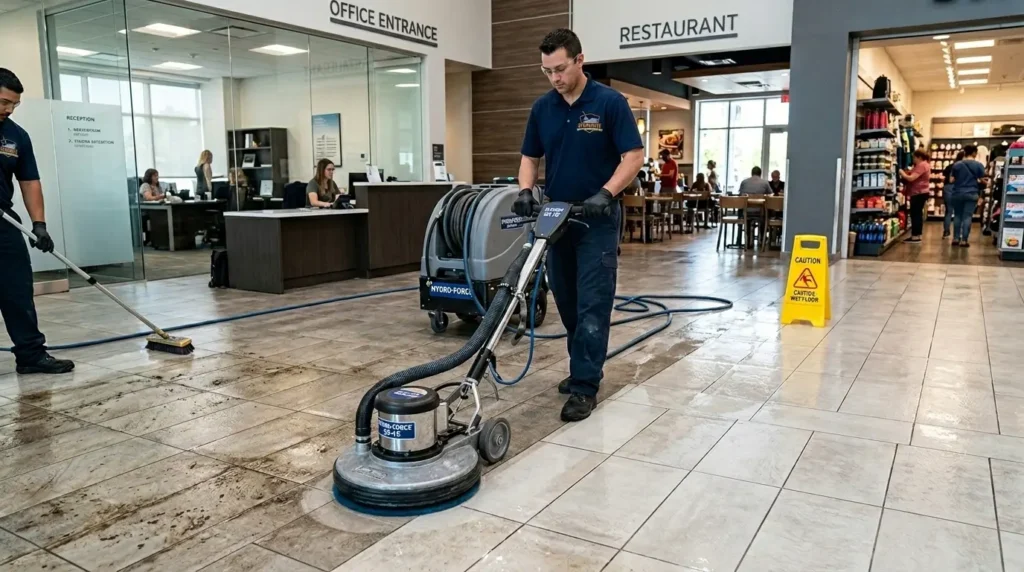
Tile is a common choice for busy commercial spaces. It is strong, easy to walk on, and can handle daily use. However, tile floors do not stay clean on their own. Dirt, grease, spills, and dirty mop water can settle inside the grout. Over time, the floor may look dark and worn.
Commercial tile and grout cleaning can remove deep soil that normal mopping leaves behind. It may help offices, restaurants, and retail spaces keep a cleaner and more cared-for look. The right cleaning plan depends on foot traffic, floor type, business hours, and the type of soil on the surface.
Why Do Commercial Tile Floors Get Dirty So Fast?
Commercial floors receive more use than most home floors. Staff, customers, vendors, carts, and delivery workers may cross the same area all day.
Each person can bring in small amounts of dust, sand, water, oil, or outdoor soil. These materials often collect near doors and busy walkways.
Grout may become dirty faster than the tile. Many grout lines sit lower than the tile surface. Dirty water can settle inside them during mopping.
Common causes of dirty commercial floors include:
- Heavy foot traffic
- Wet shoes
- Outdoor dust
- Food spills
- Cooking oil
- Drink spills
- Dirty mop water
- Too much floor cleaner
- Soap left after mopping
- Restroom moisture
- Delivery cart wheels
- Winter grit and deicer
A floor may be mopped each day but still look dull. The mop may clean loose dirt from the tile while leaving deeper soil inside the grout.
How Does High Foot Traffic Affect Tile and Grout?
High foot traffic creates visible walking paths across the floor.
The grout near doors, service counters, cash registers, elevators, and hallways often becomes dark first. Areas beside walls may stay lighter because fewer people walk there.
This creates an uneven look. The middle of the floor may appear worn while the edges still show the original grout color.
Busy areas may include:
- Office entrances
- Reception desks
- Employee break rooms
- Restaurant dining rooms
- Commercial kitchens
- Retail checkout lanes
- Dressing-room halls
- Public restrooms
- Building lobbies
- Service counters
Daltile advises that tile and grout cleaning schedules should match how the space is used. Kitchens, entryways, shared work areas, showrooms, and other busy spaces may need more frequent deep cleaning.
Can Dirty Tile Floors Add to Slip Risk?
Dirt alone does not always make a tile floor slippery. However, grease, water, cleaner film, and wet soil can affect the walking surface.
Restaurant oil may form a thin layer on the tile. Too much cleaning product may also leave a sticky or slick film.
Restroom water and wet entryways can create another concern. These areas need fast spill control, clear signs, and proper drying.
OSHA requires workplaces to keep walking surfaces clean, orderly, sanitary, and as dry as possible.
Professional cleaning may help remove built-up soil and residue. It does not replace daily safety steps.
Businesses should still:
- Clean spills at once
- Place signs around wet floors
- Keep entry mats clean
- Dry floors after mopping
- Check for leaks
- Replace damaged mats
- Keep walkways clear
- Repair broken tile or grout
No cleaning company should promise that floor cleaning will stop every slip. Daily care and staff action are still needed.
Why Do Office Tile Floors Start Looking Worn?
Office floors collect soil from shoes, chairs, carts, and daily staff use.
The entrance often becomes dirty first. Rain, snow, dust, and parking-lot soil may move from the door into the lobby.
Break rooms can also develop dark grout. Coffee, food, sugar, and cleaner residue may settle around sinks and tables.
Office restrooms face a different mix of soil. Water, soap, paper dust, and daily traffic may darken the grout around sinks, toilets, and doors.
Dirty office floors can affect the look of:
- Reception areas
- Meeting rooms
- Staff kitchens
- Hallways
- Lift areas
- Restrooms
- Customer waiting areas
A clean floor cannot fix poor lighting or damaged tile. Still, removing dark grout soil may help the space look brighter and more cared for.
Why Is Restaurant Tile and Grout Hard to Clean?
Restaurant floors face food, oil, heat, spills, and constant movement.
Grease is one of the hardest problems. It can spread from the cooking area to nearby walkways on shoes and cart wheels.
Once grease enters rough grout, it can hold more dirt. The grout may turn brown, gray, or almost black.
Problem areas often include:
- Cooking lines
- Fryer areas
- Dishwashing stations
- Food prep areas
- Walk-in cooler entrances
- Drink stations
- Server paths
- Dining-room entries
- Restrooms
- Trash areas
Routine mopping may move oily water across the floor. If the water is not changed often, soil can settle back inside the grout.
Laticrete recommends a neutral cleaner for normal tile and grout care. It also notes that grease soil may need a suitable alkaline cleaner made for that surface.
Restaurant staff should not use a strong product without checking the tile, grout, sealer, and product label first.
The FDA Food Code also supports cleaning plans that prevent soil from building on non-food-contact surfaces in food businesses.
How Does Dirty Grout Affect Retail Spaces?
Retail floors are part of the customer’s first view of the store.
Dark grout near the door can make the space look older. Stained floors around checkout lines may also stand out under bright store lights.
Retail tile often becomes dirty near:
- Main entrances
- Checkout lanes
- Fitting rooms
- Display tables
- Customer service desks
- Food or drink areas
- Stockroom doors
- Restrooms
- Shopping-cart areas
Clean shelves and displays may not have the same effect when the floor looks dull.
Professional retail floor cleaning may help remove dark traffic lines and old cleaner film. It may also make the grout color look more even.
Results depend on the floor. Permanent stains, worn grout, and damaged joints may remain after cleaning.
Why Do Commercial Restrooms Need Special Attention?
Commercial restrooms receive water, soap, body oils, paper dust, and heavy foot traffic.
Mop water can collect around toilets, sinks, partitions, corners, and floor drains. These spots may stay dark even when the middle of the room looks clean.
Odor can also remain when dirty water or waste reaches porous grout.
Restroom tile cleaning may help with:
- Dark grout lines
- Soap buildup
- Sticky floor film
- Soil around toilets
- Dirty corners
- Traffic paths
- Water marks
- Uneven floor color
Cleaning cannot fix every restroom issue. A leak, loose toilet, failed caulk, or damaged grout may need repair first.
Why Does Daily Mopping Stop Working?
Mopping works well for loose surface soil. It is not always enough for deep grout dirt.
A mop can also spread soil when:
- The water is not changed
- The mop head is dirty
- Too much soap is used
- The floor is not rinsed
- Grease is present
- Low grout lines hold water
- The floor is left wet
Using more cleaner is not always the answer. Extra product may leave a film that catches new dirt.
Daltile recommends removing the dirty cleaning solution, rinsing with clean water, and drying the surface. It also notes that some commercial spaces may need powered cleaning and extraction.
What Happens During Commercial Tile and Grout Cleaning?
The process should begin with an inspection.
The cleaner needs to identify the tile, grout, soil level, damaged areas, and any coating or sealer on the floor.
A commercial cleaning process may include:
Floor Inspection
The technician checks the surface for grease, stains, cracked grout, loose tile, and heavy traffic lines.
Area Preparation
Movable items may need to be cleared. The cleaning area should also be closed to staff and customers.
Cleaning Product Application
A suitable product is placed on the floor. The product must match the tile, grout, and type of soil.
Soil Agitation
The floor and grout are worked with suitable cleaning equipment. This helps loosen soil from grout lines and textured tile.
Rinsing and Extraction
Dirty cleaning water is removed from the floor. This step helps stop loose soil from drying back inside the grout.
Floor Drying
The area needs time to dry before normal use starts again. Fans and airflow may help when suitable.
Final Inspection
The business and cleaner can review the floor after it dries. Wet grout may look darker, so final results should not be judged too early.
How Often Should Commercial Tile and Grout Be Cleaned?
There is no single schedule for every business.
A quiet office may need deep cleaning less often than a busy restaurant. A retail entrance may also need more care during winter.
The schedule should depend on:
- Daily foot traffic
- Type of business
- Floor color
- Grout color
- Grease exposure
- Restroom use
- Entryway soil
- Current cleaning routine
- Past cleaner buildup
- Floor condition
Consider professional cleaning when:
- Grout stays dark after mopping
- Grease returns quickly
- The floor feels sticky
- Traffic lanes are clear
- Restrooms look uneven
- Tile has a cloudy film
- Customers can see dark grout
- Several areas need deep cleaning
Some businesses use a set schedule. Others plan cleaning before busy seasons, inspections, events, or store visits.
A floor inspection can help decide what makes sense.
Can Cleaning Be Planned Around Business Hours?
Yes. Commercial cleaning should be planned to reduce problems for staff and customers.
The best service time may be:
- After closing
- Before opening
- During a quiet day
- Between restaurant shifts
- During office weekends
- In sections across several visits
The business should discuss access, drying time, security, alarms, loading areas, and furniture before the service date.
Do not reopen a wet area too soon. Staff should follow the cleaner’s guidance and keep signs or barriers in place until the floor is ready.
How Should Aurora Businesses Handle Winter Floor Soil?
Aurora businesses may receive more wet soil during snow and ice events.
The City of Aurora uses liquid and granular deicer as part of its snow removal work. Some of this material can enter buildings on shoes and wheels.
Once dry, winter residue may leave a white, gray, or cloudy film. Grit may also settle inside entryway grout.
Businesses can reduce this soil by:
- Using mats outside and inside
- Cleaning mats often
- Vacuuming grit before mopping
- Changing dirty mop water
- Rinsing visible residue
- Drying the entrance
- Checking the floor during storms
Do not wet-mop a floor that is covered with loose grit. Remove the dry soil first.
When Is Cleaning Not Enough?
Commercial grout cleaning is best for firm grout that contains dirt, grease, soap, or old cleaner.
Cleaning cannot rebuild damaged grout.
Repair may be needed when:
- Grout is missing
- Cracks keep returning
- Tile moves when stepped on
- Joints are loose or powdery
- Water comes through the floor
- Shower corners have failed
- Tile edges are broken
- The floor has deep damage
Steamrite should inspect the surface before cleaning. Areas with loose tile or damaged grout may need a qualified tile repair contractor.
Does Grout Sealing Help Commercial Floors?
Grout sealing may help suitable cement grout resist some spills and stains.
It does not make the floor stain-proof. It also does not remove old dirt.
The grout must be cleaned and allowed to dry before a suitable sealer is applied.
Sealing may be considered for:
- Light grout
- Office break rooms
- Retail entrances
- Restroom floors
- Dining areas
- Other spill-prone spaces
The right choice depends on the tile, grout, past products, and floor condition.
Why Call Steamrite for Commercial Tile Cleaning?
Steamrite provides tile and grout cleaning in Aurora, CO.
The service can help offices, restaurants, retail stores, and other commercial spaces with deep soil, dark grout, grease, and cleaner residue.
Steamrite can inspect:
- Entryways
- Restrooms
- Office floors
- Break rooms
- Dining areas
- Commercial kitchens
- Retail showrooms
- Customer waiting areas
- Shared building spaces
The goal is to remove suitable soil and improve the look of the floor. Results depend on the surface and the type of staining.
Steamrite does not treat cleaning as a repair. Loose tile, missing grout, and structural damage may need another provider.
Final Answer: Is Commercial Tile and Grout Cleaning Worth It?
Commercial tile and grout cleaning may be useful when daily mopping no longer gives an even result.
It can help remove deep traffic soil, grease, soap, and cleaner film. This may make offices, restaurants, retail stores, and restrooms look cleaner and better cared for.
Cleaning should be part of a wider floor care plan. Businesses still need quick spill cleanup, clean mats, dry floors, and regular checks.
For commercial tile cleaning Aurora CO, Steamrite can inspect the floor and suggest a cleaning plan based on the space, soil level, and business schedule.
Frequently Asked Questions
How often should commercial tile and grout be cleaned?
The right schedule depends on foot traffic, grease, restrooms, floor color, and daily care. Busy restaurants and entrances may need service more often than quiet office areas.
Can professional cleaning remove black restaurant grout?
It may remove dark grease and soil when the grout is still firm. Permanent stains or damaged grout may remain.
Can dirty floors cause someone to slip?
Grease, water, and cleaner film can affect a walking surface. Cleaning may help, but businesses must also clean spills, use signs, and keep floors dry.
Why does office tile still look dirty after mopping?
Dirty water, old soap, and soil may be sitting inside the grout. The floor may need deeper cleaning and extraction.
Can Steamrite clean commercial restrooms?
Steamrite can inspect and clean suitable restroom tile and grout. Plumbing leaks, loose tile, or damaged joints may need repair first.
Can tile cleaning take place after closing?
Service timing can often be planned around business hours. Access, security, drying, and reopening times should be discussed before work starts.
Will professional cleaning restore the original grout color?
It may reveal a color closer to the original grout. The result depends on stains, age, wear, past chemicals, and grout damage.
Does commercial grout need sealing?
Not every floor needs sealing. It may help suitable cement grout resist some future spills after the grout has been cleaned and dried.
Can Steamrite repair broken grout or loose tile?
Steamrite’s listed service is tile and grout cleaning. Broken grout, loose tile, or installation damage may need a qualified repair contractor.
What areas can Steamrite clean?
Steamrite can inspect office entrances, restrooms, restaurants, retail floors, break rooms, dining areas, and other suitable tiled commercial spaces.