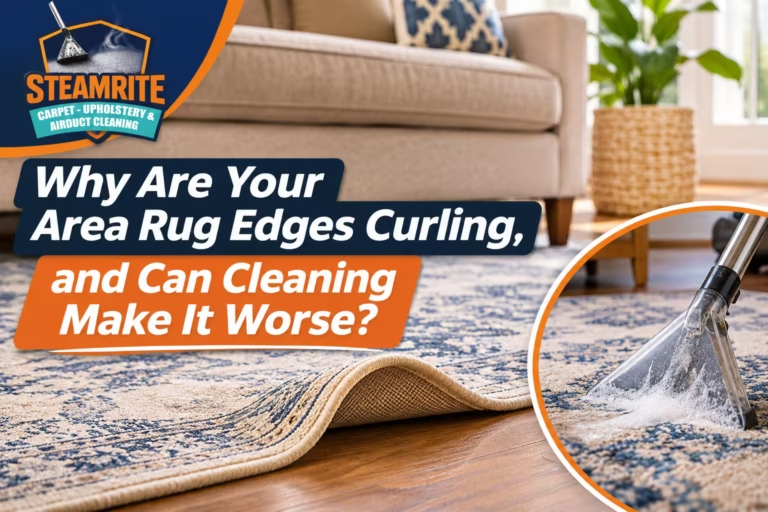
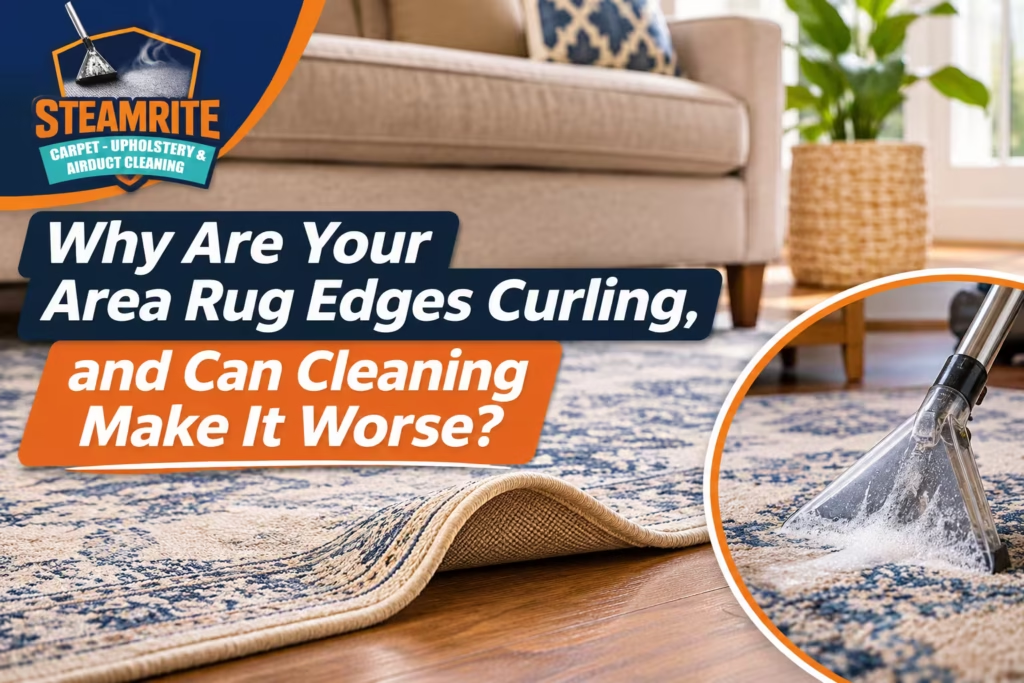
Area rug edges curling upward can create a tripping hazard and may signal anything from a temporary shipping crease to worn binding or a distorted foundation. Cleaning can reveal or worsen existing distortion because rug materials absorb and release moisture differently. The cause determines whether a simple adjustment or professional correction is appropriate.
Why Do Area Rug Edges and Corners Curl?
A rug combines pile, foundation, and finished edges that may respond differently to wear and moisture. Wool pile on a cotton foundation, for example, can develop tension when the materials change at different rates.
Common causes include:
- Construction tension: Uneven warp and weft tension can distort handmade or flatwoven rugs.
- Worn binding: A loose, frayed, or shrunken edge may curl upward.
- Moisture changes: Different fibers can expand and contract at different rates during uneven drying.
- Traffic and storage: Vacuum heads, chair legs, folding, and tight rolling can catch or deform edges.
An ill-fitting or unsecured rug pad may cause the rug to slide, wrinkle, or gather in certain areas. Check it before assuming the rug itself is damaged.
Look at the pattern before choosing a fix. A single corner that curls after delivery may simply have a temporary roll memory. A long raised side, inward-pulling edge, or waves across the center suggest a broader tension or moisture issue. Photograph the rug and note whether the change appeared after cleaning, a spill, moving furniture, or storage; that history can help narrow the cause.
Can Rug Cleaning Make Curling Worse?
Yes. Fibers can swell when wet and contract as they dry. If the pile, foundation, and edges respond at different rates, tension may cause raised edges or buckling.
The Institute of Inspection, Cleaning and Restoration Certification warns that some woven rugs shrink or buckle after cleaning because their materials react differently. Low-moisture methods may reduce, but cannot eliminate, the risk.
Cleaning may expose existing waviness or a weakened edge that soil previously concealed. Age, repairs, fiber content, and past water exposure also affect the outcome.
| What you notice after cleaning | Possible explanation |
| One or more corners lift | Edge tension, storage curl, or binding wear |
| Waves appear across the rug | Uneven drying or foundation distortion |
| Sides pull inward | Shrinkage or tension changes |
| Binding twists or separates | Edge construction may be damaged |
How to Fix Curling Rug Edges Safely
Start gently and check whether only one corner or the entire edge is affected.
- Let it settle. Lay a newly unrolled rug flat on a clean, dry floor. For a mild shipping curl, loosely reverse-roll it, then unroll it again.
- Use light weight. Place a clean, flat object over a minor corner curl briefly. Avoid concentrated pressure or heavy furniture.
- Inspect the pad. Use a quality pad slightly smaller than the rug; replace one that is folded, worn, or slipping.
- Dry evenly. Keep damp rugs uncovered and let the underside dry fully.
Do not iron, steam, soak, or glue the edge without checking the construction first. Heat and moisture can damage dyes, backing, finishes, or delicate fibers.
When Does a Rug Need Professional Correction?
If the binding unravels or waves persist, ask a rug specialist to inspect the weave, foundation, backing, and edge finish. The rug may need blocking or edge repair. Blocking reshapes a rug and holds it in position while it dries. It cannot repair broken fibers or failing backing, so a hand-tufted rug with deteriorating latex may need a different repair.
Aurora’s semi-arid climate and dry winters make indoor drying conditions worth watching. Do not speed drying with direct heat; use even airflow and make sure the underside dries.
Steamrite recommends identifying the cause first: a loose pad requires a different fix from moisture distortion or damaged binding.
Frequently Asked Questions
Why are my rug edges curling after cleaning?
Different fibers may expand and contract at different rates when wet. Uneven drying or a pre-existing binding problem can leave edges raised.
Can I use an iron to flatten a curled rug corner?
Avoid direct heat because it can affect dyes, backing, adhesives, and delicate fibers. Ask a professional about valuable or handmade rugs.
Will a rug pad stop corners from curling?
A suitable pad reduces slipping and bunching, but cannot repair damaged binding, shrinkage, or foundation distortion.
Can a hand-knotted wool rug be flattened again?
Some can, depending on the foundation and cause. Avoid soaking or steaming; have a specialist inspect persistent distortion.
When should I stop trying home fixes?
Stop if binding separates, fibers break, or the curl spreads. Repeated rolling, weighting, or wetting can worsen damage.
Final Thoughts: Keep Rug Curling From Becoming Permanent
Area rug edges curl because of construction tension, worn binding, traffic, storage, or moisture changes. Cleaning may worsen vulnerable rugs or reveal existing distortion. Use gentle flattening only for minor curls; persistent waves or damaged edges need a construction-specific assessment from Steamrite.