
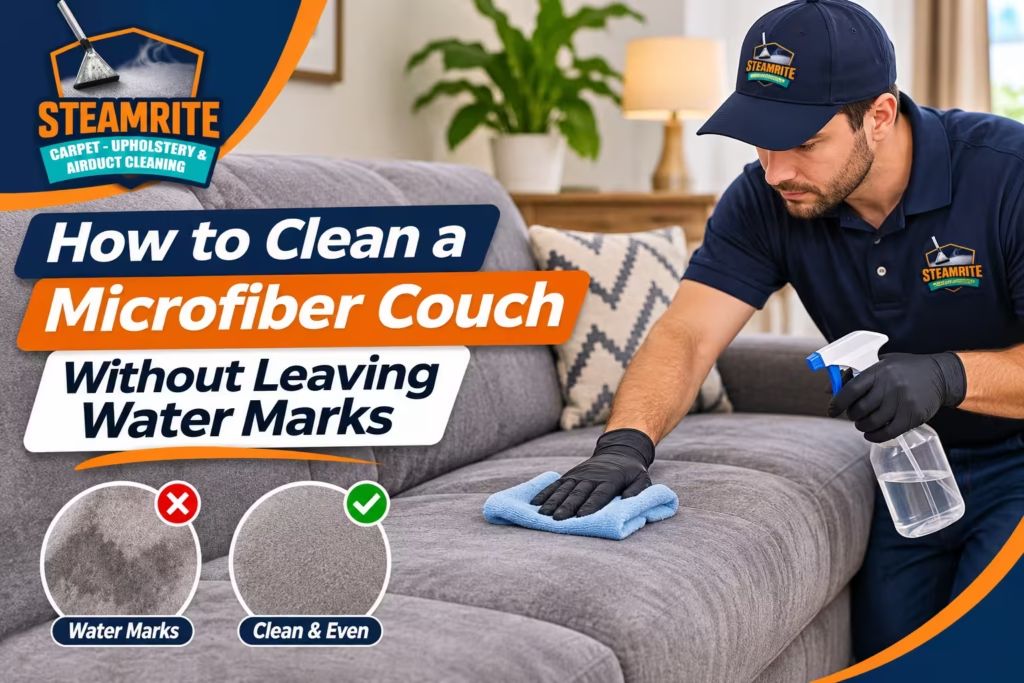
Microfiber couches are popular because their soft texture, durability, and stain resistance make them practical for everyday use. However, cleaning them incorrectly can leave visible water rings, uneven patches, or changes in the fabric’s texture. Even a small amount of moisture can create noticeable marks on certain microfiber upholstery.
The right cleaning method depends on the manufacturer’s upholstery care code, not simply the fact that the couch is made from microfiber. Before using water, a cleaning solution, or upholstery equipment, check the label and test a hidden area. This helps prevent unnecessary damage while keeping the fabric looking consistent.
Why Does Microfiber Develop Water Marks?
Most microfiber upholstery is made from densely woven polyester or nylon fibers that are much finer than regular fabric threads. Its tightly woven or textured surface can respond unevenly when exposed to moisture. Water may dry at different rates across the fabric, leaving visible rings or darker patches.
Water marks can also appear when cleaning solution spreads beyond the original stain. Dirt and cleaning residue may move toward the edges as moisture evaporates, creating a noticeable outline.
Other common causes include:
- Applying too much water to one section.
- Cleaning a small spot without blending the surrounding area.
- Applying a cleaner that is not approved for the sofa’s specific upholstery care code.
- Allowing dirty moisture to dry inside the fabric.
- Rubbing aggressively and flattening the microfiber pile.
Sometimes, what looks like a water stain is actually a change in the fabric’s texture. Restoring the pile may improve its appearance without requiring additional cleaning.
What Do the Upholstery Cleaning Codes Mean?
Look for the manufacturer’s care label underneath removable seat cushions, beneath the couch, or along the furniture frame. The code tells you which cleaning methods are suitable for that particular upholstery.
| Cleaning code | Recommended cleaning approach |
| W | Use approved water-based upholstery cleaners |
| S | Use an appropriate water-free cleaning solvent |
| WS or SW | Use approved water-based or solvent-based methods |
| X | Vacuum or lightly brush; avoid liquid cleaning products |
These codes are not interchangeable. Even if one microfiber sofa is water-safe, an S-coded couch requires solvent-based cleaning rather than water.
If the label is missing, contact the furniture manufacturer before applying a cleaning product. Fabric appearance alone cannot reliably identify the correct cleaning method.
How Do You Clean Microfiber Upholstery Without Leaving Water Stains?
Once you confirm the care code, prepare the appropriate cleaner and a few basic supplies. A clean white microfiber cloth, vacuum with an upholstery attachment, and soft upholstery brush are useful for routine care.
Follow these steps for a compatible cleaning method:
- Vacuum the couch: Remove loose dust, crumbs, and pet hair before applying any cleaning solution. Pay attention to seams and cushion gaps.
- Test a hidden area: Apply a small amount of the approved cleaner to an inconspicuous section. Check for color transfer, fading, texture changes, or other damage after it dries.
- Blot instead of rubbing: Work on the stain with a clean white cloth. Gentle blotting helps avoid spreading dirt or damaging the fabric pile.
- Control moisture: Apply only the amount permitted by the product and manufacturer instructions. Avoid soaking the upholstery or pushing moisture into the cushion filling.
- Blend the affected area: If the cleaning instructions allow it, treat the surrounding section consistently rather than leaving a sharply defined wet spot.
- Allow complete drying: Let the fabric air-dry with adequate ventilation. Keep high heat away from the fabric unless the care instructions specifically allow it.
- Restore the texture: Once completely dry, gently brush the pile in the direction recommended for the fabric.
For S-coded upholstery, follow the solvent manufacturer’s directions and use suitable ventilation. Do not substitute a water-based cleaner.
How Can You Remove Existing Water Marks From Microfiber Upholstery?
Avoid immediately wetting the entire couch or repeating the same cleaning method. First, determine whether the mark comes from mineral residue, cleaning product buildup, transferred dirt, or flattened fibers.
If the care code permits water-based cleaning, a properly selected upholstery cleaner may help address residue. Use controlled amounts and follow its instructions. For S-coded fabric, additional water can make the problem worse, so use only an approved solvent method.
Once the fabric is completely dry, gently brushing it can help lift flattened fibers and restore its texture. However, persistent discoloration, dye transfer, or widespread rings may require professional assessment.
When Is It Time to Hire a Professional for Microfiber Sofa Cleaning?
Professional cleaning is worth considering when water marks cover several cushions, previous cleaning attempts have left residue, or the upholstery has delicate finishes. It is also a sensible option when the care label is unclear, or the fabric reacts unexpectedly during testing.
A professional cleaner should inspect the fabric, identify its care requirements, and select a suitable cleaning process. Equipment and moisture levels should be chosen according to the upholstery rather than applying the same extraction method to every couch.
Steamrite can help homeowners explore professional upholstery cleaning when microfiber furniture needs more attention than routine spot cleaning can provide.
Frequently Asked Questions
Is Water Safe to Use When Cleaning Microfiber Upholstery?
Only when the manufacturer’s care instructions permit water-based cleaning. A W or WS label generally allows approved water-based methods, but the fabric should never be saturated. Always test the cleaner first.
What Causes Microfiber Upholstery to Darken After Cleaning?
The fabric may still be damp, or moisture may have changed the appearance of its pile. Leftover cleaning solution may also cause visible discoloration or uneven areas across the fabric. Allow the area to dry completely before deciding whether further treatment is necessary.
Is Dish Soap Safe for Cleaning Microfiber Furniture?
Check the fabric care label before using dish soap, as it may not suit all microfiber upholstery. Its suitability depends on the care code and manufacturer’s instructions. An incompatible solution may leave residue or cause additional water marks.
Should you brush microfiber after cleaning?
Brushing can help restore flattened fibers and improve the fabric’s appearance. Wait until the upholstery is completely dry and use a soft brush suitable for the material.
When should microfiber upholstery be professionally cleaned?
Consider professional service when marks keep returning, large sections are affected, or the fabric shows discoloration after spot treatment. Professional assessment is also useful when the care label is missing or unclear.
Final Thoughts: Keep Microfiber Upholstery Free From Water Marks
A clean microfiber couch starts with understanding its care code and controlling how much moisture reaches the fabric. Avoid aggressive rubbing, untested household mixtures, and unnecessary soaking. For widespread stains or uncertain cleaning requirements, Steamrite can help homeowners consider an appropriate professional approach to microfiber upholstery care.