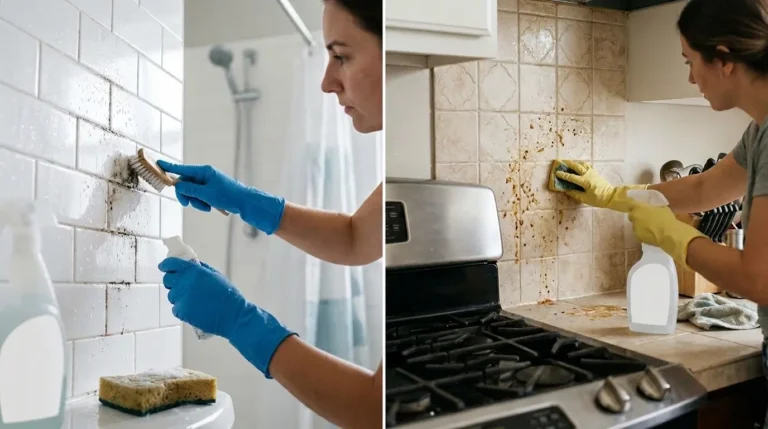
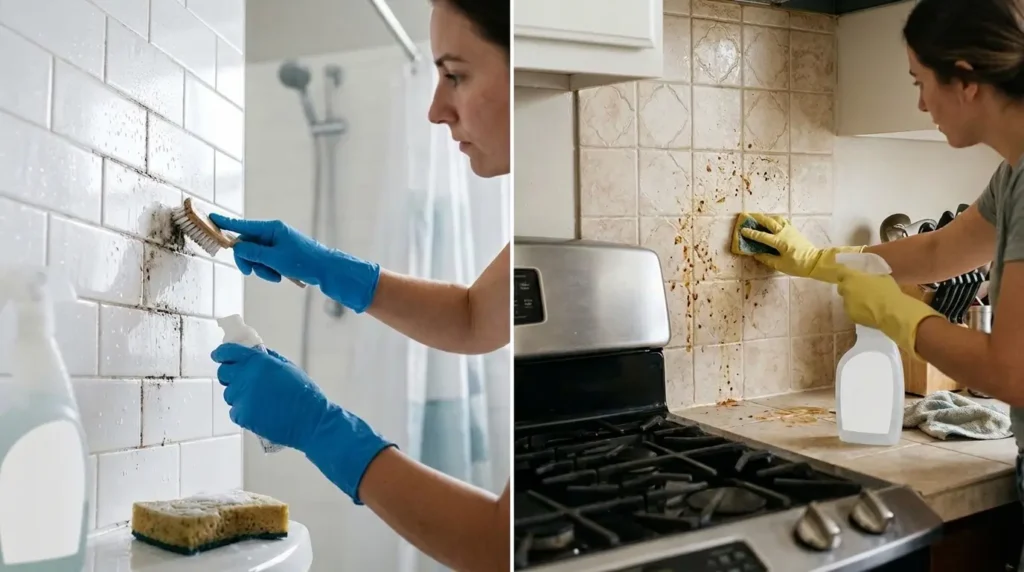
Bathroom Tile Cleaning vs Kitchen Tile Cleaning may look similar. However, the dirt found in each room is often very different. Bathroom tile collects soap, body oils, moisture, and hard-water marks. Kitchen tile faces grease, food spills, crumbs, and dirty foot traffic.
This means one cleaning method may not work well in both rooms. A product that removes light soap film may not cut through kitchen grease. A strong grease cleaner may also be too harsh for some bathroom surfaces.
Understanding the difference can help you clean each space safely. It can also help you know when normal cleaning is no longer enough.
What Is the Main Difference Between Bathroom and Kitchen Tile Cleaning?
The main difference is the type of buildup found on the tile and grout.
Bathroom tile often has wet, soapy buildup. Kitchen tile often has oily, sticky soil.
Bathroom cleaning usually focuses on:
- Soap scum
- Body oils
- Shampoo residue
- Hard-water marks
- Moisture
- Dark shower joints
- Water around sinks and tubs
Kitchen cleaning usually focuses on:
- Cooking grease
- Food spills
- Sugary drinks
- Crumbs
- Oil near the stove
- Dirty mop water
- Soil brought in on shoes
Both rooms may have ceramic, porcelain, or natural stone tile. The cleaning product must match the surface as well as the type of dirt.
Why Does Bathroom Tile Develop Soap Scum?
Soap scum forms when soap, body oils, water, and minerals dry on the tile.
It often appears as a cloudy, white, gray, or dull film. It may feel rough or waxy when you touch it.
Soap scum is common on:
- Shower walls
- Shower floors
- Tub surrounds
- Bathroom backsplashes
- Tile near sinks
- Built-in shower shelves
- Corners behind bottles
The buildup often grows slowly. You may not notice it until the tile loses its shine or the grout starts to look darker.
Regular rinsing and drying can reduce the problem. However, old soap film may need more than a quick wipe.
Why Does Kitchen Tile Collect Grease?
Cooking sends small amounts of oil and grease into the air.
These tiny drops can land on the floor, backsplash, cabinets, and nearby grout. Grease can also spread through spills, shoes, and cleaning tools.
Kitchen grease often builds up near:
- Stoves
- Ovens
- Fryers
- Sinks
- Trash bins
- Refrigerators
- Food prep areas
- Dining tables
- Pet bowls
Grease can create a sticky layer. Dust and crumbs then attach to that layer.
This is why a kitchen floor may still feel dirty after mopping. The mop may remove loose soil but leave the oily film behind.
How Is Moisture Different From Food Residue?
Bathroom moisture often stays on the surface for a long time. Kitchen food residue may dry, harden, or become sticky.
In bathrooms, water can remain in:
- Grout lines
- Shower corners
- Tub edges
- Areas around toilets
- Tile beside sinks
- Low spots on the floor
Poor airflow can slow drying. This may cause dark joints, odor, or repeated surface buildup.
In kitchens, food residue may include:
- Cooking oil
- Sauces
- Milk
- Juice
- Coffee
- Sugar
- Flour
- Meat drips
- Pet food
These spills should be cleaned quickly. Once dry, they can be harder to remove and may attract insects or more dirt.
Is Bathroom Grout Different From Kitchen Grout?
The grout itself may be the same type. The contamination inside it is often different.
Bathroom grout may hold:
- Soap
- Shampoo
- Skin oils
- Moisture
- Hard-water deposits
- Cosmetic residue
- Cleaning spray
Kitchen grout may hold:
- Cooking grease
- Food liquid
- Sugar
- Dirt from shoes
- Dirty mop water
- Floor cleaner
- Pet residue
Bathroom grout often looks dark because it stays wet or holds soap film. Kitchen grout may look dark because grease traps soil.
The right cleaning method depends on what is inside the grout. Scrubbing harder does not always solve the problem.
Why Is Bathroom Wall Tile Cleaned Differently?
Bathroom wall tile does not face the same foot traffic as a floor.
However, shower walls receive water, soap, shampoo, and body oils each day. The buildup may run down the wall and settle in lower grout lines.
Wall tile cleaning often includes:
- Removing soap film
- Cleaning around fixtures
- Wiping shower corners
- Cleaning shelves and niches
- Rinsing the surface
- Drying the wall
- Checking caulk joints
A soft pad or cloth may work for light buildup. Rough tools can scratch some tile finishes or damage grout.
Always test a cleaner in a hidden area first. Natural stone needs products made for that material.
Why Is Kitchen Floor Tile Harder to Maintain?
Kitchen floors receive both spills and foot traffic.
Food may fall on the floor several times each day. Shoes then spread the residue across the room.
A kitchen floor may collect:
- Grease near the stove
- Water near the sink
- Crumbs under cabinets
- Sticky drinks near the table
- Pet food around bowls
- Dirt near garage doors
- Soil under appliances
The grout may become darker along common walking paths. Corners and edges may stay lighter.
This uneven color makes the floor look worn, even when the tile itself is still in good shape.
Can You Use the Same Cleaner in Both Rooms?
Sometimes, but not always.
A mild tile-safe cleaner may work for routine care in both rooms. However, bathroom soap film and kitchen grease may need different products.
Before using any cleaner:
- Check the tile type.
- Check whether the grout is sealed.
- Read the product label.
- Test a hidden area.
- Use the correct amount.
- Rinse when required.
- Dry the surface.
Do not assume that a stronger cleaner will work better. Strong acids may damage cement grout and natural stone. Oily soaps may leave film on kitchen floors.
Never mix cleaning chemicals. Mixing products can create harmful fumes or damage the surface.
Why Does Bathroom Tile Still Look Dirty After Cleaning?
Bathroom tile may still look dirty when soap or mineral film remains on the surface.
Common causes include:
- Using too much cleaner
- Not rinsing the tile
- Letting dirty water dry
- Ignoring corners
- Cleaning only the tile face
- Leaving shower walls wet
- Using the wrong product
- Worn or stained grout
Wet grout may also look darker than dry grout. Allow the area to dry before judging the final color.
If dark joints return soon after cleaning, check for leaks, poor airflow, or failed caulk.
Why Does Kitchen Tile Feel Sticky After Mopping?
A sticky floor often has cleaner or grease left on it.
Using extra soap may make the problem worse. The soap can dry as a thin film and attract fresh soil.
Dirty mop water can also spread grease across the floor. Low grout lines may collect that water as it dries.
A better kitchen mopping routine is:
- Sweep or vacuum crumbs.
- Remove grease spills first.
- Use a clean mop or pad.
- Measure the cleaner.
- Work in small sections.
- Change cloudy water.
- Rinse when needed.
- Dry the floor.
Do not mop loose crumbs and grease together. Remove dry soil before adding water.
How Should You Clean Bathroom Tile?
Start by removing bottles, mats, and other items from the area.
Then follow a simple routine:
Remove Loose Dirt
Vacuum or sweep bathroom floors before wet cleaning. Hair and dust can turn into dirty residue when wet.
Apply a Suitable Cleaner
Use a product approved for the tile and grout. Allow it to work for the time shown on the label.
Clean Small Areas
Focus on shower corners, lower walls, grout lines, and areas around fixtures.
Rinse the Tile
Remove cleaner and loosened dirt with fresh water when the product requires rinsing.
Dry the Surface
Use a clean cloth, microfiber pad, or squeegee. Drying helps reduce water marks and soap film.
Improve Airflow
Run the exhaust fan after showers. Leave the door open when safe and suitable.
How Should You Clean Kitchen Tile?
Kitchen cleaning should begin with crumbs and grease.
Remove Dry Soil
Sweep or vacuum the floor. Pay close attention to cabinets, appliances, and dining areas.
Wipe Fresh Spills
Clean oil, drinks, sauces, and food before they dry.
Treat Greasy Areas
Use a tile-safe product that can handle grease. Follow the label and do not make the mixture stronger than advised.
Use Clean Water
Change the water once it becomes cloudy or oily.
Rinse the Floor
Rinse if the product leaves residue or the label calls for it.
Dry the Tile
Drying helps prevent streaks, cleaner film, and dirty water from settling into grout.
How Often Should Bathroom Tile Be Cleaned?
Bathroom tile should be cleaned based on use and moisture.
A busy family bathroom may need more care than a guest bathroom.
Clean the tile when:
- Soap film appears
- Grout stays dark
- Water marks are visible
- The floor feels slick
- Corners smell damp
- Shower walls look cloudy
- Buildup appears around bottles
Quick drying after each shower can reduce deeper buildup. A squeegee can help on shower walls and doors.
How Often Should Kitchen Tile Be Cleaned?
Kitchen tile should be cleaned when food, grease, or sticky soil appears.
Some spots may need daily care. The whole floor may not need wet mopping every day.
Clean kitchen tile when:
- Food spills occur
- Grease appears near the stove
- The floor feels sticky
- Grout lines look dark
- Crumbs collect near cabinets
- Pet bowls leave residue
- Dirty traffic paths appear
Fast spill cleanup is often more useful than adding extra cleaner during the next full mopping.
Which Room Usually Needs Deeper Grout Cleaning?
Either room may need deeper cleaning. It depends on use and maintenance.
Bathroom grout may need deep cleaning when soap and moisture have built up for months.
Kitchen grout may need deep cleaning when grease and dirty mop water have settled into the joints.
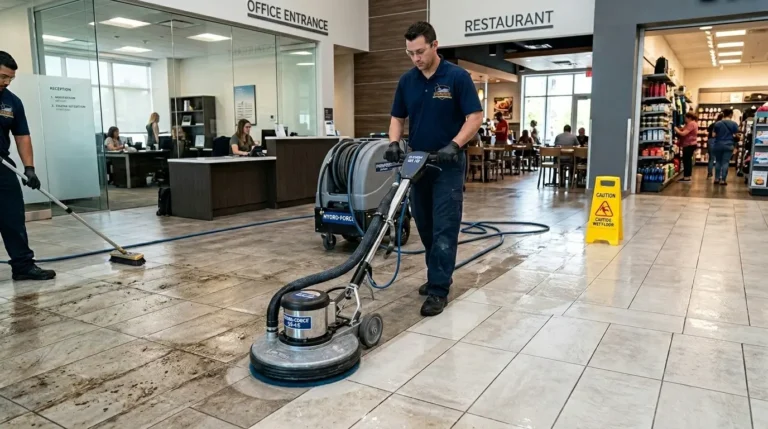
Professional cleaning may help when:
- Grout stays dark after mopping
- Soap film keeps returning
- Kitchen grease feels sticky
- The tile has a dull film
- Large areas look uneven
- Home cleaning no longer works
- Several rooms need an even result
Cleaning works best when the grout is still firm. It cannot rebuild missing or cracked joints.
When Is Cleaning Not Enough?
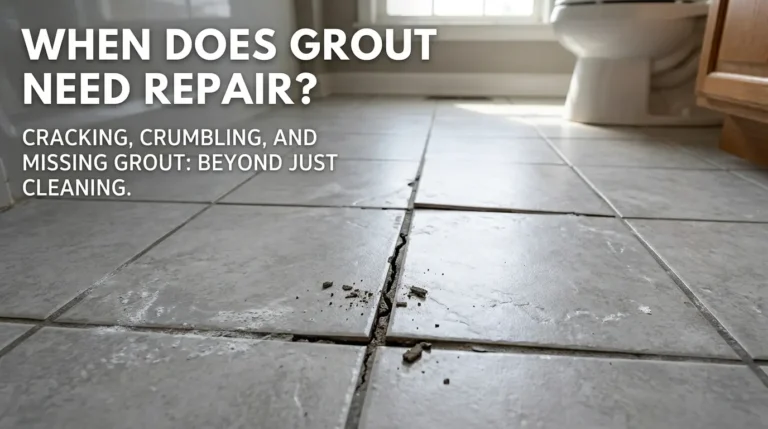
Cleaning is not enough when the problem is damage.
Watch for:
- Missing grout
- Loose grout pieces
- Deep cracks
- Moving tiles
- Failed shower corners
- Water outside the shower
- Soft walls or baseboards
- Repeated moisture stains
- Broken tile edges
A cleaner may remove surface dirt around these areas. However, a qualified repair contractor may need to fix the damage.
Steamrite’s listed service is tile and grout cleaning. Loose tile, broken grout, leaks, and installation problems may need another provider.
Does Grout Sealing Help Both Rooms?
Grout sealing may help suitable cement grout resist some spills and stains.
It may be useful in bathroom floors, kitchen floors, backsplashes, and other busy tiled areas.
However, sealing does not:
- Remove existing dirt
- Fix cracks
- Stop all stains
- Make grout waterproof
- Replace daily cleaning
- Repair loose tile
The grout should be cleaned and dried before a suitable sealer is applied.
How Can Aurora Homes Keep Bathroom Tile Cleaner?
Aurora’s dry climate does not remove indoor bathroom moisture.
Showers, poor airflow, and wet floors can still cause repeated buildup.
Helpful habits include:
- Run the exhaust fan
- Dry shower walls
- Move bottles from grout lines
- Wipe soap spills
- Clean corners
- Fix dripping taps
- Check caulk
- Wash bathroom mats
- Keep the floor dry
A bathroom that dries faster is often easier to maintain.
How Can Aurora Homes Keep Kitchen Tile Cleaner?
Aurora homes may also receive outdoor dust, snow, and winter grit through kitchens and garage doors.
Use mats near entrances. Vacuum grit before wet mopping.
Other helpful steps include:
- Wipe grease quickly
- Sweep crumbs daily
- Clean pet bowl areas
- Change dirty mop water
- Use less cleaner
- Dry the floor
- Clean under movable items
- Check grout near the stove
Small daily steps can prevent heavy buildup later.
When Should You Call Steamrite?
Call Steamrite when bathroom or kitchen tile no longer looks even after normal cleaning.
Professional service may help when:
- Bathroom grout stays dark
- Soap scum covers large areas
- Kitchen grout holds grease
- Floors feel sticky
- Cleaner film keeps returning
- Traffic paths are visible
- Several tiled areas need cleaning
- Grout needs cleaning before possible sealing
Steamrite provides tile and grout cleaning in Aurora, CO. The service begins with an inspection of the surface, soil, grout, and problem areas.
The goal is to remove suitable dirt and residue. Final results depend on the tile, grout, stains, past products, and surface condition.
Final Answer: How Are Bathroom and Kitchen Tile Cleaning Different?
Bathroom tile cleaning and kitchen tile cleaning focus on different forms of buildup.
Bathrooms mainly deal with soap scum, body oils, water, and moisture. Kitchens mainly deal with grease, food spills, crumbs, and heavy floor traffic.
Bathroom wall tile often needs rinsing and drying. Kitchen floor tile often needs grease control, clean mop water, and careful residue removal.
Both rooms need a cleaner that matches the tile and grout. They also need full rinsing and drying when required.
For bathroom and kitchen tile cleaning in Aurora, CO, Steamrite can inspect the surface and explain whether professional cleaning may improve the tile and grout.
Frequently Asked Questions
What is the biggest difference between bathroom and kitchen tile cleaning?
Bathroom cleaning focuses more on soap and moisture. Kitchen cleaning focuses more on grease, food residue, and floor traffic.
Can I use the same cleaner in the bathroom and kitchen?
A mild tile-safe cleaner may work for routine care in both rooms. Heavy soap scum or grease may need a different product.
Why does bathroom grout turn dark?
Soap, body oils, water, poor airflow, and cleaner residue can make bathroom grout look dark.
Why does kitchen grout feel sticky?
Cooking grease, food spills, and too much floor cleaner can leave sticky buildup inside the grout.
Is wall tile easier to clean than floor tile?
Wall tile has less foot traffic. However, shower walls may still collect heavy soap and mineral film.
Should tile be dried after cleaning?
Yes. Drying can reduce streaks, water marks, cleaner film, and dirty water left inside grout lines.
Can professional cleaning make grout look new again?
It may make grout lighter and more even when the discoloration comes from removable soil. Permanent stains and damage may remain.
Can Steamrite repair cracked grout?
Steamrite’s listed service is tile and grout cleaning. Cracked, missing, or loose grout may need a qualified repair contractor.
How often should kitchen floors be mopped?
Mop based on spills, grease, traffic, and visible soil. Sweep or vacuum crumbs before wet cleaning.
How often should shower tile be cleaned?
Clean it when soap film, water marks, dark grout, or slippery buildup appears. Regular drying can reduce how often deep cleaning is needed.