

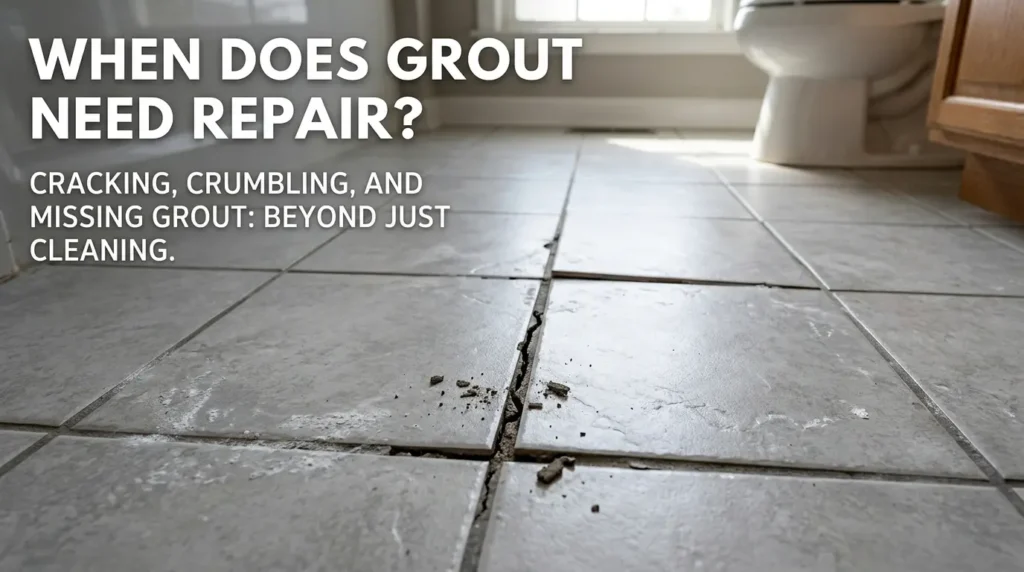
Dirty grout and damaged grout can look similar at first. Both may appear dark, uneven, or worn. However, they need very different solutions. Cleaning removes soil and residue. Repair replaces grout that has cracked, loosened, crumbled, or fallen out.
So, when does grout need repair? Repair is usually needed when joints have visible cracks, missing sections, loose material, repeated water entry, or movement around the tile. Cleaning can improve the appearance of sound grout, but it cannot rebuild broken joints or correct problems below the tile.
This guide explains the difference between dirt and damage. It also covers loose tiles, shower moisture, failed corner joints, and signs that a tile professional should inspect the surface before cleaning continues.
What Is the Difference Between Dirty Grout and Damaged Grout?
Dirty grout remains firmly packed between the tiles. It may have stains, grease, soap, or dark soil, but it does not move, crack, or release pieces when touched.
Damaged grout has lost part of its structure. It may be cracked, loose, powdery, or missing. Water and dirt can enter the open spaces, but cleaning those spaces will not rebuild them.
A simple grout cleaning vs repair comparison looks like this:
| Condition | Cleaning May Help | Repair May Be Needed |
| Dark surface dirt | Yes | No |
| Soap or cleaner residue | Yes | No |
| Kitchen grease | Yes | No |
| Light grout staining | Sometimes | No |
| Hairline crack | No | Possibly |
| Loose grout pieces | No | Yes |
| Missing joint sections | No | Yes |
| Tile movement | No | Yes |
| Failed shower corner | No | Yes |
| Water behind tile | No | Further inspection needed |
Cleaning and repair may both be required. The area should normally be repaired only after the cause of the damage has been understood.
What Do Cracks in Grout Mean?
Cracks often mean that movement has occurred somewhere in the tile system. The movement may come from the subfloor, wall, tile backing, installation materials, or a change between two surfaces.
The Tile Council of North America explains that excessive movement in the surface below the tile can crack grout. Greater movement may also crack the tile itself. Weak grout installation, too much mixing water, or grout that was not packed fully into the joint can also cause loose or crumbling sections.
A small crack does not always prove that the whole floor has failed. Still, it should not be hidden under dirt or covered with new grout before the cause is checked.
Watch for cracks that:
- Continue across several tiles
- Return after a previous repair
- Grow wider over time
- Run along a wall or doorway
- Appear beside moving tiles
- Release powder when touched
- Remain wet or dark
- Develop in shower corners
Repeated cracks are more concerning than one small surface mark. They may show that the installation continues to move.
Can Cracked Grout Be Cleaned?
The tile around cracked grout can be cleaned carefully, but cleaning will not close or strengthen the crack.
Strong scrubbing, focused steam, or high water pressure may loosen already weak grout. Cleaning products can also enter the crack and remain below the surface.
Before cleaning cracked grout:
- Check whether the crack is stable.
- Press gently around nearby tiles.
- Look for movement or hollow sounds.
- Check for water or dark moisture.
- Avoid directing pressure into the opening.
- Ask for an inspection when several joints are affected.
Cleaning may need to pause until cracked grout repair is completed. This is especially important in showers, around tubs, or on floors where water can enter the open joint.
When Does Missing Grout Need Repair?
Missing grout should be repaired when open spaces appear between tiles. Grout fills joints and helps protect their edges from dirt and impact.
The Tile Council notes that grout is a joint filler. It is not the material that holds tile in place. A missing joint therefore does not always mean the tile will fall out, but it does leave the installation incomplete and may allow debris or moisture into the gap.
Signs that missing grout repair is needed include:
- Deep open lines between tiles
- Pieces breaking away during mopping
- Sharp tile edges becoming exposed
- Dirt packing into empty joints
- Water sitting inside gaps
- Missing grout around a drain
- Gaps beside a shower curb
- Sections that have already been patched more than once
Do not simply spread a thin layer of new grout over the old surface. The Tile Council advises that a large part of the old joint must be removed before replacement grout can be packed correctly. Grouting over a shallow damaged layer may fail because the new material does not have enough depth or a sound surface to hold onto.
Grout removal can damage tile edges when done carelessly. Larger repairs are best handled by someone with the right tools and experience.
Does Loose Grout Mean the Tile Is Loose?
Not always. Grout can fail because it was mixed, installed, or cured poorly while the tile remains bonded.
However, loose grout can also be a warning sign of tile or subfloor movement. The Tile Council explains that movement in a wood subfloor can cause grout to break away and add to floor instability.
Check the tile when grout keeps loosening.
Possible signs of a loose tile include:
- A tile that moves under pressure
- A clicking sound when stepped on
- A hollow sound when tapped
- A raised tile edge
- New cracks around one tile
- Grout breaking away from all four sides
- Water appearing around the joint
- A tile that rocks slightly
Grout should not be used to hold a loose tile in place. The tile must be bonded correctly to the surface below it. Adding new grout around a moving tile may only create another short-term failure.
A tile installer may need to lift the tile, inspect the setting material, and correct the cause before regrouting.
Can Cleaning Fix Loose Tiles?
No. Cleaning can remove dirt from around the tile, but it cannot restore the bond below it.
A loose tile may be caused by:
- Poor adhesive coverage
- Subfloor movement
- Moisture damage
- An unsuitable installation product
- Impact damage
- Missing movement joints
- A weak surface below the tile
Cleaning equipment should be used carefully around loose tiles. Water or pressure entering the open area may make inspection or repair more difficult.
When a tile moves, ask about loose tile and grout repair before booking deep cleaning for that section.
What Does Water Intrusion Look Like?
Water intrusion means moisture is entering or moving through parts of the tile system where it should be controlled.
Grout joints are not waterproof. In showers and other wet spaces, the installation below the tile must provide the water protection. The Tile Council clearly states that wet areas should rely on the approved installation method and the surface below the tile—not grout alone—to protect nearby materials.
Possible signs of water intrusion include:
- Grout that stays dark after the shower dries
- White residue that keeps returning
- Loose wall or floor tile
- Cracked shower corners
- Soft drywall beside the shower
- Swollen baseboards
- Peeling paint
- A musty smell
- Water marks on the ceiling below
- Dampness outside the shower enclosure
The EPA advises that mold and moisture problems require both cleanup and correction of the water source. Covering a damp or moldy surface with caulk or another coating is not a lasting solution.
Cleaning visible grout may improve the surface. It will not repair a plumbing leak, failed waterproof membrane, or wet wall backing.
Does White Grout Residue Mean Repair Is Needed?
Not always. White residue can come from soap, cleaning products, mineral deposits, or moisture carrying salts toward the surface.
The Tile Council explains that recurring white residue may be linked to moisture moving through concrete and grout. It recommends finding where the water is coming from before treating the visible deposit.
You may need deeper inspection when white residue:
- Returns soon after cleaning
- Appears with damp grout
- Covers several connected joints
- Forms near a basement slab
- Appears beside a shower leak
- Comes with loose or cracked tile
Using acid to remove the mark without finding the cause may damage cement grout. Cleaning may address the residue, but ongoing moisture may require building, plumbing, or tile repair.
When Do Shower Corners Need Repair?
Shower corners need repair when the joint is cracked, separated, missing, or allowing water to enter.
Corners are different from flat grout joints. The wall and floor can move separately. The Tile Council says a flexible caulk or sealant is generally more suitable where two surfaces meet because rigid grout may crack when those surfaces move.
Check these areas:
- Wall-to-wall corners
- Wall-to-floor joints
- Tub edges
- Shower-base edges
- Around built-in benches
- Around shelves and niches
- Beside door frames
- Around plumbing fixtures
Failed caulk should not simply be covered with a new layer. The old loose material should be removed, and the area should be cleaned and dried before suitable replacement sealant is applied.
If the wall remains wet or soft, stop. The issue may extend behind the visible joint.
Can Grout Sealer Fix Cracks or Missing Grout?
No. Sealer cannot fill cracks, replace missing grout, or secure loose tiles.
A grout sealer may help suitable cement grout resist future stains after the surface is cleaned and repaired. It is a protective treatment, not a building or repair material.
Do not apply sealer when:
- Joints are cracked
- Grout is missing
- The surface is wet
- Loose material remains
- A leak is active
- Cleaner residue is present
- Tiles move
Applying sealer over damage may hide the surface without correcting the cause.
Steamrite’s guide to grout cleaning versus grout sealing explains the different purpose of each process.
When Is Professional Cleaning Still the Right Choice?
Professional cleaning is the right choice when the grout remains sound but contains deep soil, grease, soap, or cleaner residue.
Cleaning may help when:
- Grout is firm but dark
- Kitchen joints hold grease
- Entryway grout has tracked-in dirt
- Shower grout contains soap film
- Mop residue has built up
- The floor looks uneven
- Tile has a dull surface film
- Grout needs cleaning before possible sealing
The Tile Council recommends loosening soil, removing dirty water, rinsing, and removing the rinse water. This helps stop soap and dirt from settling back into grout lines.
Steamrite provides tile and grout cleaning in Aurora, CO. This service is suited to removable dirt and residue on appropriate tile and grout surfaces.
Cleaning cannot repair structural movement, missing joints, loose tile, or hidden water damage.
What Should Aurora Homeowners Check Before Cleaning?
Before arranging grout cleaning Aurora CO, inspect the busiest and wettest tiled areas in the home.
Check:
- Shower corners
- Bathroom floors
- Kitchen grout
- Tiled entryways
- Mudrooms
- Basement floors
- Areas around toilets
- Tile near dishwashers or sinks
- Places with past plumbing leaks
Aurora’s dry outdoor air does not prevent indoor moisture problems. Showers, plumbing leaks, wet entryways, and damp materials can still affect tile installations. The EPA notes that even small amounts of condensation or indoor moisture can support mold around bathroom tile and grout.
Take photos of cracks and mark their ends with a removable note. Check again later. A crack that grows or returns should be inspected before cleaning or regrouting.
Who Should Repair Damaged Grout?
The right provider depends on the cause.
A tile installer or repair contractor may handle:
- Grout replacement
- Loose tiles
- Broken tile
- Failed movement joints
- Repeated floor cracks
- Damaged shower joints
A plumber may be needed for:
- Leaking pipes
- Dripping fixtures
- Water under a toilet
- Moisture near a dishwasher
- Shower-valve leaks
A water-damage or mold professional may be needed when moisture has reached drywall, subflooring, insulation, or other hidden materials.
Steamrite can help with tile and grout cleaning Aurora where the grout is suitable for cleaning. Ask about repair needs before service when joints are loose or missing.
Final Answer: When Does Grout Need Repair?
The answer to when does grout need repair depends on whether the problem is dirt or damage.
Clean grout when it is firm but stained by soil, soap, grease, or residue. Repair grout when it is cracked, loose, crumbling, or missing. Stop and request further inspection when tiles move, moisture keeps returning, or the surface around a shower or floor becomes soft.
Cleaning has a clear limit. It can improve the appearance of sound grout, but it cannot rebuild joints or fix movement below the tile.
For professional grout repair, contact a qualified tile contractor. For sound surfaces that need deep grout cleaning Aurora CO, Steamrite can inspect and clean appropriate tiled areas.
Frequently Asked Questions
Can cracked grout be cleaned?
The surrounding surface can be cleaned carefully, but cleaning will not close or strengthen a crack. Repair may be needed first.
Should missing grout be replaced?
Yes. Open joints collect dirt and moisture and leave tile edges exposed. The damaged joint should be prepared and filled correctly.
Can I apply new grout over old grout?
A thin layer over old grout often fails. Damaged grout usually needs to be removed to a suitable depth before replacement material is packed into the joint.
Does loose grout mean my floor is failing?
Not always. It may result from poor grout installation. It can also point to movement below the tile, so inspection is wise.
Can water pass through cracked grout?
Yes. Grout joints are not waterproof, and an open crack creates an easier path for moisture. Wet areas must rely on the correct waterproof installation below the tile.
Can grout sealer repair cracks?
No. Sealer may add stain resistance to suitable grout. It cannot fill cracks or secure loose material.
Why does repaired grout keep cracking?
The tile system may still be moving. Subfloor movement, weak installation, poor adhesive coverage, or missing movement joints may be involved.
Can Steamrite repair loose tiles?
Steamrite’s listed service is tile and grout cleaning. Loose tile, missing grout, or installation damage may require a qualified tile-repair contractor.