

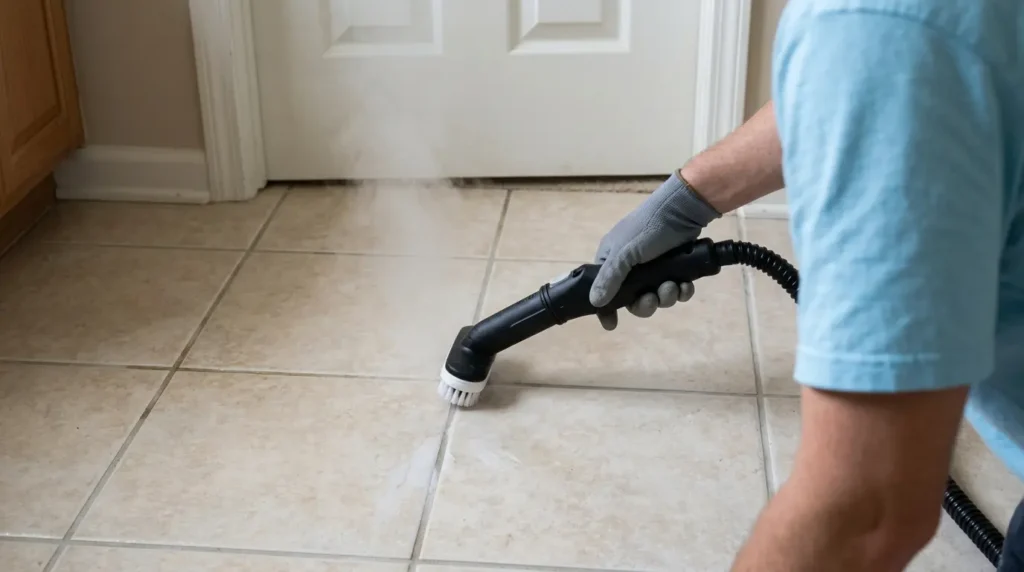
Steam can loosen dirt from tile and grout without heavy scrubbing. That makes it useful for kitchens, bathrooms, and other tiled areas. However, steam is not safe for every floor or every grout joint.
So, can steam cleaning damage grout? It may cause further damage when grout is already loose, cracked, weak, or missing. High heat and direct steam may also be unsuitable for some natural stone surfaces. Sound ceramic or porcelain tile with grout in good condition can often handle careful steam cleaning when the equipment instructions allow it. Kärcher states that sound grout should not normally be damaged by steam, but loose grout may suffer more damage.
The safest choice depends on the tile material, grout condition, tool, heat level, and cleaning method. This guide explains when steam use makes sense and when a homeowner should stop and call a professional.
Can Steam Cleaning Damage Grout?
Steam cleaning tile and grout is usually safer when the grout is firm, complete, and well bonded. Problems are more likely when steam reaches joints that are already cracked or coming loose.
Steam tools release heat, moisture, and some level of pressure. A detail nozzle can focus that force on a small area. This may help lift stubborn soil, but it can also disturb grout that is already weak.
Kärcher advises that grout must be in sound condition before steam cleaning. Its guidance says loose grout may be damaged further, while grout in good condition can often be cleaned more gently with steam than with hard brush scrubbing.
Steam does not normally create healthy grout damage on its own. It is more likely to reveal or worsen an issue that was already present.
When Is Steam Cleaning Safe for Grout?
Steam is generally safer when the grout lines are solid and the tiled surface has no signs of movement or water damage.
Before using a steam cleaner for grout, look closely at the joints. Good grout should not crumble when touched. It should fill the space between the tiles without deep gaps.
Steam may be suitable when:
- Grout feels firm
- No sections are missing
- Tiles do not move
- There are no deep cracks
- The tile maker allows steam
- The steam-cleaner guide lists tile as a safe surface
- A hidden test area shows no damage
- The tool is moved instead of held in one place
The Tile Council of North America lists pressurized steam as one option for stains that do not respond to normal grout cleaners. However, it also stresses good rinsing and dirty-water removal during grout cleaning.
The fact that steam may be used does not mean maximum heat or pressure should be applied. A careful method is better than forcing the nozzle against one grout line for a long time.
When Should You Avoid Steam Cleaning Grout?
Do not steam grout when the joints are loose, badly cracked, crumbling, or partly missing. Those signs point to a repair issue rather than a cleaning problem.
Avoid steam cleaning when you notice:
- Pieces of grout coming out
- Powder or loose material on the floor
- Long cracks across several joints
- Gaps around tile edges
- Tiles that move or sound loose
- Failed caulk in shower corners
- Moisture coming from below the tile
- A surface material that cannot be identified
- Instructions that warn against steam
Grout joints are not waterproof. In a shower or other wet area, the waterproofing system behind the tile must control water. Steam cleaning cannot fix a failed membrane, leak, or poor installation.
If a crack returns after repair, more cleaning will not solve the cause. The floor or wall may be moving, or water may be reaching an area where it should not.
Can Steam Cleaning Make Cracked Grout Worse?
Yes, steam may make cracked or loose grout worse. The main risk comes from focused pressure and moisture reaching a joint that has already lost strength.
A fine crack may not change during gentle floor cleaning. A loose section, however, may break away when hit with direct steam or scrubbed with a stiff brush.
Do not point a detail nozzle into a crack. Do not keep steaming the area because dirt remains inside it. Stop and inspect the joint instead.
Cracked grout should be treated based on its cause. A small surface defect may need regrouting. Repeated cracks, loose tile, or wet areas may need a tile contractor or moisture specialist.
Cleaning should begin only after you know the tiled surface is stable.
Is Steam Cleaning Safe for Ceramic and Porcelain Tile?
Steam is often suitable for sound ceramic and porcelain tile, but you should still check the tile and equipment instructions.
Glazed ceramic tile has a smooth outer surface that is usually easy to clean. Porcelain is also widely used on floors and walls. The more common concern is often the grout, sealant, or damaged edge rather than the tile face itself.
Kärcher includes steam cleaning as an option for tile and advises moving the floor or hand nozzle in quick, overlapping passes. Its guidance also says dirty cleaning cloths should be replaced because they collect the loosened soil.
Test a small hidden section before cleaning the full room. Stop if you see:
- A change in surface shine
- New haze
- Loose grout particles
- A damaged coating
- Water entering cracks
- Color transfer onto the cloth
The answer to is steam cleaning safe for tile depends on the whole surface, not only the tile name.
Can Steam Damage Natural Stone Tile?
Natural stone needs more caution because marble, limestone, travertine, slate, and granite do not all react the same way to heat, moisture, cleaners, or pressure.
Some stone is porous. Some has a polished finish. Some may already have small cracks, fillers, coatings, or old sealers. A method that works on porcelain may be unsuitable for stone.
Kärcher advises identifying the tile material before cleaning and taking extra care with natural and artificial stone. It also recommends testing cleaning methods in a hidden area.
Steam should not be held against natural stone for long periods. High heat and moisture may affect certain stone finishes, fillers, or coatings. Always follow the stone supplier’s care instructions.
Do not mix steam with vinegar, lemon, or another acidic product. Many natural stones are sensitive to acid, which can dull or etch the surface.
When the stone type is unknown, professional inspection is safer than testing a steam mop across the whole floor.
Is a Steam Mop Safe for Grout?
A steam mop on grout may be safe for routine cleaning when the tile and joints are in good condition. It should not be used as a repair tool or forced into damaged joints.
A floor steam mop spreads steam over a wider area. A handheld detail nozzle directs it at a smaller point. The detail nozzle may clean narrow lines more closely, but it also places more force on one section.
Follow these basic steps:
- Sweep or vacuum loose dirt.
- Inspect the tile and grout.
- Test a hidden area.
- Use the lowest useful steam setting.
- Keep the mop moving.
- Do not hold steam over one joint.
- Change dirty pads often.
- Dry any water left near cracks or corners.
Do not add floor cleaner, bleach, fragrance, or another chemical to the steam-cleaner tank unless its maker clearly allows it. Kärcher warns that adding chemicals may damage both the machine and the floor surface.
Old detergent can also cause streaking during steam cleaning. Steam may loosen the residue, which then collects on the pad. More than one pass with a clean pad may be needed.
Can Steam Damage Shower Grout?
Steam may damage shower grout when the joints are cracked, loose, or already affected by moisture problems. Sound grout can often handle careful cleaning, but shower corners need extra care.
The straight grout joints between tiles are different from flexible silicone or caulk used in corners and around fixtures. Direct steam should only be applied briefly to silicone joints because long exposure may damage the material.
Before steaming a shower, inspect:
- Inside corners
- Grout near the drain
- Joints behind bottles
- Areas below a leaking fixture
- Caulk around the tub or shower base
- Tiles that sound hollow
- Dark areas that stay wet
Steam can remove surface soil. It cannot repair failed caulk or stop water coming from behind a wall.
If a dark mark returns in the same place, check the moisture source instead of repeatedly applying more heat.
Does Steam Remove All Grout Stains?
No. Steam may loosen some dirt and stains, but it cannot restore every grout line.
A dark joint may contain:
- Surface soil
- Soap film
- Cooking grease
- Old cleaner
- Deep discoloration
- Permanent dye
- Mineral residue
- Damage or missing grout
- Color variation from installation
The Tile Council of North America says steam may help with some stains that do not respond to standard cleaning. It also explains that acids can remove the top layer of grout and may lead to regrouting, so harsh acid use is not recommended.
If steam does not improve a test area, do not keep increasing the heat. The stain may need another tile-safe treatment, extraction, color sealing, or grout replacement.
Home Steam Mops vs Professional Tile Cleaning
A home steam mop and professional tile steam cleaning are not the same process.
Home tools normally loosen dirt with steam and collect some of it on a cloth pad. This can work for regular surface care. The pad must be changed often, or it may spread loosened soil across the floor.
Professional cleaning may include:
- Tile and grout inspection
- Material identification
- A surface-safe cleaning solution
- Controlled agitation
- Pressure adjusted to the floor
- Dirty-water extraction
- A final rinse
- Optional sealing when suitable
Steamrite’s tile service is not described as simply passing a household steam mop over the floor. Its current process includes an inspection, professional cleaning solution, high-powered cleaning, and extraction of loosened dirt.
Extraction is important because dirty water and soap left in grout can dry back into the joints. The Tile Council recommends lifting dirty cleaning water away and then removing the rinse water as well.
Can Professional Equipment Cause Damage?
Professional equipment can cause damage when the wrong pressure, product, or attachment is used. More power does not always produce a safer or better result.
A trained cleaner should lower pressure or change methods when grout is weak. Natural stone and polished surfaces also need material-specific care.
Before work begins, the technician should inspect:
- Grout strength
- Cracks and gaps
- Tile movement
- Stone type
- Surface finish
- Previous coatings
- Shower caulk
- Moisture concerns
Steamrite states that it identifies tile type and inspects tile and grout condition before selecting a cleaning approach. Its service page also warns that using a harsh chemical or unsuitable method can damage the surface.
Ask the cleaner what method will be used. A clear answer is better than a promise that one machine is safe for every floor.
How Should Aurora Homeowners Use Steam Safely?
Aurora homes may have tiled entryways that collect wet grit and road residue during winter weather. The City of Aurora uses both liquid and granular deicer during snow removal, so soil carried indoors can contain more than simple dust.
Vacuum or sweep this grit before using a steam mop. Steam applied over loose soil may turn it into dirty moisture that settles into grout lines.
In Aurora homes:
- Remove wet shoes near the entrance
- Clean entry mats often
- Vacuum tile before adding steam
- Wipe winter residue before it dries
- Inspect entry grout for small cracks
- Do not force steam into damaged joints
- Dry moisture left beside walls or cabinets
Bathroom tile may have a different risk. Focus on airflow, failed caulk, and areas that remain wet after use.
For more information about cleaning methods and tile materials, Steamrite’s complete tile and grout cleaning guide. To compare home scrubbing with professional equipment, review the professional cleaning versus DIY guide.
When Should You Call Steamrite?
Call Steamrite when the tile type is unknown, grout is deeply stained, or you are concerned about cracks and damage.
Professional help may make sense when:
- Grout is loose or uneven
- A large floor needs cleaning
- Steam left streaks or poor results
- Natural stone is present
- Shower stains keep returning
- Dirty water settles into the grout
- The floor has years of residue
- You want the area inspected before sealing
Steamrite provides tile and grout cleaning Aurora CO services for homes and businesses. Its process includes inspection, cleaning, agitation, and extraction based on the condition of the tiled surface.
A professional should also tell you when cleaning is not enough. Loose tiles, missing grout, or hidden water damage may need repair before any deep-cleaning method is used.
Final Answer: Can Steam Cleaning Damage Grout?
Yes, but damage is most likely when the grout or tile already has a problem.
For sound ceramic or porcelain tile, careful steam use is often safe. For loose grout, deep cracks, failed shower joints, unknown surfaces, or delicate natural stone, steam may make the condition worse.
The best answer to can steam cleaning damage grout comes from inspection. Check the joints, identify the tile, follow the machine guide, and test a hidden area. Do not treat maximum heat and pressure as the goal.
When the surface is damaged or uncertain, Steamrite can inspect it and recommend a safer professional grout cleaning Aurora method.
Is professional tile cleaning safer than a home steam mop?
It may be safer for damaged, heavily soiled, or unknown surfaces because the cleaner can inspect the floor and adjust the method. The quality of the inspection and operator still matters.
Frequently Asked Questions
Can steam cleaning loosen good grout?
Steam should not normally loosen grout that is firm and properly installed. Loose or weak grout may break away further during steaming.
Can I steam-clean cracked grout?
It is better to avoid direct steam on cracked grout. Have the joint inspected and repaired before deep cleaning.
Is steam safe for porcelain tile?
Steam is often safe for sound porcelain tile when the manufacturer allows it. Check the grout, coatings, and surrounding materials before use.
Can I use steam on marble tile?
Use caution. Marble can have sensitive finishes, fillers, and sealers. Follow the stone supplier’s instructions or ask a stone-care professional.
Can steam remove mold from grout?
Steam may remove some surface buildup. It will not fix a leak, failed caulk, or moisture behind the tile.
Should I add cleaner to a steam mop?
Do not add cleaner unless the machine maker clearly permits it. Some chemicals can damage the machine and the floor.
Why does my tile look streaky after steam cleaning?
Old detergent residue or a dirty mop pad may cause streaks. Vacuum first and replace dirty pads during cleaning.