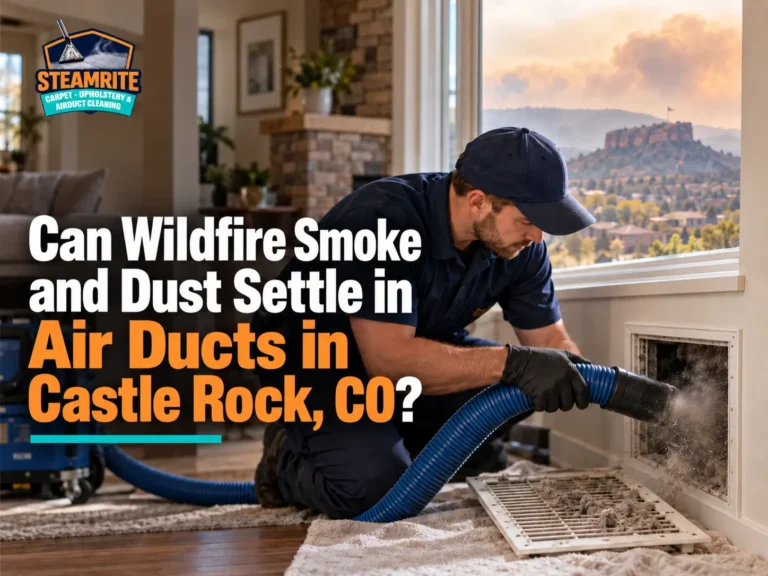

Yes. Suspension of fine dust and wildfires can infiltrate a home, pass through the heating and cooling system, and lead to significant accumulation of fine dust in the air ducts. Castle Rock homeowners concerned about wildfire smoke in their air ducts should first determine whether smoke entered the HVAC system and left behind any noticeable buildup in the ductwork.
Not every home impacted by outdoor smoke will require duct cleaning. The answer will vary based on the amount of smoke that has entered the home, the state of the HVAC filter, visible residue, and whether dust or debris is impacting the system’s operation.
How Wildfire Smoke Infiltration Affects Home HVAC Systems
Wildfire smoke contains fine particles known as PM2.5, meaning particles with diameters of 2.5 micrometers or less. These particles are small enough to travel indoors through open windows, doors, gaps, and some ventilation openings.
When indoors, particles may settle on furniture, floors, and other surfaces. If the heating, ventilation, and air conditioning system is running and circulating contaminated air, some particles can get stuck on the filter or inside components of the HVAC system. Return vents bring air back to the equipment, and supply ducts bring conditioned air back to living areas.
Castle Rock sits at approximately 6,202 feet above sea level, according to the Town of Castle Rock. Its location along Colorado’s Front Range makes wildfire smoke a relevant seasonal concern, although local exposure varies with wind, fire activity, and weather conditions.
Signs Smoke or Dust May Be Affecting Your HVAC System
A dusty return grille doesn’t necessarily indicate the whole duct system is dirty. Don’t make a decision until you see several of the signs at once.
| What you notice | What it may indicate |
| Gray or dark residue near vents | Dust or possible smoke-related particles |
| A filter that becomes dirty quickly | Heavy airborne particle loading or another dust source |
| Persistent smoky odors indoors | Lingering smoke residue may be present on surfaces, furniture, or HVAC equipment |
| Dust returning soon after cleaning | An ongoing dust source, leakage, or inadequate filtration |
| Visible debris inside accessible ducts | A reason to consider professional inspection |
Odor alone cannot confirm that smoke residue is inside the ducts. Porous materials such as carpet, upholstery, curtains, and others can also hold smoke odors. If symptoms or odors continue to occur despite improved outdoor air quality, then consider the indoor environment as a whole instead of relying on duct cleaning to be the sole solution.
What Should Castle Rock Homeowners Check First?
Take some simple steps before scheduling service to get to know the situation.
Start with the HVAC filter. Switch the power off as per the manufacturer’s instructions before taking the filter out. Examine whether it is very dirty, broken, wrongly mounted, or too small or too large. Replace as per equipment instructions if necessary.
Then check the exposed parts of return and supply registers. Search for any unusual material, large amounts of dust, or residue that will reappear after regular cleaning. Never take duct panels out or venture deep into the system without assistance.
During smoky conditions, Colorado health guidance recommends using filtered heating or cooling equipment when appropriate and keeping outdoor air intakes closed. Follow local public-health guidance, and avoid running unfiltered equipment if it could draw more smoke indoors.
Can a Better HVAC Filter Help With Wildfire Smoke?
Yes. Filtration is one of the first ways to reduce airborne particles moving through a central HVAC system. The EPA recommends considering a MERV 13 filter or the highest-efficiency filter the system can accommodate during wildfire smoke events. However, a higher-rated filter is not suitable for every system, so check the equipment manual or consult an HVAC professional first.
Here is how to approach filtration:
- Check compatibility: A filter that restricts airflow beyond what the system can handle may affect performance.
- Ensure a snug fit: Air should not bypass the filter through gaps around its edges.
- Monitor filter condition: Smoke events can load filters faster than usual. Check them more frequently and replace them when dirty, following manufacturer guidance.
- Consider room filtration: A properly sized portable air cleaner can supplement HVAC filtration, especially in rooms where the family spends the most time.
A filter helps capture airborne particles as air passes through it. It does not remove all smoke residue already deposited inside ducts, on furnishings, or on other surfaces.
When Does Air Duct Cleaning Make Sense?
Considering professional air duct cleaning could be beneficial if the inspection reveals excessive debris, dust, or any suspected residue that requires cleaning. It can also come in very handy when dust and contamination are easily visible in easily accessible system parts.
But duct cleaning isn’t always the answer to indoor air quality issues. EPA recommends that you consider duct cleaning if there is significant visible mold growth, vermin, or excessive dust and debris in the duct system. Exposure to smoke does not mean duct cleaning is required.
A qualified technician should explain what they found and which areas need attention before recommending work. Ask whether the inspection covers return ducts, supply ducts, registers, and accessible HVAC components. Be cautious of claims that cleaning will eliminate every indoor pollutant or permanently prevent dust from returning.
What About Smoke Residue on Carpets and Other Surfaces?
Air ducts are not the only components of the indoor environment. Smoke particles may settle on flooring surfaces, upholstery, curtains, and other household surfaces, and normal dust can still enter through doors, windows, and normal daily activities.
Cleaning these areas can be important after a smoke event, particularly if odors or visible residue remain. For example, knowing what causes grout to discolor can help homeowners separate routine dirt buildup in porous grout from smoke particles deposited on surrounding surfaces. The appropriate cleaning method depends on the material and type of residue.
If you are preparing a recently purchased property for occupancy, it is also worth considering which surfaces need attention first. Our guide to surfaces to clean first explains how to prioritize professional cleaning when moving into a Castle Rock home.
A Practical Plan for Castle Rock Homes
Here’s a quick plan to follow after your home gets hit by heavy smoke:
- Check outdoor conditions. Use Colorado’s air-quality resources or the AirNow Fire and Smoke Map to monitor local PM2.5 conditions.
- Limit smoke entry. Keep windows and doors closed when outdoor air is smoky, while maintaining safe indoor temperatures.
- Inspect filtration. Check the HVAC filter and use a compatible, higher-efficiency option when appropriate.
- Clean affected surfaces. Follow suitable cleaning methods for floors, upholstery, and other materials.
- Arrange an inspection if needed. Seek professional help if you see substantial duct debris, suspect contamination, or continue to experience unexplained dust or odors.
Steamrite can help homeowners understand their air duct cleaning options and determine whether a professional assessment is appropriate for their concerns.
Frequently Asked Questions
Can wildfire smoke stay inside air ducts after a fire?
Smoke particles can settle in ductwork or on HVAC parts once smoke has entered your home. How much gets left behind depends on exposure, airflow, filtration, and how your system’s running.
Does a dirty HVAC filter mean my ducts need cleaning?
No. A dirty filter shows that particles have been captured, but it does not prove that the ductwork needs cleaning. Inspect the system and look for additional evidence before deciding.
Will duct cleaning remove every smoke odor?
No. Odors can remain in carpets, upholstery, insulation, and other materials. Duct cleaning may address residue inside the ductwork, but other affected areas may require separate cleaning.
How often should air ducts be cleaned?
No fixed cleaning schedule works for every household. Consider cleaning when inspection reveals substantial debris or another specific problem, rather than relying on an arbitrary annual schedule.
Final Thoughts: Keep Indoor Air Quality in Focus
Wildfire smoke and fine dust can enter Castle Rock homes and contribute to indoor particle buildup, but not every smoky day calls for duct cleaning. Start with filtration, inspect visible areas, and look for evidence before choosing a service. Steamrite can help you evaluate whether air duct cleaning is a sensible next step for your home’s condition and indoor air quality concerns.