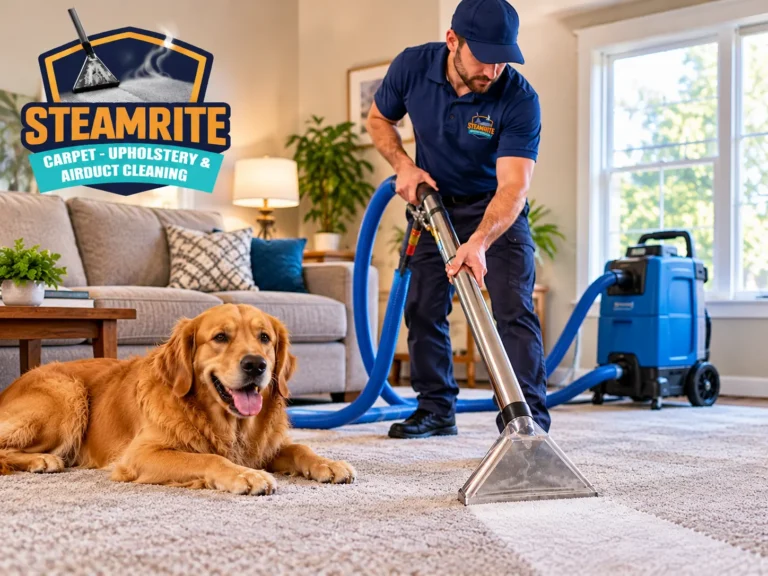
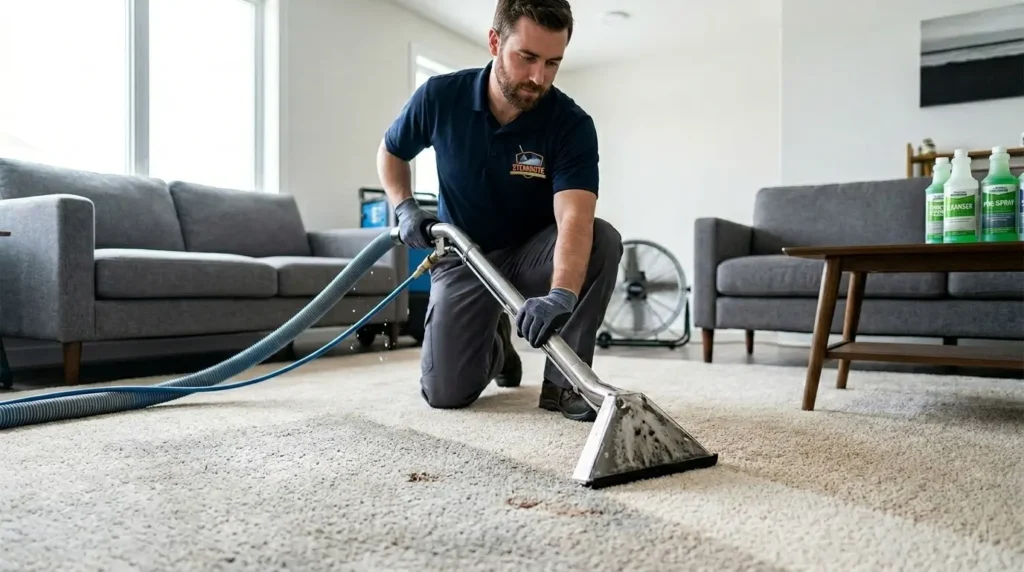
A well-planned service usually starts with checking the carpet and identifying problem areas. The cleaner then prepares the carpet for treatment, deals with areas that need extra attention, performs the main cleaning process, removes loosened soil and moisture, and checks the carpet before finishing.
The exact professional carpet cleaning process can vary from one home to another. Carpet fiber, soil level, stains, pet accidents, room use, and previous cleaning products can all affect the way a carpet should be handled. Steamrite uses truck-mounted hot water extraction for its carpet cleaning service in Aurora.
Knowing what to expect from carpet cleaning helps you prepare the rooms, point out problem areas, and understand what cleaning can and cannot correct.
What Happens Before Professional Carpet Cleaning Starts?
A professional cleaning job should begin with understanding the condition of the carpet.
Before the main cleaning starts, the technician may look at the rooms being cleaned and ask about areas that need special attention. This can include spills, pet accidents, heavy traffic lanes, old stains, or sections that were treated with another cleaning product.
It is useful to point out problems that may not be obvious at first glance. For example, a stain may have returned after a previous cleaning, or a certain area may have been cleaned several times with a home machine.
The purpose of this first step is simple: the cleaning process should match the carpet in front of the technician instead of treating every room the same way.
What Is Checked During a Carpet Inspection?
A carpet inspection helps identify the material, visible soil, stains, wear, and areas that may need a different approach.
The technician may look for:
- Heavy traffic lanes
- Food or drink stains
- Greasy or sticky areas
- Pet-related spots
- Worn carpet fibers
- Loose seams or ripples
- Color changes
- Previous cleaning residue
- Areas around entrances and stairs
Carpet cleaning can remove soil, but it cannot repair every type of damage. A worn traffic path, burn mark, permanent color loss, or damaged fiber may still be visible after cleaning.
The Carpet and Rug Institute recommends using suitable carpet cleaning products and following proper carpet care practices. It also notes that manufacturer requirements may matter for cleaning and warranty protection.
A good pre-inspection helps set realistic expectations before cleaning starts.
How Should You Prepare a Room for Carpet Cleaning?
You do not need to empty the entire room, but giving the technician clear access can make the appointment easier.
Before an Aurora carpet cleaning appointment, remove small items from the floor when possible. This may include:
- Shoes
- Toys
- Pet bowls and toys
- Floor baskets
- Small decorations
- Loose electrical cords
- Lightweight items that block carpeted areas
If you have a stain or problem area, avoid covering it with furniture before the cleaner arrives.
Large sofas, beds, dressers, and other heavy furniture may be handled differently depending on the service scope. Ask in advance what can be moved and what should stay in place.
Preparation should focus on access and safety rather than turning the appointment into a full furniture-moving project.
Is Vacuuming Included in Professional Carpet Cleaning?
Dry soil removal is an important part of carpet care, but whether the cleaning company performs the vacuuming or asks you to do it first can depend on the service.
Vacuuming removes loose dirt, dust, hair, and grit before moisture is introduced. The Carpet and Rug Institute describes regular vacuuming as a core part of carpet care and recommends more frequent vacuuming in high-traffic areas.
If you are asked to vacuum before the appointment, give extra attention to open floor areas, entrances, hallways, and places where pet hair collects.
Vacuuming before deeper treatment also helps keep dry debris from becoming mixed into the wet-cleaning stage.
Between professional appointments, a consistent carpet maintenance routine can help control loose soil and everyday spills.
What Happens to Stains and High-Traffic Areas?
Problem areas are usually identified before the main cleaning begins because they may need more attention than the rest of the carpet.
These areas can include:
- Entry paths
- Hallways
- Stairs
- Food spills
- Drink stains
- Oily soil
- Pet spots
- Sticky residue
- Old stains
A suitable pre-treatment may be used to help loosen soil before extraction.
The treatment should depend on the stain and carpet rather than using the same chemical for every spot. The Carpet and Rug Institute advises testing cleaning products in an inconspicuous area and following product directions carefully.
Stain treatment also has limits. Results depend on the substance involved, carpet fiber, age of the stain, previous cleaning attempts, and whether the mark is actually soil or permanent fiber damage.
Professional cleaning should not be presented as a guarantee that every stain will disappear.
What Does Pre-Treatment Do?
Pre-treatment is used on areas where soil needs extra help before the main cleaning stage.
Busy carpeted areas may contain body oils, tracked-in soil, food residue, or other material that does not release easily with a simple pass of cleaning equipment.
A suitable pre-treatment can help loosen this material so it can be removed more effectively during the main cleaning process.
The type and amount of cleaning product matter. More chemical is not automatically better.
CRI’s guidance for spot cleaning also warns against overusing cleaning products and advises removing remaining product after treatment because residue can contribute to re-soiling.
This is why carpet condition, product choice, and extraction should work together.
What Happens During the Main Carpet Cleaning Process?
Steamrite’s professional carpet cleaning in Aurora, CO uses truck-mounted hot water extraction equipment.
Hot water extraction applies cleaning solution and water to the carpet and then uses extraction to recover loosened soil and moisture.
During the main cleaning stage, the technician may work across the carpet in sections and give additional attention to busy paths or pre-treated areas.
The job can involve:
- Preparing the carpet
- Applying suitable treatment where needed
- Cleaning the carpet with the selected process
- Extracting loosened soil and moisture
- Making additional extraction passes where needed
- Checking problem areas before moving on
The purpose is not simply to make the carpet wet. The cleaning solution needs to loosen soil, and the extraction stage needs to remove as much of that loosened material and moisture as practical.
Why Is Extraction an Important Part of Cleaning?
With hot water extraction, cleaning and removal happen together.
Water and cleaning solution help release soil from the carpet, while extraction pulls moisture, solution, and loosened material back out.
Strong extraction also helps limit the amount of moisture left in the carpet.
Drying conditions still vary from one home to another. Carpet thickness, fiber, indoor temperature, airflow, humidity, and the amount of moisture used can all affect drying.
Because those factors change from job to job, a responsible carpet cleaning service guide should not promise one exact drying time for every carpet.
Good airflow and following the technician’s aftercare instructions can support the drying process.
Is Spot Treatment Always Included?
Some normal spots may be addressed during the standard cleaning process, but every type of stain or contamination should not be assumed to be included automatically.
Certain problems may need separate treatment or a different service.
Examples can include:
- Deep pet urine contamination
- Odor that has reached carpet padding
- Large oil-based stains
- Permanent dye changes
- Carpet repair
- Water damage
- Specialty or delicate carpet materials
A surface stain and a problem below the carpet are not the same thing.
For example, pet urine that reaches the backing or pad may require more than ordinary surface cleaning. Steamrite separates professional carpet cleaning from its dedicated pet urine and odor treatment service.
The best time to clarify these issues is during inspection, before treatment begins.
Does Professional Cleaning Include Carpet Repairs?
No. Carpet cleaning and carpet repair are different services.
Cleaning can improve the condition of soiled carpet, but it does not fix physical damage such as:
- Burns
- Tears
- Loose seams
- Permanent fiber wear
- Large ripples
- Missing fibers
- Permanent color loss
A heavily worn traffic lane may look better after soil is removed, but cleaning cannot rebuild damaged carpet fibers.
This is an important part of setting realistic expectations.
The technician should be able to separate a cleaning problem from damage that requires another type of service.
What Happens After the Main Cleaning Is Finished?
The last part of the professional carpet cleaning steps is checking the carpet and preparing it for drying.
The technician may review areas that received extra treatment and make additional extraction passes if needed.
After cleaning, homeowners are usually asked to limit unnecessary traffic while the carpet is damp.
Simple aftercare may include:
- Keeping outdoor shoes off the carpet
- Maintaining airflow through the room
- Following instructions about furniture
- Keeping pets away from damp areas
- Avoiding new spills during drying
- Waiting until the carpet is ready before returning heavy items
The exact instructions can vary based on the carpet and cleaning conditions.
What Should Be Checked Before the Technician Leaves?
Before the job is complete, take a quick look at the cleaned areas.
This is a good time to discuss:
- Areas that received stain treatment
- Heavy traffic sections
- Any marks that remain
- Expected drying conditions
- Furniture instructions
- Room access during drying
- Basic aftercare
If a mark remains, ask whether it is still removable soil or whether it appears to be permanent staining, wear, or color damage.
Clear communication at this stage helps prevent confusion later.
It also gives you a chance to understand what normal drying should look like in your home.
What Should Aurora Homeowners Expect During the Appointment?
Homes in Aurora can vary widely in layout, carpet use, access, and soil level.
A smaller apartment may have a simple open layout, while a multi-level home may include carpeted stairs, several bedrooms, hallways, and busy family areas.
Seasonal outdoor conditions can also change what gets tracked indoors. Dry soil, wet shoes, pets, and busy entrances can make some sections of carpet more heavily used than others.
That local context should affect the inspection and cleaning plan, not just the wording of the page.
Steamrite’s professional carpet cleaning in Aurora, CO uses truck-mounted hot water extraction and serves residential and commercial carpeted spaces in the area.
What Questions Should You Ask Before Cleaning Begins?
A few simple questions can make the scope of the job clearer.
Ask:
- Which rooms are included?
- Should I vacuum before the appointment?
- What happens to heavy furniture?
- How will visible stains be handled?
- Are pet-related areas treated differently?
- What cleaning process will be used?
- Are there any concerns about my carpet type?
- What should I do while the carpet dries?
- What aftercare should I follow?
These questions are about understanding your own appointment, not comparing companies.
You should know what work will be completed before the cleaning begins.
Final Thoughts
Understanding what does professional carpet cleaning include helps you know what should happen from the start of the appointment to the final carpet check.
A complete professional carpet cleaning process is more than running a machine across the floor. Inspection, preparation, treatment, controlled cleaning, extraction, and aftercare all serve a different purpose.
The exact scope should reflect your carpet fiber, soil level, stains, room use, and any special problem areas.
If you need to confirm what is included in your own Aurora carpet cleaning appointment, you can contact Steamrite with details about your rooms and carpet condition.
FAQs
What does professional carpet cleaning include?
The service can include inspection, carpet preparation, dry soil removal, treatment of problem areas, the main cleaning process, extraction, a final check, and aftercare instructions. The exact scope depends on the carpet and service.
What happens during professional carpet cleaning?
The technician first checks the carpet and problem areas. The carpet is then prepared and treated where needed before the main cleaning and extraction process begins.
Should I vacuum before carpet cleaners arrive?
Ask the cleaning company before your appointment. Some services include pre-vacuuming, while others may ask the homeowner to remove loose soil first.
Does carpet cleaning include stain removal?
Common spots may be treated as part of the cleaning process, but difficult stains, permanent damage, pet contamination, or specialty treatments may require additional assessment.
Can professional carpet cleaning remove every stain?
No. The result depends on the stain, carpet fiber, how long the stain has been present, previous cleaning products, and whether permanent damage has occurred.
Does professional carpet cleaning include moving furniture?
It depends on the service scope and furniture size. Small items are usually best removed before the appointment. Heavy furniture should be discussed with the cleaner in advance.
What should I do after professional carpet cleaning?
Follow the cleaner’s drying and aftercare instructions. Limit unnecessary traffic while the carpet is damp and maintain suitable airflow through the room.