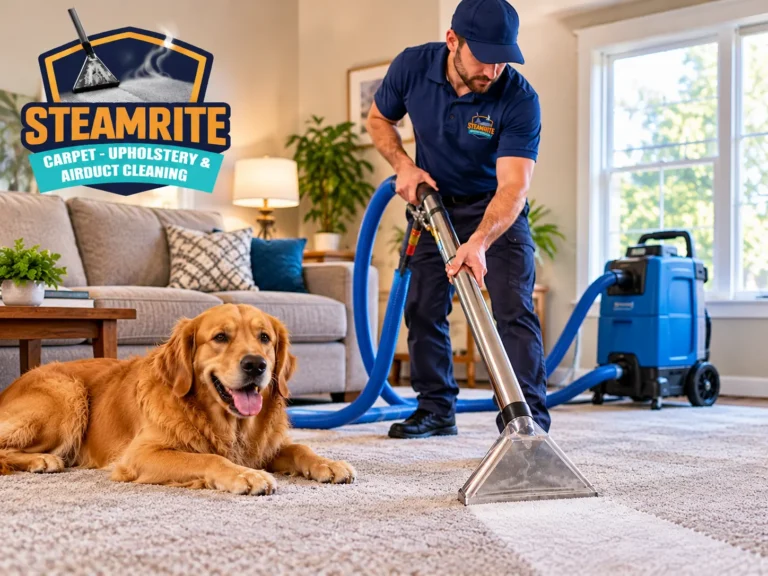
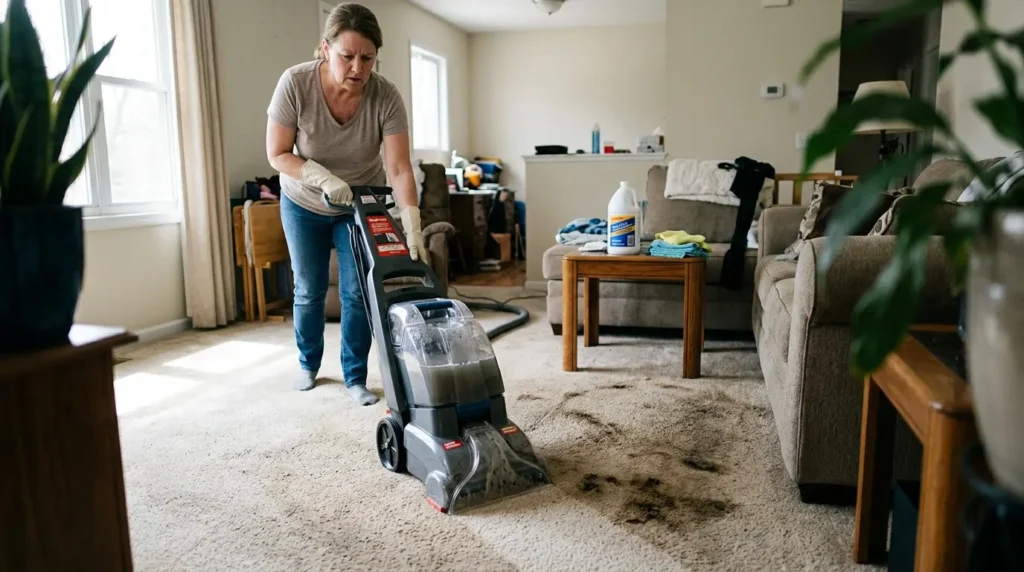
DIY deep carpet cleaning can work for routine soil in a standard household carpet when you know the carpet type, use a suitable cleaning product, and follow the extractor and carpet manufacturer’s directions. Start by vacuuming well, test products in a hidden area, work in small sections, and avoid soaking the carpet. Use extraction passes to remove as much moisture and cleaner as practical.
Stop DIY cleaning if the carpet shows color change, stays unusually wet, has deep pet contamination, has an unknown or delicate fiber, or the same problem keeps returning.
This guide explains how to deep clean carpet with a rental or consumer extractor without turning a simple cleaning job into a moisture, residue, or carpet-damage problem.
When Does DIY Deep Carpet Cleaning Make Sense?
DIY extraction is most suitable when the problem is normal household soil rather than serious contamination or carpet damage.
For example, you may choose to deep clean carpet at home when a room looks dull after regular vacuuming, light traffic soil has built up, or the carpet needs a general refresh and the manufacturer’s instructions allow extraction cleaning.
Before starting, make sure you can answer three basic questions:
- What type of carpet are you cleaning?
- Does the carpet manufacturer allow the planned cleaning method?
- Do you understand how to use the extractor correctly?
The Carpet and Rug Institute recommends choosing cleaning products and equipment that are suitable for carpet. Its Seal of Approval program tests extractors for cleaning performance, residual moisture, and appearance retention.
If you cannot identify the carpet or its care requirements, guessing with water and cleaning solution is not a good starting point.
What Should You Do Before Using a Rental Carpet Cleaner?
Good preparation can make a bigger difference than adding more cleaning solution.
Start by clearing small items from the area. Move lightweight furniture when it is safe to do so, secure loose cords, and make sure you can move the extractor through the room without repeatedly stopping.
Then inspect the carpet.
Look for:
- Old stains
- Pet accident areas
- Loose seams
- Damaged fibers
- Unusual color changes
- Areas that already feel damp
- Spots previously treated with another product
A general deep-cleaning machine is not designed to solve every one of these conditions.
You should also read the machine instructions before filling the tank. Rental extractors can differ in how their tanks, solution systems, triggers, and recovery systems work.
Following the actual equipment directions is safer than assuming every machine operates the same way.
Should You Vacuum Before Deep Cleaning Carpet?
Yes. Vacuuming first removes loose dry soil before water and cleaning solution are introduced.
This is one of the most useful rental carpet cleaner tips because dry soil is easier to remove while it is still dry. Hair, grit, crumbs, dust, and other loose material can otherwise become mixed into the wet-cleaning process.
CRI-approved deep-cleaning systems commonly include pre-vacuuming as part of the cleaning sequence.
Vacuum slowly and give extra attention to:
- Entry paths
- Hallways
- Areas around furniture
- Carpet near exterior doors
- Places where pet hair collects
- Busy walking paths
Daily and weekly vacuuming belongs to normal carpet maintenance. This guide is focused only on the deeper extraction stage that may be done less often when the carpet condition calls for it.
Should You Test the Cleaning Product First?
Yes. Test any unfamiliar carpet-cleaning product in a small hidden area before treating a large visible section.
Carpets can differ in fiber, dye, finish, backing, and previous treatments. A product that appears harmless on one carpet may not be suitable for another.
The Carpet and Rug Institute advises pretesting carpet-cleaning products in an inconspicuous area for color transfer or carpet changes.
Follow the cleaner’s label and the carpet manufacturer’s care directions.
Do not assume that adding extra product will improve cleaning. More detergent can make rinsing and extraction harder.
If the test area shows color transfer, texture change, or another unwanted reaction, stop using that product.
How Do You Use a Carpet Extractor Without Over-Wetting the Carpet?
The main goal is to clean the carpet while controlling moisture.
With an extractor, a wet pass applies cleaning solution or rinse water while the machine recovers moisture. A dry pass uses extraction without adding more liquid.
One of the most common DIY carpet cleaning mistakes is making repeated wet passes because the carpet still looks dirty. This can add more moisture faster than the machine removes it.
Instead, work in manageable sections.
Follow the machine’s instructions for:
- Applying the approved cleaning solution
- Moving the machine at the recommended pace
- Overlapping passes where required
- Extracting the applied moisture
- Making additional dry passes when appropriate
Watch the recovery tank. You should be removing moisture, not simply adding it.
CRI’s cleaning guidance warns against over-wetting carpet, and its extractor testing includes residual-moisture performance as one measure of equipment quality.
Why Is Over-Wetting a Problem?
Carpet is more than the surface fibers you can see.
Below the pile are backing materials, and beneath the carpet may be a separate pad. Applying too much moisture can make drying more difficult because water can move deeper than the visible surface.
The risk increases when:
- Too many wet passes are made
- Extraction is weak
- The machine is moved too quickly during recovery
- Large amounts of solution are applied
- Airflow is poor
- The carpet or pad already contains moisture
Do not keep adding water simply because one area needs more cleaning.
If the carpet becomes much wetter than expected, focus on extraction and drying rather than adding another treatment.
A darker area is also not always removable soil. It may be wear, permanent staining, or fiber damage that more water will not correct.
How Much Cleaning Solution Should You Use?
Use the amount specified by the cleaning-product and equipment manufacturer.
More solution does not mean a deeper clean.
Too much detergent can leave material behind if the extractor does not remove it fully. That residue may change how the carpet feels and can attract new soil.
CRI warns that cleaning-product residue can contribute to faster re-soiling and recommends removing remaining cleaning solution rather than leaving it in the carpet.
This is also why universal homemade cleaning formulas do not belong in a DIY deep carpet cleaning plan.
A homemade mixture may behave differently depending on:
- Carpet fiber
- Dye
- Existing treatment
- Product concentration
- Previous cleaning chemicals
- Machine design
Use products that are suitable for both the carpet and the extractor, and follow their instructions.
What Are Dry Passes and Why Do They Matter?
A dry pass means running the extractor over the carpet without adding more cleaning solution or water.
The purpose is to recover additional moisture after the cleaning pass.
This step matters because a carpet extractor has two jobs: it helps with cleaning, but it also needs to recover the moisture used during that process.
The exact number of dry passes should not be treated as a universal rule. Equipment, carpet construction, soil level, and moisture conditions vary.
Instead, follow the extractor instructions and pay attention to how much water the machine continues to recover.
If another extraction pass is still pulling a noticeable amount of moisture from the carpet, additional recovery may be useful within the machine manufacturer’s guidance.
How Do You Help Carpet Dry After DIY Cleaning?
Once extraction is complete, stop adding moisture and focus on drying.
Drying depends on several conditions, including:
- How much water was applied
- How much moisture the extractor recovered
- Carpet thickness
- Carpet backing
- Indoor airflow
- Temperature
- Humidity
There is no reliable universal drying time for every DIY job.
Air movement can help. CRI-certified extraction procedures may include air movers or fans to support drying after extraction.
Keep unnecessary traffic off damp carpet. Clean shoes, socks, pets, and furniture can all affect freshly cleaned areas.
Do not return heavy furniture to damp carpet unless the equipment or carpet-care instructions say it is appropriate.
If the carpet remains unusually wet or develops a persistent musty smell, the problem should not be solved by applying another round of cleaner.
Why Does Carpet Sometimes Feel Sticky After DIY Cleaning?
A sticky or stiff feel can be a sign that cleaning solution was not fully removed.
This can happen when too much detergent was added, the solution was too concentrated, rinsing was incomplete, or the extractor left more cleaning product behind than expected.
Residual cleaner matters because it can attract soil. CRI specifically warns that residues left by spot-cleaning products may contribute to rapid re-soiling.
Avoid solving this problem by adding a different household chemical on top.
Check the carpet and machine instructions first. If the carpet requires further extraction or rinsing, use only a method that is suitable for that carpet and the equipment.
If you do not know what products have already been used, repeated DIY treatment can make the problem harder to diagnose.
What DIY Carpet Cleaning Mistakes Should You Avoid?
Most problems come from technique rather than from the idea of DIY cleaning itself.
The biggest DIY carpet cleaning mistakes include using too much product, skipping the vacuuming stage, making too many wet passes, failing to extract enough moisture, and continuing to treat a carpet when the material or problem is unclear.
Other mistakes include:
- Scrubbing carpet aggressively
- Mixing several cleaning products
- Ignoring manufacturer instructions
- Using an untested solution across an entire room
- Treating carpet damage as if it were dirt
- Repeatedly soaking a stain that does not improve
- Returning furniture before the carpet is ready
- Walking heavily over damp carpet
CRI advises blotting rather than scrubbing during spot treatment because aggressive scrubbing can damage carpet texture.
The same careful approach should carry through the whole DIY job.
When Should You Stop DIY Deep Carpet Cleaning?
Stop when continued cleaning is more likely to add moisture or chemicals than solve the actual problem.
Professional assessment becomes more appropriate when you find:
- Carpet fiber or care instructions you cannot identify
- Color bleeding or color change
- Loose seams or visible carpet damage
- Persistent odor after cleaning
- Carpet that remains unusually wet
- Heavy contamination below the surface
- Repeated stains that return after drying
- Large areas of heavy soil that the rental unit is not improving
- Delicate or specialty carpet
- A previous DIY treatment that left heavy residue
Pet urine is a good example. A rental machine may clean the visible surface, but contamination can sometimes reach the carpet backing or pad. Repeatedly soaking that area does not guarantee that the source has been removed.
When routine DIY extraction is no longer suitable, professional carpet cleaning in Aurora, CO uses truck-mounted hot water extraction equipment for carpet cleaning services.
Does DIY Deep Cleaning Work for Every Carpet?
No.
Some carpets require more careful handling because fiber, construction, dye stability, backing, or manufacturer requirements can change how they should be cleaned.
Before using a carpet extractor rental, check any label, purchase paperwork, warranty information, or manufacturer care guide you have.
This matters even more when the carpet is:
- Delicate
- Unusually thick
- High pile
- Made from a specialty fiber
- Already damaged
- Previously treated with an unknown chemical
CRI notes that even routine equipment such as vacuums can affect some high-pile carpet differently, which shows why carpet construction matters when choosing cleaning equipment.
When the material is uncertain, identify it before adding moisture or cleaning products.
DIY Deep Carpet Cleaning in Aurora Homes
For homeowners doing DIY deep carpet cleaning in Aurora, CO, indoor conditions matter more than simply having an Aurora address.
Drying can change based on airflow and indoor humidity. Entry areas may also collect more soil than low-use rooms, especially when outdoor dirt is tracked through the home.
Focus on the carpet in front of you.
Prepare the room, vacuum well, keep moisture controlled, and make sure the extractor is recovering water effectively.
If several rooms need heavy treatment or the carpet has problems beyond normal soil, a consumer machine may not be the best tool for the job.
The goal of DIY cleaning should be controlled improvement, not making repeated passes until the carpet is saturated.
What Should You Do After DIY Deep Cleaning?
Once the carpet has been extracted, leave it alone long enough to dry properly.
Keep the room ventilated where practical and limit traffic over damp areas. Check places that received extra treatment because those sections may contain more moisture than the rest of the room.
After the carpet has dried, look at the result.
Ask:
- Does the carpet feel normal?
- Is there sticky residue?
- Did the soil improve?
- Did a stain return?
- Is any section still damp?
- Is there a new or recurring odor?
Do not immediately repeat the entire cleaning process if the result is poor.
A problem that returns after drying may need a different solution rather than another wet cleaning pass.
Final Thoughts
DIY deep carpet cleaning can be a practical option when the carpet has normal household soil, the material is suitable for extraction, and you can control the amount of cleaning solution and moisture used.
Good results depend on preparation. Vacuum first, follow manufacturer instructions, spot-test unfamiliar products, avoid excessive detergent, use wet passes carefully, recover moisture with extraction passes, and allow the carpet to dry fully.
The most important part of knowing how to deep clean carpet is also knowing when to stop. If the carpet stays wet, changes color, contains deeper contamination, or fails to improve after careful cleaning, repeating the same DIY process can create more problems.
For carpet conditions that have moved beyond routine home extraction, contact Steamrite for professional carpet cleaning and describe the carpet type, affected area, and any products or rental equipment already used.
FAQs
Can you deep clean carpet yourself?
Yes. DIY deep carpet cleaning can work for normal household soil when the carpet allows extraction cleaning and you follow the carpet, cleaning-product, and machine instructions.
Should you vacuum before using a carpet cleaner?
Yes. Pre-vacuuming removes loose dry soil, hair, and debris before moisture is added. It is also part of many tested carpet extraction processes.
Can a rental carpet cleaner damage carpet?
Poor technique can cause problems. Using unsuitable products, over-wetting, aggressive treatment, or ignoring carpet-care instructions can affect the carpet or make drying difficult.
How do you avoid over-wetting carpet?
Use the extractor according to its instructions, avoid unnecessary wet passes, make effective extraction passes, and stop adding solution once the cleaning stage is complete.
Why does carpet feel sticky after DIY cleaning?
Cleaning-product residue may remain when too much detergent is used or the carpet is not rinsed and extracted well enough. Residue can also contribute to faster re-soiling.
How long does DIY-cleaned carpet take to dry?
There is no single drying time. Moisture level, extraction, carpet construction, airflow, temperature, and humidity all affect drying.
When should you stop DIY carpet cleaning?
Stop when you see color change, excessive moisture, persistent odor, deep contamination, carpet damage, or a problem that keeps returning after cleaning.