

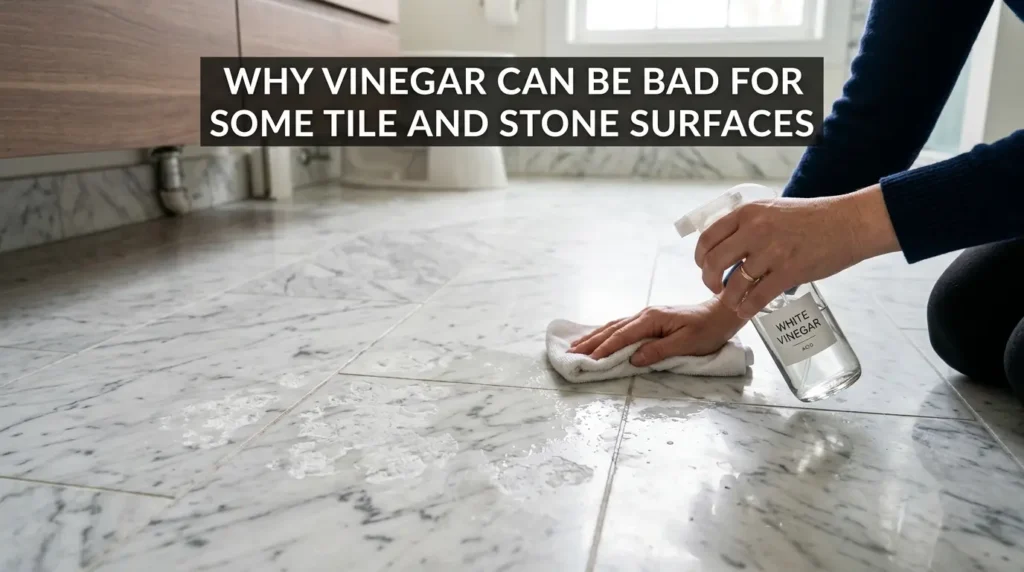
Vinegar is cheap, easy to find, and often promoted as a natural cleaner. It can cut through some household residue, so many homeowners use it on bathroom walls, kitchen floors, shower grout, and stone surfaces.
However, one cleaner does not suit every tiled area. The answer to is vinegar safe for tile and grout depends on the tile material, grout type, finish, sealer, and how often vinegar is used. Vinegar may leave some glazed ceramic or porcelain tile unchanged, but it can slowly wear cement grout and visibly damage marble, limestone, travertine, and other acid-sensitive stone.
This guide explains why vinegar creates problems, which surfaces face the greatest risk, and what safer products homeowners can use instead. It also covers Aurora’s mineral-rich water, entryway residue, and signs that professional cleaning may be needed.
Is Vinegar Safe for Tile and Grout?
Vinegar is not a safe universal cleaner for tile and grout.
It is acidic. That acidity can react with cement-based grout and calcium-rich natural stone. Repeated cleaning may wear the grout surface or leave dull, pale marks on stone.
The Tile Council of North America advises using an alkaline cleaner rather than an acid-based product for cement grout. It explains that vinegar reacts with grout in a similar way to its familiar reaction with baking soda.
Vinegar may be less risky on a sound, fully glazed ceramic or porcelain tile face. Yet the liquid rarely touches only the tile. It also reaches:
- Grout joints
- Silicone or caulk
- Metal trim
- Sealers
- Decorative finishes
- Nearby natural stone
- Cracks and chipped edges
You therefore need to judge the full tiled surface, not just the main tile material.
Why Can an Acidic Cleaner Cause Damage?
Vinegar contains acetic acid. Household vinegar is diluted, but it is still acidic enough to react with some mineral and cement-based surfaces.
An acidic product may dissolve a small amount of the material each time it is used. One quick use may not create obvious damage. Repeated cleaning can slowly wear the surface and make it rougher or weaker.
Damage may appear as:
- Dull patches
- Light or pale marks
- Rough grout
- Grout powder
- Loss of shine
- Uneven color
- A surface that stains faster
- Worn grout edges
Diluting vinegar reduces its strength, but it does not change the fact that the solution remains acidic. A weaker acid may act more slowly rather than becoming suitable for every surface.
Does Vinegar Damage Cement-Based Grout?
Yes, repeated vinegar use can damage cement-based grout.
Traditional grout contains cement. Acid reacts with the cement portion of the joint. Over time, this can remove material from the grout’s upper surface.
The Tile Council warns that acids can dissolve cement grout. It recommends alkaline cleaners and tile-and-grout products instead of acid-based household solutions.
Possible signs of grout wear include:
- Sand or powder appearing during cleaning
- Grout becoming lower than the tile
- Small holes in the joint
- Rough or uneven lines
- Grout breaking away near tile edges
- Faster dirt absorption
- A lighter or faded surface
Not every crack is caused by vinegar. Grout may crack because of movement, age, moisture, or installation problems. However, acid cleaning can add stress to grout that is already weak.
Stop using vinegar when the grout feels soft, releases particles, or has visible gaps. Cleaning cannot rebuild missing material.
Can Vinegar Remove Grout Sealer?
Vinegar may affect some grout sealers or coatings. The result depends on the product and its chemical resistance.
A sealer is meant to reduce stain absorption. It does not make grout resistant to every cleaner. Repeated acid exposure may weaken the protection or cause uneven wear.
You may notice that:
- Water begins soaking into grout faster
- Some grout lines darken while others do not
- The surface becomes patchy
- Stains enter more easily
- A topical coating begins to peel or turn cloudy
Do not apply more sealer over a floor that still contains vinegar, soap, dirt, or moisture. The joints should first be rinsed, dried, and inspected.
Follow the grout and sealer manufacturers’ care instructions. A product approved for one sealer may not suit another.
Why Is Vinegar Risky for Natural Stone?
Natural stone contains minerals that may react strongly with acid. Marble, limestone, and travertine are especially at risk because they contain calcium-based minerals.
Vinegar can etch these stones. Etching is chemical damage, not normal dirt. It changes the stone surface and often creates a dull, light, or rough mark.
The Natural Stone Institute warns that products containing vinegar, lemon, or other acids may dull or etch calcium-rich stone. It recommends neutral cleaners, stone soap, or mild detergent for routine care.
Daltile provides similar guidance. It says natural-stone cleaners should not contain acid and warns that even a light vinegar-and-water solution can etch and eventually damage many types of stone.
Marble
Vinegar damage to marble can appear very quickly. The polished finish may develop a pale ring, dull patch, or rough area.
The mark cannot usually be washed away because the acid has changed the surface itself. Polishing or restoration may be needed.
Limestone
Limestone is also highly sensitive to acids. Vinegar can dull the finish and open the surface, making later staining easier.
Travertine
Travertine belongs to the same calcium-rich stone family. Vinegar can damage the stone and may affect fillers used in its natural holes.
Granite
Granite is generally more acid-resistant than marble or limestone, but that does not make vinegar a recommended routine cleaner. Different granite slabs contain different minerals, and applied sealers may react differently.
The Natural Stone Institute advises homeowners not to use vinegar on granite without checking the stone’s mineral makeup and the compatibility of any sealer or treatment.
Slate and Other Stone
Slate, quartzite, and other stones also vary. Surface coatings, mineral content, finish, and sealer can change how they react.
A stone-specific, pH-neutral product is safer than testing a homemade acid mixture.
Is Vinegar Safe for Ceramic Tile?
Vinegar may not visibly damage the face of sound glazed ceramic tile during limited use. The glaze acts as a protective surface.
However, problems may still occur around the tile. Vinegar can reach cement grout, chipped edges, decorative coatings, and metal trim.
Avoid vinegar on tile floors when:
- Grout is cement-based
- Tiles are cracked or chipped
- Decorative glaze is present
- The floor contains natural-stone accents
- A sealer or coating is unknown
- The manufacturer warns against acid
- Metal transitions may be affected
A tile-safe cleaner is a more predictable choice. Daltile recommends removing dry soil first, using a suitable cleaning product, rinsing with clean water, and removing excess water rather than allowing dirty solution to remain on the floor.
Can You Use Vinegar on Porcelain Tile?
The dense porcelain tile body often resists liquids well. Many glazed porcelain surfaces may show no immediate change after contact with diluted vinegar.
Yet porcelain floors still include grout. Polished, matte, coated, or textured finishes may also have their own care instructions.
Vinegar may create trouble when:
- Cement grout surrounds the porcelain
- The floor includes marble or stone borders
- Cleaner dries and leaves streaks
- Acid reaches damaged joints
- The porcelain has a special coating
- A grout sealer is present
- Metal trim surrounds the tiled area
Use the tile manufacturer’s approved cleaner. Sweep or vacuum grit first, especially on polished tile, because fine particles can scratch the finish during wet cleaning.
Why Does Vinegar Sometimes Appear to Work?
Vinegar can dissolve certain mineral deposits and cut through some residue. This may make a shower door, fixture, or tile surface look cleaner at first.
The immediate result can hide slower damage. A homeowner may see less film but not notice that the grout or stone has become slightly rougher.
A rougher surface can later hold more dirt. The homeowner then uses vinegar more often, which may continue the wear.
The cleaner may also appear to work because it removes one type of buildup while leaving another behind. Soap scum, grease, mold-like growth, cement haze, and mineral deposits do not all need the same treatment.
Identify the surface and the stain before selecting a cleaner.
Is Vinegar Good for Hard-Water Deposits?
Vinegar can dissolve some mineral deposits, but it is not safe for every surface that holds those deposits.
Aurora’s 2026 water-quality data lists average hardness of 136 parts per million, with a reported range of 87 to 198 ppm. This mineral content can contribute to visible film on shower tile, grout, glass, and fixtures.
Aurora homeowners may notice:
- White marks on dark tile
- Cloudy shower glass
- Crust around fixtures
- Dull grout lines
- Film mixed with soap residue
It is tempting to spray the full shower with vinegar. That may be risky when the shower includes natural stone or cement grout.
Use a mineral-deposit cleaner approved for the exact surface. A product that is safe on shower glass may not be safe on marble, grout, or metal trim.
Regular drying can slow mineral buildup. Squeegee walls, wipe fixtures, and remove standing water before the deposits become thick.
Can Vinegar Clean Mold From Shower Grout?
Vinegar should not be the default cleaner for dark shower grout. The dark material may be mold-like growth, soap residue, mineral film, or permanent staining.
Surface mold on sound, compatible hard surfaces can often be cleaned with detergent and water, followed by full drying. Moisture control is also needed to stop repeated growth.
Using vinegar does not repair:
- Failed shower caulk
- Cracked grout
- A leaking fixture
- Weak ventilation
- Moisture behind tile
- Damaged wallboard
When the grout is cement-based or the shower contains natural stone, vinegar introduces an added damage risk.
Use a tile-safe product and correct the moisture source. Call the correct professional when growth is widespread or appears to extend behind the tile.
What Are Safer Alternatives to Vinegar?
The best alternative depends on the surface and type of buildup.
For Cement Grout
Use an alkaline or purpose-made grout cleaner. The Tile Council recommends alkaline products rather than acid-based cleaners for cement grout.
Use a nylon brush, then rinse and remove the dirty water. Do not allow cleaner and loosened soil to dry back inside the joints.
For Ceramic and Porcelain Tile
Use a cleaner approved by the tile manufacturer. A neutral or mild tile cleaner is often suitable for regular care.
A safe routine includes:
- Vacuuming or sweeping loose grit
- Diluting the cleaner correctly
- Working in small sections
- Using a microfiber mop or nylon brush
- Rinsing with clean water
- Removing excess water
- Drying the floor
For Natural Stone
Use a pH-neutral stone cleaner, stone soap, or mild detergent approved for the material. Rinse well and dry the surface with a soft cloth.
Avoid acid, bleach, abrasive powder, and rough pads unless the stone supplier clearly approves them.
For Soap Scum
Use a non-acidic soap-scum remover approved for the tile and grout. Let it work for the label’s recommended time, scrub gently, and rinse well.
For Entryway Dirt
Vacuum dry grit before mopping. Use clean water and change it before it becomes cloudy.
Aurora uses liquid and granular deicers during snow removal. Residue carried indoors on shoes can mix with water and settle into entryway grout.
Use mats inside and outside the door. Remove wet shoes and wipe winter residue before it dries.
Can Baking Soda Be Used Instead?
Baking soda is mildly abrasive. It may help with light soil on some durable surfaces, but it is not safe for every finish.
It may scratch:
- Polished stone
- Glossy decorative tile
- Soft coatings
- Some metal trim
- Worn glazed surfaces
Do not mix baking soda with vinegar as a standard grout-cleaning method. The bubbling reaction does not prove that the mixture is deep-cleaning the grout. The vinegar can still react with cement or stone.
A labeled product provides clearer directions about material safety, contact time, rinsing, and protective equipment.
What Should You Do After Accidentally Using Vinegar?
Do not panic after one use. The result depends on the surface, strength, contact time, and condition.
Take these steps:
- Stop using the vinegar.
- Rinse the surface well with clean water.
- Remove the rinse water.
- Dry the area with a soft cloth.
- Check the surface in normal light.
- Watch for dullness, roughness, or grout powder.
- Do not apply another strong cleaner.
- Contact a tile or stone professional if damage is visible.
Do not try to remove a dull marble mark with more acid or abrasive powder. Etching is surface damage and may require polishing.
If cement grout is releasing particles, avoid heavy brushing. The joints may need professional inspection or repair.
What Does Vinegar Damage Look Like?
Acid damage can look different from ordinary dirt.
Possible signs include:
- A dull ring on marble
- Pale patches on dark stone
- Loss of polished shine
- Rough stone texture
- Powdery grout
- Low or worn grout joints
- Uneven grout color
- A damaged sealer
- Faster water absorption
- New staining after cleaning
Mineral film normally sits above the surface. Etching changes the surface itself.
A simple wipe test may help. If a dull mark stays after gentle cleaning and drying, it may be damage rather than residue.
Avoid guessing on valuable natural stone. A stone-care professional can often identify whether the problem is etching, staining, residue, or wear.
When Should You Call a Professional?
Professional help is useful when the surface is unknown, natural stone is present, or home cleaning has created dull or uneven results.
Call a professional when:
- Marble or travertine has lost its shine
- Grout releases sand or powder
- Dark joints remain after safe cleaning
- A large floor holds cleaner residue
- Several materials meet in one area
- A sealer has become cloudy
- The tile has a special finish
- You are unsure which product is safe
- Grout is cracked or missing
- The floor needs deep extraction
Steamrite offers tile and grout cleaning Aurora CO services for suitable residential and commercial surfaces. Its service page lists inspection, professional cleaning solutions, scrubbing, extraction, and optional sealing based on the surface condition.
Cleaning cannot repair etched natural stone, loose tile, failed caulk, or missing grout. Steamrite or another qualified specialist should explain when restoration or repair is needed instead.
Choose Safer Tile Care With Steamrite
The answer to is vinegar safe for tile and grout is not a simple yes. Vinegar may leave some glazed tile unchanged, but it can wear cement grout and damage natural stone.
Use a cleaner made for the complete tiled surface. Check the tile, grout, sealer, finish, and nearby materials before applying any product.
For grout cleaning Aurora CO, Steamrite can inspect the surface and recommend a cleaning method based on the tile and grout condition. This is safer than testing stronger homemade mixtures on an unknown floor or shower.
Frequently Asked Questions
Does vinegar damage grout immediately?
One short use may not create visible damage. Repeated or prolonged use can wear cement-based grout over time.
Is diluted vinegar safe for grout?
Dilution reduces the acid strength, but the solution is still acidic. It is not the preferred cleaner for cement grout.
Can vinegar be used on ceramic tile?
It may not affect some glazed ceramic tile faces. However, it can reach cement grout, sealers, chipped edges, and nearby stone.
Is vinegar safe for porcelain tile?
Some glazed porcelain may tolerate limited contact. The grout, finish, coatings, and surrounding materials may not.
Why should vinegar not be used on marble?
Marble contains calcium-rich minerals that react with acid. Vinegar can etch the surface and leave dull or pale marks.
What is a safe cleaner for natural stone?
Use a pH-neutral stone cleaner, stone soap, or mild detergent approved for the exact stone.
Can vinegar remove hard-water film?
Vinegar may dissolve some mineral deposits, but it can damage grout and natural stone. Use a surface-approved mineral cleaner instead.
Can professional cleaning repair vinegar damage?
Cleaning can remove residue but cannot reverse every etched or worn surface. Stone polishing, grout repair, or restoration may be needed.