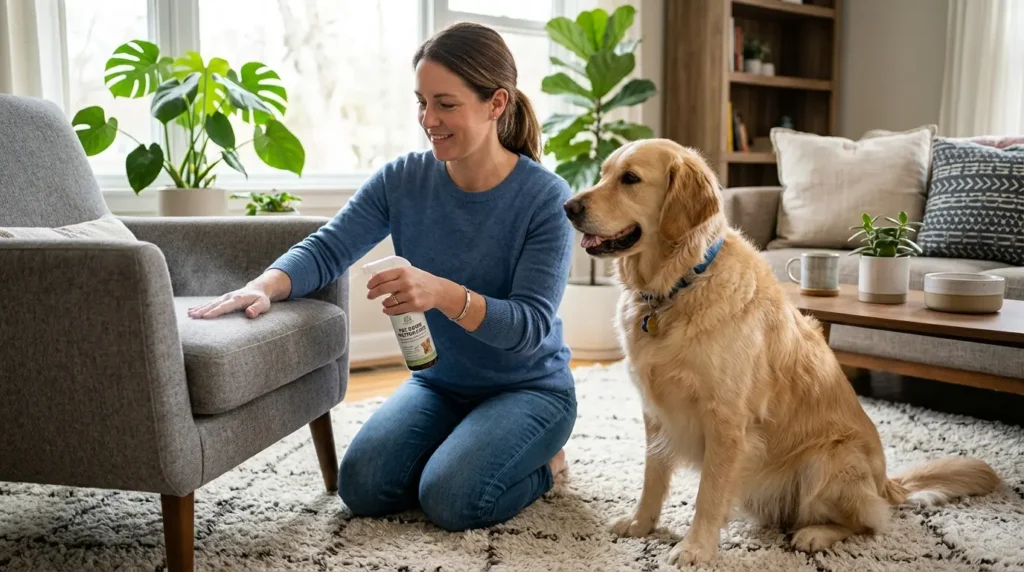
The best pet odor prevention starts with controlling the source before smells build up in carpet and upholstery. Vacuum pet areas often, clean bedding and washable covers regularly, blot fresh accidents quickly, keep litter and feeding areas clean, and allow damp fabrics to dry fully. Do not rely on fragrance to hide a recurring smell. If an accident reaches below the carpet surface or odor keeps returning after routine cleaning, the problem may need deeper treatment. These simple habits are the foundation of effective pet odor control at home.
Living with pets does not mean your carpet, sofa, and other fabrics have to develop a constant odor. The key is regular source control. Pet hair, body oils, outdoor dirt, bedding, food, litter areas, and accidents can all contribute to odor when they are allowed to build up.
These pet odor removal tips focus on prevention and routine care rather than deep urine treatment. They can help reduce everyday odor buildup and make it easier to notice when a problem needs more than normal home cleaning.
Vacuum Pet Areas Before Odor Builds Up
Regular vacuuming is one of the simplest ways to reduce the material pets leave behind on carpet.
Pet hair, loose soil, dander, and other dry material can collect where pets sleep, play, enter the home, or spend most of their time. The Carpet and Rug Institute specifically advises homes with pets to vacuum more frequently to capture pet hair and dander.
If you are trying to keep carpet smelling fresh with pets, focus on the areas that actually receive the most pet activity.
These often include:
- Pet sleeping areas
- Hallways
- Entry doors
- Carpet near sofas
- Stairs
- Areas around pet beds
- Favorite resting spots
Do not wait until the whole room looks dirty.
Frequent removal of loose material helps stop everyday pet-related soil from building up in the carpet pile.
Clean Pet Bedding and Washable Covers Regularly
Pet beds, blankets, crate liners, and washable furniture covers can hold hair, dirt, body oils, and other material that affects how a room smells.
The CDC advises cleaning pet beds, blankets, and habitats regularly and gives weekly cleaning as a general example for these items. It also notes that pet items can be cleaned more often when they look dirty or smell bad.
Follow the care label for the specific item rather than using one washing temperature or cleaning product for every fabric.
A simple routine may include:
- Washing removable pet-bed covers
- Cleaning blankets used on sofas
- Washing washable crate liners
- Cleaning fabric pet mats
- Replacing items that can no longer be cleaned properly
This reduces one common odor source instead of trying to cover the smell after it spreads into nearby carpet or upholstery.
Respond to Fresh Pet Accidents Quickly
Fast response matters when a pet has an accident on carpet.
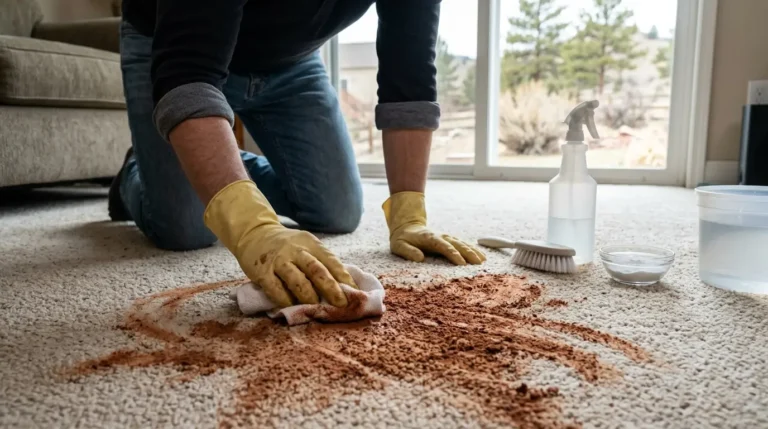
CRI advises cleaning new pet messes promptly. For liquid spills, its spot-care guidance recommends blotting with a clean white absorbent cloth rather than scrubbing the carpet.
For a fresh accident:
- Remove solid material carefully if present.
- Blot liquid with a clean white absorbent cloth or paper towel.
- Work without rubbing the carpet aggressively.
- Use only a product suitable for the carpet and the type of accident.
- Follow the product label.
- Avoid leaving unnecessary cleaning residue behind.
- Allow the area to dry properly.
The goal is to remove as much contamination as practical while it is still fresh.
Scrubbing can spread a wet spot across more carpet fibers and can also affect carpet texture.
Do Not Treat Every Pet Smell With the Same Cleaner
A common mistake in home odor control is assuming one product can handle every surface and every pet problem.
Carpet, upholstery, washable fabric, pet bedding, and hard flooring can all have different care requirements.
CRI recommends testing carpet-cleaning products in an inconspicuous area and following product directions carefully. It also warns that excessive cleaning product can leave residue that attracts new soil.
Before using a cleaner:
- Read the surface care instructions
- Check whether the product is intended for that material
- Test carpet or fabric where appropriate
- Use the stated amount
- Do not combine cleaning chemicals
- Remove residue as directed
For pet stains and odors in carpet, CRI recommends products designed specifically for pet-related problems.
Routine cleaning should be controlled and surface-appropriate rather than based on strong homemade mixtures.
Keep Pet Hair Under Control on Upholstery
Carpet is not the only soft surface that can hold pet-related material.
Sofas, chairs, cushions, throws, and other upholstered surfaces can collect hair and soil where pets regularly rest.
For practical pet odor prevention, remove loose hair before it becomes heavily embedded in the fabric.
Depending on the upholstery care instructions, this may involve:
- Vacuuming with a suitable upholstery attachment
- Cleaning removable washable covers
- Washing throws used by pets
- Cleaning under removable cushions
- Removing loose pet hair from high-use areas
Always follow the furniture manufacturer’s fabric-care instructions before introducing moisture or a cleaning product.
If a pet repeatedly sleeps in the same place, using a washable throw or removable cover can also make routine cleaning easier.
The purpose is not to spray more fragrance onto the furniture. It is to remove the material that is contributing to the smell.
Clean Around Pet Beds, Not Just the Bed Itself
Washing a pet bed will not solve much if the carpet underneath and the area around it are ignored.
Pet sleeping zones often collect hair and soil beyond the edge of the bedding.
When cleaning the bed, also check:
- Carpet beneath it
- Carpet around the edges
- Nearby baseboards
- Upholstery next to the bed
- Blankets
- Toys
- Washable mats
Vacuum these areas as part of the same routine.
If the bed has a removable washable cover, check the cushion or inner material as well. An outer cover can be clean while the material underneath still carries an odor.
Replacing badly worn pet bedding may sometimes be more practical than repeatedly cleaning material that can no longer be properly maintained.
Keep Litter Areas Clean and Separate
Cat litter areas are another source that should be controlled before odor spreads to surrounding rooms and fabrics.
The CDC recommends changing cat litter boxes daily and keeping litter boxes away from food-preparation areas.
For household odor control, also pay attention to the floor around the litter box.
Tracked litter and small spills can move beyond the box itself.
A routine can include:
- Daily litter-box maintenance
- Cleaning tracked litter from nearby flooring
- Washing or replacing litter mats as needed
- Checking walls or nearby surfaces for accidents
- Keeping the area reasonably ventilated
- Washing hands after handling litter
If carpet is close to the litter area, vacuum tracked dry litter rather than allowing it to work deeper into the fibers.
Keeping the source area clean reduces the need to mask odor elsewhere in the room.
Clean Pet Toys and Other Washable Items
Pet toys, blankets, bowls, collars, and other frequently used items can collect dirt and organic material over time.
The CDC recommends regular cleaning of pet supplies and notes that frequency should increase when items look dirty or smell bad.
For odor control, focus mainly on items that come into regular contact with carpet, furniture, bedding, or the pet’s mouth and body.
Follow each product’s cleaning instructions.
For example, some fabric toys may be washable, while other items may need surface cleaning or replacement.
Keeping pet belongings clean helps prevent freshly cleaned carpet or upholstery from immediately coming back into contact with dirty bedding, toys, or covers.
Do Not Use Fragrance as a Substitute for Source Removal
A room can smell strongly scented and still have an unresolved pet-odor source.
Air fresheners, perfumes, and scented products may change what you smell temporarily, but they do not remove urine from carpet padding or clean dirty pet bedding.
CRI notes that some odor products may simply mask pet urine odor, while complete odor removal is unlikely when the urine itself has not been completely removed.
This is an important distinction.
If an odor keeps returning, look for the source instead of repeatedly adding fragrance.
Check:
- Old accident areas
- Pet bedding
- Upholstery
- Carpet near doors
- Litter areas
- Washable covers
- Carpet beneath furniture
- Areas where a pet frequently rests
A returning smell is useful information. It may tell you that the odor source has not yet been fully addressed.
Be Careful With Essential Oils Around Pets
Essential oils should not be treated as a simple pet-odor solution.
The ASPCA warns that concentrated essential oils can be harmful to pets and advises against directly applying them to animals. Risk can vary based on the oil, concentration, formulation, exposure route, and type of pet.
For that reason, do not assume that a product is automatically pet-safe because it is described as natural.
If you use any scented product in a pet household:
- Follow the product directions
- Keep products out of a pet’s reach
- Avoid direct application to pets
- Consider the species in your home
- Ask a veterinarian when you are unsure about safety
For pet odor control at home, cleaning the source is more useful than attempting to overpower it with a stronger scent.
Control Moisture Around Carpet and Upholstery
Cleaning an odor source creates another job: getting the cleaned material dry.
Repeatedly soaking carpet or upholstery can spread moisture beyond the area you intended to clean.
Use only the amount of product needed according to its directions and avoid unnecessary over-wetting.
CRI’s spot-cleaning guidance advises controlled application and careful blotting. It also warns about residues left by excessive cleaning solution.
After routine spot care:
- Remove as much moisture as practical
- Maintain reasonable airflow
- Keep pets away until the area is ready
- Do not cover a damp spot with heavy items
- Follow product and material-care directions
The aim is to clean the source without creating a larger moisture problem.
Watch the Areas Where Pets Enter the Home
Pets can bring outdoor dirt onto carpet even when there has been no accident.
Entry paths may collect:
- Dry soil
- Mud
- Moisture
- Pet hair
- Plant debris
- Material from paws
These areas often need more frequent vacuuming than lightly used carpet.
A washable mat at an entrance can make some of this soil easier to manage before it reaches the rest of the room. Cleaning muddy paws when needed can also reduce what gets transferred to soft flooring.
This type of routine pet odor prevention is simple because it deals with material before it spreads through the home.
Use Washable Barriers in High-Use Pet Areas
If a pet regularly sleeps on one chair, one side of a sofa, or one carpeted corner, a washable barrier can make routine care easier.
Depending on the surface, this could be:
- A washable furniture cover
- A pet blanket
- A washable bed cover
- A removable mat
The barrier still needs to be cleaned regularly.
Its purpose is to reduce direct buildup on a harder-to-clean surface.
This is especially useful with upholstery because removing and washing a cover is often simpler than repeatedly wet-cleaning the furniture fabric.
Always make sure any barrier is suitable for your pet and does not create a slipping, chewing, or entanglement problem.
Learn the Difference Between Prevention and Treatment
Routine pet odor removal tips work best before there is deep contamination.
Vacuuming, bedding care, fresh-accident response, washable covers, and source control can reduce everyday odor buildup.
They have limits.
Pet urine can move below the visible carpet fibers. CRI notes that unattended urine can affect carpet backing and that complete odor removal is difficult when the urine itself is not completely removed. Humidity can also make some urine odor noticeable again.
That is different from ordinary household pet smell.
If you are dealing specifically with a urine accident rather than general odor prevention, the dog urine smell removal guide covers that problem separately.
Keeping those two situations separate prevents routine prevention advice from being used for contamination it was never designed to handle.
When Is Routine Pet Odor Prevention No Longer Enough?
Home maintenance may no longer be enough when odor continues after the visible surface has been cleaned.
Pay attention when:
- The smell repeatedly returns from the same spot
- A pet has used the same carpet area more than once
- Urine may have reached the carpet backing or pad
- Upholstery cushions were deeply soaked
- An old accident is difficult to locate
- Normal cleaning changes the smell only briefly
- A large carpeted area is affected
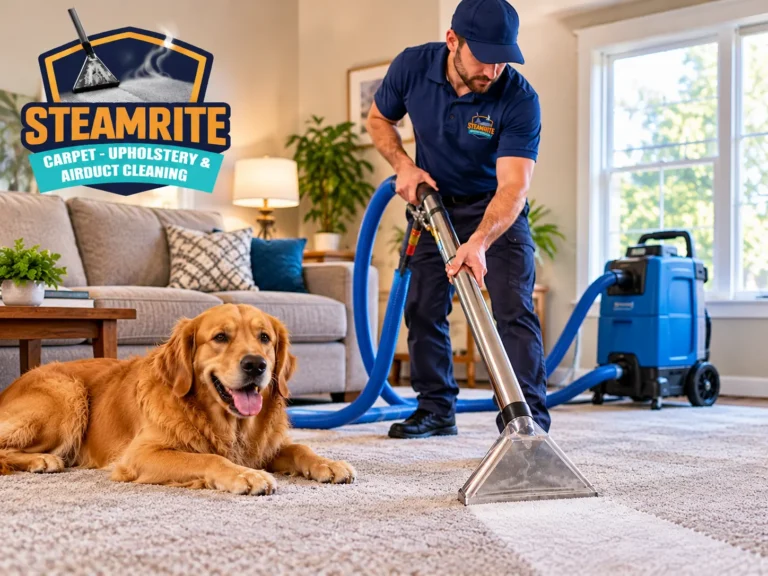
Steamrite’s current pet-odor service page explains that urine can move through carpet fibers into the padding and, in some cases, reach material below it. Its professional service uses treatments aimed at contamination beyond ordinary surface cleaning.
When routine source control is no longer solving the problem, professional pet urine and odor removal in Aurora, CO is a different level of treatment from everyday prevention.
A Simple Pet Odor Prevention Routine
You do not need a complicated cleaning schedule.
A practical routine can focus on the areas that create odor most often.
Regularly
- Vacuum carpet in pet-use areas
- Remove pet hair from upholstery
- Check pet bedding
- Clean tracked litter and entry soil
- Look for fresh accidents
When an Accident Happens
- Respond quickly
- Blot liquid rather than scrubbing
- Follow the carpet or fabric care instructions
- Use a suitable pet-stain product
- Avoid excessive moisture
- Let the area dry
As Needed
- Wash pet beds and removable covers
- Clean washable throws
- Clean pet toys and other washable items
- Check underneath pet beds
- Inspect favorite sofa or chair areas
The routine should follow your household and pet rather than an artificial schedule that assumes every home gets dirty at the same rate.
Final Thoughts
Effective pet odor prevention is mostly about controlling sources before they build up.
Vacuum pet areas regularly. Keep bedding and washable fabrics clean. Respond to accidents quickly. Blot instead of scrubbing. Maintain litter and pet-use areas. Remove pet hair from upholstery, and avoid using strong fragrance as a substitute for cleaning.
These habits can make pet odor control at home much easier because they target the material causing everyday smells.
The important boundary is knowing when the problem has moved beyond prevention. If the same odor keeps returning or contamination appears to have reached below the carpet surface, routine cleaning may no longer reach the source. For persistent contamination, Steamrite pet odor treatment can be discussed based on the affected surface and condition.
FAQs
How can I prevent pet odor in my carpet?
For pet odor prevention, vacuum pet areas frequently, respond quickly to fresh accidents, clean pet bedding and washable covers, keep litter areas clean, and address the source of a smell instead of covering it with fragrance.
Does vacuuming help with pet odor?
Yes. Vacuuming removes pet hair, dander, and dry soil from carpet. CRI specifically recommends more frequent vacuuming in homes with pets.
What should I do immediately after a pet accident on carpet?
Remove solids carefully and blot liquids with a clean white absorbent cloth. Avoid scrubbing. Use only a suitable cleaning product and follow its directions. CRI recommends prompt cleanup for new pet messes.
How often should pet bedding be cleaned?
There is no need to invent one schedule for every household. The CDC gives weekly cleaning as a general example for pet beds and blankets and recommends cleaning more often when an item becomes dirty or smells bad.
How do I prevent pet odor in upholstery?
Remove loose pet hair, clean removable washable covers, wash throws used by pets, and respond quickly to accidents. Follow the upholstery manufacturer’s care instructions before using moisture or cleaning products.
Should I use essential oils to cover pet odor?
Use caution. The ASPCA says concentrated essential oils can be harmful to pets, and safety depends on factors such as the oil, concentration, exposure, and species. Source removal is a better first step for odor control.
Why does pet odor sometimes return after cleaning?
A returning smell can mean that the source remains below the surface. CRI notes that complete pet-urine odor removal is difficult if the urine itself has not been completely removed, and odor can become noticeable again under humid conditions.
When should I stop trying routine home cleaning?
If odor repeatedly returns, urine may have reached deeper carpet layers, or a large area is affected, routine prevention may no longer match the problem. At that point, a deeper assessment can identify the source.