
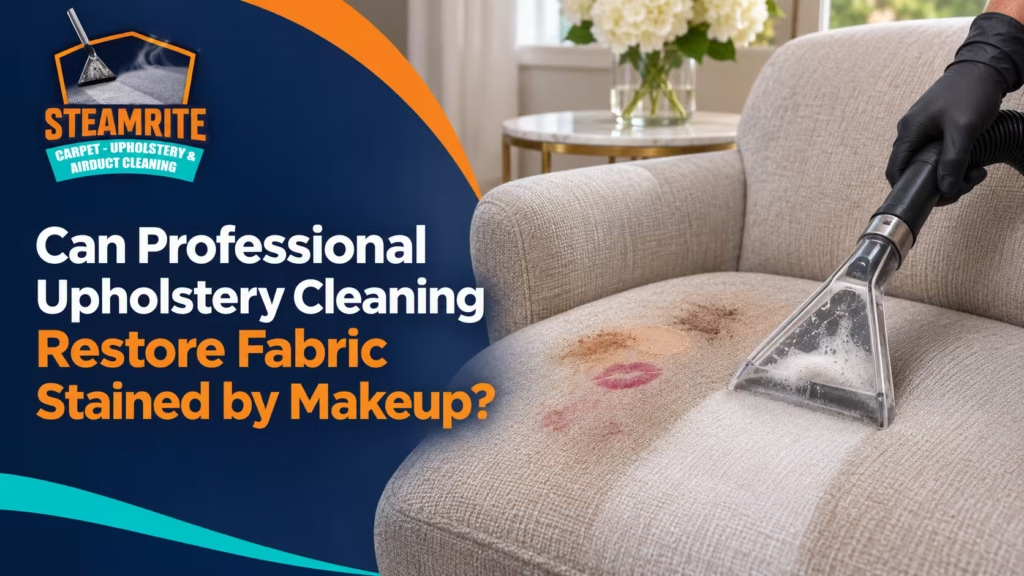
A swipe of foundation on a sofa arm or lipstick transferred from clothing can leave more than a surface mark. Cosmetic products often contain oils, waxes, silicones, dyes, and concentrated pigments. Once these materials settle between upholstery fibers, wiping the area with a household cleaner may spread the stain or push it deeper.
Professional upholstery cleaning can improve makeup stains, and some fresh marks may come out completely. Results depend on the cosmetic formula, fabric, cleaning code, stain age, and previous treatment.
Why Makeup Stains Need More Than Ordinary Spot Cleaning
Makeup is not one type of soil. A powder blush, liquid foundation, concealer, and long-wear lipstick leave different residues. Some products are mostly loose pigment; others combine color with oily or waxy ingredients designed to stay on skin.
That combination creates two cleaning challenges. The cleaner must loosen the material holding the pigment to the fibers, then remove the released residue without damaging the fabric or leaving a visible ring.
| Cosmetic product | Common residue | What makes removal difficult |
| Liquid foundation | Pigment, oils, silicones, and emollients | Can spread into the weave and leave a tinted oily shadow |
| Concealer | Dense pigment and creamy binders | High pigment concentration may remain after surface residue lifts |
| Lipstick | Waxes, oils, and strong colorants | Waxy material can cling to fibers while pigment transfers outward |
| Powder makeup | Dry mineral or cosmetic pigments | Brushing or rubbing can drive fine particles deeper |
| Cream blush or contour | Oils, waxes, and colorants | May leave both a greasy mark and visible color |
How Professional Cleaning Approaches Different Makeup Stains
A trained cleaner, such as the team at Steamrite, checks the upholstery material and care instructions. The backing, dye, finish, and cushion construction can affect how the furniture responds.
Oil-based foundation and concealer: These products often need a method that can break down oily residue without spreading it. A professional may use a fabric-compatible pre-treatment, controlled agitation, and extraction or a suitable low-moisture method. If the pigment has bonded to the fibers, some discoloration may remain.
Lipstick: Lipstick can be particularly stubborn because waxes and oils hold concentrated pigments in place. Treatment may involve carefully loosening the oily binder and removing it in stages. Aggressive rubbing is risky because it can enlarge the mark and distort the fabric surface.
Powder makeup: Loose powder is usually easier to address when it is still dry. A professional can remove surface particles with controlled vacuuming before treating any remaining color. Adding water too early may turn loose powder into a paste and make it harder to lift.
The Upholstery Care Code Can Change the Cleaning Plan
Before choosing a cleaning solution, check the furniture label or manufacturer instructions. Common upholstery codes describe which cleaning methods the fabric can tolerate.
| Care code | General meaning | Important limitation |
| W | Water-based cleaning agents | Does not mean the fabric should be soaked |
| S | Water-free solvent cleaning | Water-based products may cause rings or damage |
| WS or W/S | Water-based or solvent-based methods | The stain and fabric still determine the appropriate choice |
| X | Vacuuming or light brushing only | Do not apply liquid or solvent cleaners |
These codes are general guidance, not permission to use any product within a category. A professional should still test a treatment in an inconspicuous area and follow the furniture maker’s specific instructions. Delicate fabrics, including some velvets and natural-fiber blends, may need specialized care.
What Happens During a Professional Makeup-Stain Treatment?
Professional treatment begins with an assessment of the fabric, cosmetic residue, and realistic cleaning outcome.
- Inspect the stain: The cleaner checks its size, age, location, and whether it has spread into seams or cushion edges.
- Identify the fabric: The care code, fiber type, dye stability, and construction help determine suitable chemistry.
- Test the treatment: A small hidden area is checked for color transfer, texture change, or other adverse reaction.
- Loosen and remove residue: The selected product is applied in a controlled amount, followed by blotting, agitation when appropriate, or extraction.
- Review the result: Once the area is treated and dries, the technician checks for remaining pigment, oily shadowing, or a change in appearance.
More than one treatment stage may be needed, but repeated applications can risk color loss or fabric damage.
Why Some Makeup Stains Do Not Disappear Completely
Professional cleaning improves many cosmetic marks, but it cannot guarantee restoration in every case. A stain that has remained for months may have oxidized, bonded strongly to the fibers, or been driven into the cushion by repeated wiping.
Previous attempts can complicate treatment. Detergents may leave residue, while bleach, strong solvents, or excessive heat can affect dyes and finishes. Cleaning cannot reverse damaged fibers or restore stripped color.
For example, a fresh foundation transfer on a water-cleanable polyester sofa may respond well to professional treatment. The same foundation on a delicate, solvent-only fabric may require a different approach and a more limited result.
What to Do Before the Cleaner Arrives
Take these steps to avoid making the stain harder to treat:
- Lift loose powder gently with a vacuum upholstery attachment; do not brush it into the weave.
- Blot fresh liquid or cream makeup with a clean, white absorbent cloth.
- Avoid rubbing, scrubbing, or pressing the cosmetic deeper into the cushion.
- Do not apply hot water, dish soap, makeup remover, alcohol, or stain spray unless the fabric instructions specifically allow it.
- Photograph the stain and tell the cleaner which products have already been used.
For silk, viscose, velvet, or other delicate fabrics, share the furniture label with the cleaner rather than experimenting with home remedies.
Frequently Asked Questions
Can professional upholstery cleaning remove old foundation stains?
It may reduce or remove some old foundation marks, but results depend on the formula, fabric, and previous cleaning attempts. Older pigments may have bonded to the fibers or changed the fabric color.
Does lipstick come out of a fabric sofa?
Lipstick can often be removed because a professional can target its waxy and oily components. Strong pigments, long-wear formulas, and delicate upholstery may limit complete removal.
Should I use warm water on makeup stains?
Not automatically. The correct method depends on the upholstery care code and stain ingredients. Hot water or an unsuitable water-based cleaner can spread residue or damage fabrics that require solvent-based care.
Is professional cleaning safe for delicate upholstery?
It can be, provided the technician identifies the fabric and follows its care requirements. Some materials allow only limited cleaning, so a professional may recommend testing or explain that full stain removal is not safe.
Final Thoughts: Give Makeup Stains the Right Treatment
Makeup stains can involve both oily residue and stubborn cosmetic pigments, which is why one household cleaning method rarely suits every sofa. Professional treatment offers a better chance of removing the residue while protecting the upholstery, but the fabric and stain condition determine the likely result.
Steamrite can assess the makeup stain, upholstery type, and cleaning limitations before providing a suitable treatment. Acting carefully and avoiding untested products gives the fabric a better chance of a successful result.