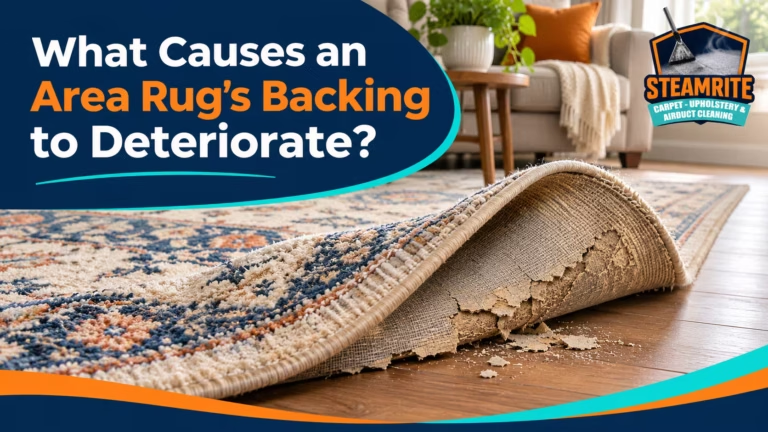
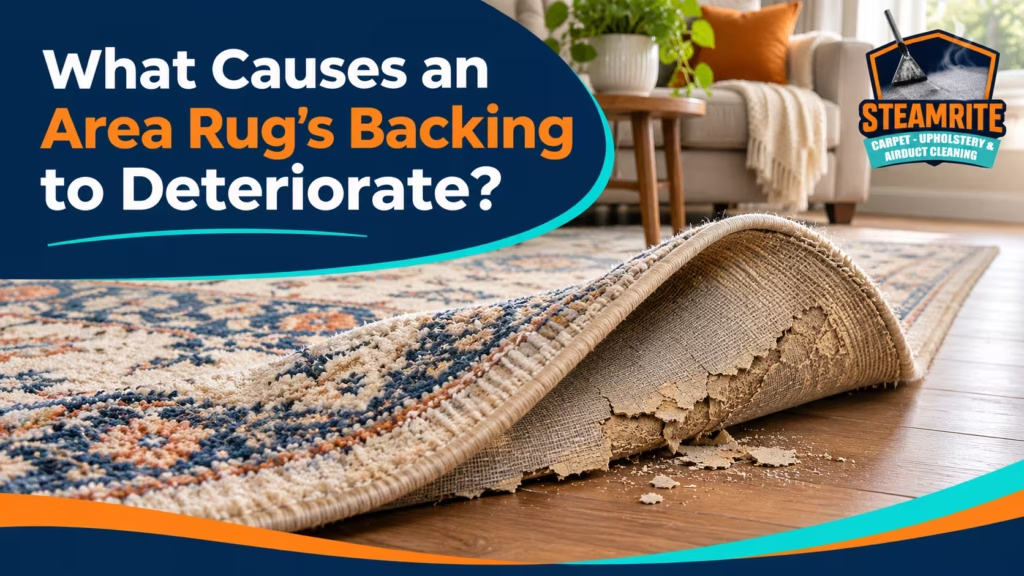
A rug can look clean from the front while its underside leaves a trail of pale dust, flakes, or rubbery crumbs across the floor. This often points to a material problem rather than ordinary dirt. The backing may be losing the bond that holds its layers together.
Area Rug Backing Deterioration is especially common in some tufted rugs that rely on latex adhesive. As the binder ages or reacts to its environment, it can become brittle, powdery, sticky, or detached. Understanding the construction helps explain why vacuuming or washing cannot restore a failing backing.
What Is Holding the Rug Together?
Many tufted rugs are made by pushing yarn through a primary fabric backing. A latex adhesive is then applied to secure the tufts, and a secondary cloth may cover the underside. The adhesive is structural: it helps hold the yarn in place and bonds the backing layers.
That construction differs from a hand-knotted or woven rug, where the yarn structure itself provides much of the integrity. A tufted rug may depend more heavily on the condition of its adhesive binder. If that bond weakens, the rug can lose stability even when the surface fibers still look presentable.
| Backing or construction | What may happen as it ages |
| Latex-backed tufted rug | Adhesive dries, powders, cracks, or loses grip |
| Secondary cloth backing | Cloth ripples, bubbles, or separates from the rug |
| Rubberized non-slip coating | Coating may harden, flake, become sticky, or transfer residue |
| Woven or hand-knotted foundation | Usually does not fail through latex delamination, though fibers and foundation can still wear |
Why Does Rug Backing Deteriorate?
1. Age and adhesive oxidation
Latex and rubber-based materials change as they age. Exposure to air and repeated flexing can reduce their flexibility and adhesive strength. Eventually, the binder may crumble into fine particles or stop holding the backing layers securely. Product quality and original manufacturing conditions also influence how quickly this happens.
2. Moisture and contamination
Repeated dampness, spills, pet accidents, or prolonged exposure to water can affect some adhesives and backing materials. Contamination may weaken the bond or contribute to odor. A rug that has been wet should be assessed carefully before another cleaning, especially if the backing already feels brittle or loose.
3. Heat, sunlight, and floor exposure
Direct sunlight and warm conditions can accelerate changes in some rubber and latex materials. Heat from a nearby source or floor system may also affect a backing if the product is not designed for that environment. The effect depends on the rug’s materials, exposure, and manufacturer specifications.
4. Friction and repeated movement
Dragging furniture, frequent folding, aggressive vacuuming, and heavy traffic can stress an already weakened backing. These actions may not be the original cause, but they can make cracks, loose edges, and delamination more noticeable.
How to Tell Deterioration From Ordinary Dirt
Powder under a rug does not automatically mean the backing is failing. Dust, grit, residue from a rug pad, or particles from the floor finish can look similar. Check the underside and look for several signs together.
- Recurring powder: Fine particles return beneath the same rug after the floor is cleaned.
- Cracked or brittle areas: The backing breaks or flakes when the rug is gently moved.
- Bubbles or ripples: A cloth layer no longer lies flat against the rug.
- Loose tufts: Yarn shifts or pulls free because the adhesive no longer holds it securely.
- Unusual odor or stickiness: Some deteriorating or contaminated materials develop a persistent smell or tacky surface.
Simple inspection: Lift one corner over a clean, light-colored sheet and photograph the underside and residue. Do not scrape, pull, or bend a damaged section to test it. If the powder appears to come from the rug itself or the layers are separating, pause routine cleaning and arrange a material assessment.
Can Cleaning Repair a Crumbling Rug Backing?
No cleaning method can replace adhesive that has lost its bonding strength. Washing may remove surface soil, but it cannot rebuild the connection between the tufts, primary backing, and secondary cloth. Excess moisture or mechanical handling may also put additional stress on a fragile rug.
Cleaning and structural repair are different jobs:
| What the rug needs | Appropriate next step |
| Surface soil, backing remains stable | Discuss suitable cleaning with a rug-care professional |
| Loose secondary cloth, adhesive still partly sound | Ask whether a specialist backing repair is feasible |
| Widespread powdering, loose tufts, or brittle layers | Obtain a repair-versus-replacement assessment |
| Sticky residue or possible floor transfer | Protect the floor and ask about material compatibility |
A specialist may be able to remove failed material and rebuild a backing on certain rugs. That is not possible or economical in every case. The rug’s construction, extent of damage, fiber condition, and repair cost all matter. Steamrite can assess the rug’s condition and determine whether its backing problems require specialist attention before cleaning.
What Should You Do When the Backing Starts Shedding?
Use these steps to avoid making the damage worse:
- Stop aggressive cleaning. Avoid scrubbing, soaking, steam treatment, or repeated vacuuming over loose areas until the backing is assessed.
- Lift it carefully. Fold or roll only if the rug remains flexible; do not force a brittle section.
- Separate it from the floor. Place a clean protective layer beneath it temporarily, ensuring the layer itself is compatible with the flooring.
- Document the problem. Photograph the backing, powder, bubbles, and any loose tufts.
- Ask for a construction-based assessment. Share the rug’s approximate age, known spills, sunlight exposure, and previous cleaning history.
Do not apply household glue, spray adhesive, or a new coating as a quick fix. An incompatible product can stiffen the rug, stain the face fibers, or make later repair more difficult.
Frequently Asked Questions
Why is my rug backing turning into powder?
Powder can form when latex or another backing compound loses cohesion as it ages. Confirm the source by checking whether particles are coming from the rug, its underlay, or the floor. Recurring powder alongside cracking or separation is a stronger warning sign.
Can a rug with peeling latex backing be saved?
Sometimes. A specialist may be able to remove deteriorated adhesive and rebuild the backing if the face yarn and foundation remain sound. Extensive breakdown, loose tufts, or high repair costs may make replacement more practical.
Does moisture always cause latex backing to fail?
No. The outcome depends on the adhesive formulation, exposure, contamination, and drying conditions. However, repeated wetting or pet contamination can contribute to damage, so a rug with existing backing problems should not be soaked without professional assessment.
Is the powder under my rug harmful?
Its composition cannot be confirmed by appearance alone. Avoid stirring it up, keep children and pets away from loose debris, and clean it carefully without spreading it. Ask a rug-care professional to assess the material if shedding continues.
Final Thoughts: Recognize Backing Failure Before It Spreads
A deteriorating backing is a structural issue, not simply a cleaning problem. Early inspection can clarify whether a rug needs careful cleaning, specialist repair, or replacement. Steamrite can assess rug condition and help determine an appropriate care approach when backing damage is present.