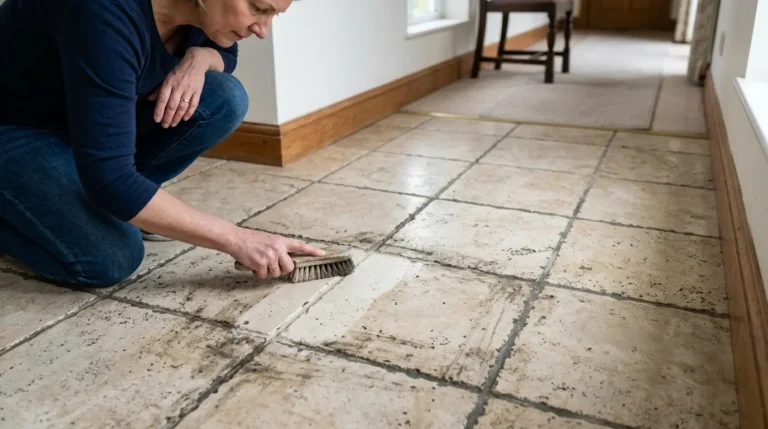
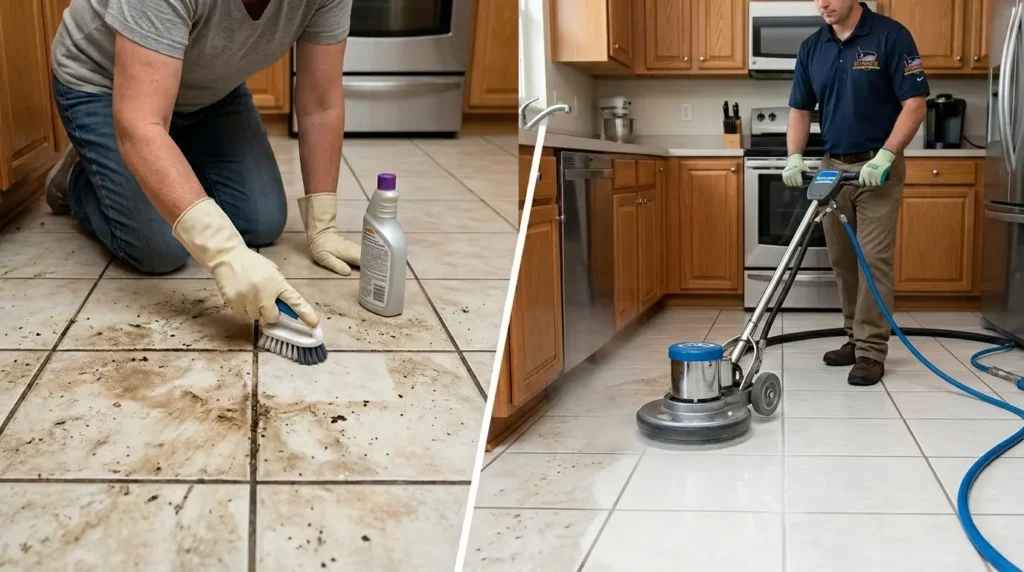
Dirty grout can make a clean tile floor look old. Many homeowners start with a brush, a bucket, and a household cleaner. This may improve a small area, but the results are not always even. Dark lines may return after the floor dries.
The choice between professional tile and grout cleaning vs DIY depends on the amount of dirt, tile type, floor size, and condition of the grout. DIY scrubbing works well for light upkeep. Professional cleaning is often more useful when dirt sits deep inside porous grout or covers a large area.
This guide compares both options in simple terms. You will learn how they differ in time, cleaning depth, equipment, safety, cost, and long-term care.
What Is the Main Difference Between Professional Cleaning and DIY Scrubbing?
DIY scrubbing relies on hand pressure, a brush, and a household cleaning product. Professional cleaning uses a planned process to loosen soil, rinse the surface, and remove the dirty solution.
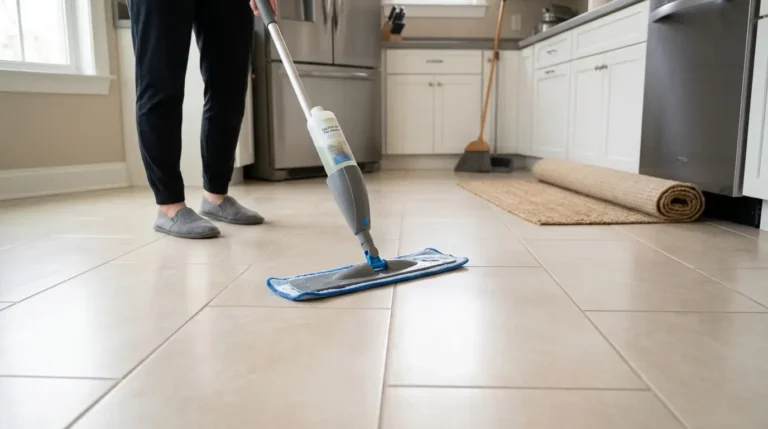
The biggest difference is often extraction. A homeowner may scrub the grout and then wipe or mop the floor. Some of the dirty water can remain inside low grout lines. Once it dries, fine soil and cleaner residue may stay behind.
A professional system is designed to remove that dirty solution instead of letting it settle back into the joints. Steamrite’s tile and grout service includes inspection, suitable cleaning products, powered scrubbing, and extraction. Optional sealing may also be discussed based on the surface and grout condition.
Neither option is always better. The right choice depends on the problem you are trying to solve.
When Does DIY Grout Cleaning Work Well?
DIY grout cleaning works best for light dirt, small areas, and regular maintenance. It can be a practical choice when the grout is in good condition and has not developed heavy staining.
A homeowner may get good results when cleaning:
- A small bathroom floor
- A recent food spill
- Light soap film
- Dust near an entryway
- A few dirty grout lines
- Tile that is already cleaned often
- Grout with no cracks or missing sections
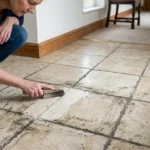
The safest approach starts with dry soil removal. Vacuum or sweep the floor before adding water. This keeps loose dust from turning into muddy water that can settle into the grout.
Use a cleaner approved for the tile material. Apply only the amount listed on the label. Scrub with a nylon brush, then remove the dirty water. Rinse the floor when the cleaner requires it.
DIY care is not only about strong scrubbing. Good rinsing and water removal matter just as much.
What Are the Limits of Household Scrubbing?
Household scrubbing has limits because grout is uneven and often porous. A brush may clean the top layer without reaching old soil below the surface.
Hand cleaning can also become tiring. Pressure often becomes lighter as the job continues. One section may look bright while another stays dark.
Common DIY limits include:
- Uneven pressure across the floor
- Difficulty removing dirty water
- Slow work over large areas
- Cleaner left inside grout lines
- Weak results on grease and old residue
- Risk of using the wrong chemical
- Trouble reaching textured tile
- Limited results on deep discoloration
A toothbrush may work on several grout lines. It is less practical for a large kitchen, tiled basement, shower enclosure, or commercial floor.
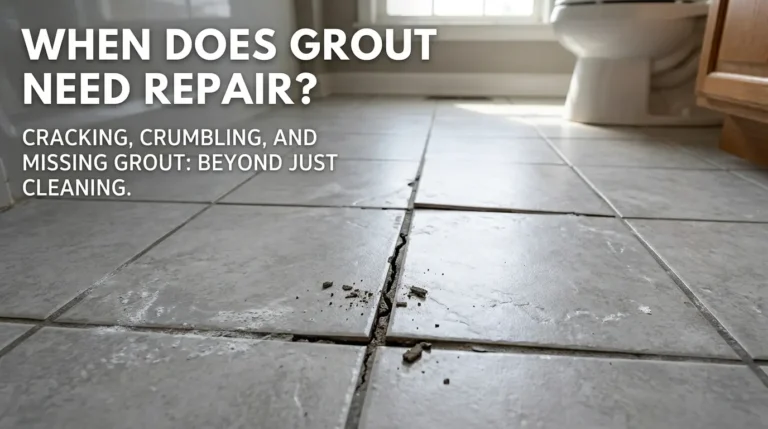
Some stains may also be permanent. Stronger scrubbing will not fix missing grout, faded color, cracked joints, or moisture coming from below the tile.
How Does Professional Tile and Grout Cleaning Work?
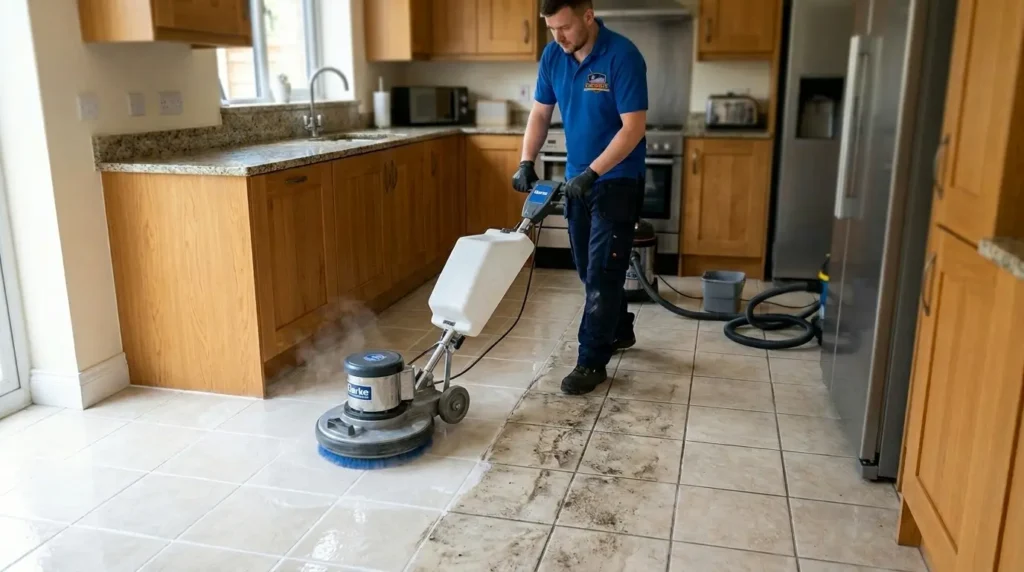
Professional grout cleaning usually follows several connected steps. The exact method should change based on the tile, grout, soil, and condition of the surface.
Inspection
The cleaner first checks the tiled area. This includes identifying the surface, looking for loose tiles, checking cracked grout, and reviewing heavy stains.
This step matters because ceramic, porcelain, and natural stone do not always need the same products or pressure.
Dry Soil Removal
Loose grit, hair, and surface dirt may be removed before wet cleaning starts. This reduces the amount of soil that can spread through the cleaning solution.
Pre-Treatment
A suitable cleaning product is applied to loosen grease, soap film, and built-up soil. It may need a short amount of contact time before scrubbing.
The product should match the surface. A cleaner that is safe for ceramic tile may not be suitable for marble, limestone, or travertine.
Agitation or Scrubbing
Powered or manual brushes help move the cleaning product into textured areas and grout lines. This loosens soil that normal mopping may leave behind.
Rinsing and Extraction
The surface is rinsed, and the dirty solution is extracted. This is a key difference between deep cleaning and simple surface scrubbing.
Extraction helps remove loosened soil, soap, and water from the floor. It also reduces the chance of dirty solution drying back into the grout.
Final Inspection
The cleaner checks the results after the surface has been rinsed. Areas that need more attention may receive another treatment.
The cleaner should also explain any problems that cleaning cannot repair.
Do Professionals Use Steam, Pressure, or Extraction?
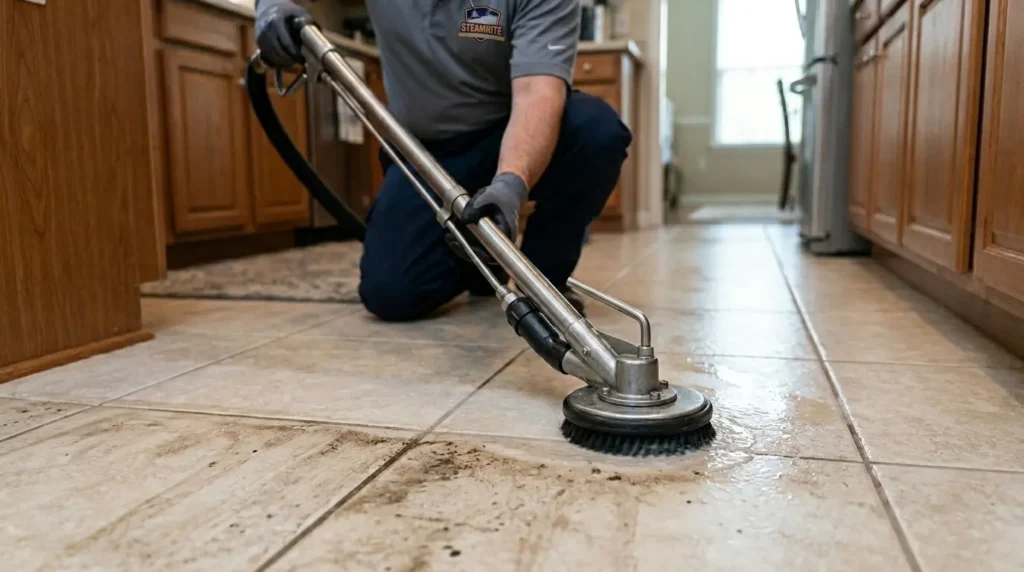
Professional systems may use heated water, controlled water pressure, powered agitation, extraction, or a mix of methods. The right setup depends on the surface.
“Steam cleaning” is often used as a broad term. In practice, the equipment may use heated water rather than dry household steam. The water and cleaning solution loosen the soil, while extraction removes it.
Controlled pressure can help rinse grout lines. However, stronger pressure is not always better. Loose grout, cracks, weak joints, and damaged tile need careful treatment.
Extraction is one of the most useful parts of the process. It lifts dirty water away from the surface instead of spreading it with a mop.
Steamrite describes its process as professional product application, high-powered scrubbing, and extraction after a detailed inspection.
Can Professional Cleaning Reach Deeper Dirt?
Professional cleaning can often remove more embedded soil than hand mopping or light scrubbing. It combines chemical action, agitation, rinsing, and extraction.
This does not mean every dark mark will disappear. Grout can have permanent staining, worn color, damage, or old coatings. A stain may also sit below the area that cleaning equipment can safely reach.
Good cleaners should set clear expectations before beginning. They should not promise that every line will return to its original color.
The main goal is to remove removable soil and residue as safely and evenly as possible.
Which Method Takes More Time?
DIY scrubbing usually takes more of the homeowner’s active time. A small area may be manageable, but larger floors can take many hours.
The work includes:
- Moving small items
- Sweeping or vacuuming
- Mixing the cleaner
- Applying the product
- Scrubbing each line
- Wiping dirty solution
- Rinsing the floor
- Cleaning the tools
You may also need to repeat sections that dry unevenly.
Professional cleaning still takes time, but the equipment can cover larger areas more efficiently. The homeowner does not need to remain on the floor with a small brush.
The total service time depends on room size, soil level, layout, tile type, and grout condition. A simple open floor will usually require less work than a detailed shower with walls, corners, shelves, and narrow joints.
Which Option Gives More Even Results?
Professional equipment often gives more even results across a large area. The cleaner can apply a consistent process from one section to the next.
DIY results may vary because:
- Some areas receive more scrubbing
- The cleaner dries before other areas are reached
- Mop water becomes dirty
- Grout lines have different stain levels
- The brush wears down
- The person cleaning becomes tired
This does not make DIY cleaning useless. It simply means it works better for maintenance than major restoration.
For a few lines near a sink, hand scrubbing may be enough. For a full kitchen or several tiled rooms, professional cleaning may give a more consistent finish.
Is DIY Grout Cleaning Safe?
DIY cleaning can be safe when the product and tools match the tile. Problems often begin when homeowners use harsh chemicals or abrasive tools without checking the surface.
Avoid:
- Metal brushes
- Undiluted harsh chemicals
- Mixing cleaning products
- Strong acid on cement grout
- Vinegar on acid-sensitive stone
- Abrasive powder on polished tile
- High heat on loose or damaged joints
Natural stone needs special care. The Natural Stone Institute advises using neutral cleaners, stone soap, or mild detergent on stone. It warns that vinegar, lemon, and other acids may dull or etch calcium-based stone such as marble, limestone, and travertine.
Too much soap can also cause trouble. Excess cleaner may leave film and streaks, so the surface should be rinsed and the rinse water changed often.
When you do not know the tile material, test a hidden area or ask a trained cleaner before using a strong product.
Can Professional Cleaning Damage Tile or Grout?
Any cleaning method can cause damage when used incorrectly. Professional tools must be adjusted to the condition of the floor.
Possible risks include:
- Pressure on loose grout
- Scratching a polished surface
- Using the wrong chemical
- Forcing water into damaged joints
- Applying acid to sensitive stone
- Cleaning over failed caulk
- Disturbing loose tiles
A responsible cleaner should inspect these issues first. The team may lower the pressure, change the product, avoid a damaged section, or recommend repair before cleaning.
Professional equipment is not safe simply because it is powerful. It is safer when the operator understands the material and knows when not to use full pressure.
Which Method Produces Longer-Lasting Results?
Professional cleaning may stay presentable longer when it removes deep soil and cleaning residue. However, no cleaning method stops new dirt from entering the grout.
Results depend on what happens after the cleaning. Grout can become dirty again when homeowners:
- Mop with dirty water
- Use too much soap
- Leave wet shoes near entryways
- Let grease sit on kitchen floors
- Allow shower grout to stay damp
- Ignore worn mats
- Delay spill cleanup
Sealing may help some cement-based grout resist stains. It does not make grout stain-proof or remove the need for cleaning.
Natural Stone Institute guidance makes a similar point for stone sealers: sealing improves stain resistance but does not make a surface completely stain-proof.
A good maintenance routine often matters more than choosing the strongest cleaning method.
Professional Tile and Grout Cleaning vs DIY: Quick Comparison
| Factor | DIY Scrubbing | Professional Cleaning |
| Best use | Light dirt and small areas | Deep buildup and larger areas |
| Tools | Brush, mop, bucket | Powered scrubbing and extraction equipment |
| Cleaning depth | Mainly surface and shallow soil | Better removal of loosened embedded soil |
| Dirty water removal | Often wiped or mopped | Extracted from the surface |
| Time | High active homeowner time | Less active work for the homeowner |
| Results | May be uneven on large floors | Usually more consistent across large areas |
| Safety | Depends on product choice | Depends on inspection and operator skill |
| Repair ability | Cannot repair damage | Cleaning still cannot repair cracks or loose tile |
| Ongoing care | Still required | Still required |
Is Professional Grout Cleaning Worth It?
Professional cleaning may be worth it when the job is too large, the grout stays dark, or DIY methods keep leaving poor results.
It may offer better value when:
- You have several tiled rooms
- Kitchen grout holds heavy grease
- Shower grout has thick soap buildup
- The floor still feels sticky after mopping
- Grout becomes dark again after drying
- The tile has a textured surface
- You have natural stone
- You want to clean before possible sealing
- You cannot spend hours scrubbing by hand
DIY care may still be the better choice for fresh spills and small maintenance jobs.
Think about the time, tools, safety, and likely result. Buying several products and spending a full day scrubbing may not save much if the floor still needs professional treatment afterward.
What Affects the Cost of Professional Cleaning?
Professional cleaning cost depends on the job rather than one fixed number.
Common factors include:
- Total floor area
- Number of rooms
- Floor tile or shower walls
- Grout width
- Soil and grease level
- Tile material
- Furniture or item removal
- Stain treatment needs
- Access to the area
- Optional sealing
- Damaged sections requiring special care
A quote should explain what is included. Ask about inspection, pre-treatment, scrubbing, rinsing, extraction, and optional services.
A very low price may not include every step. A higher price also does not prove better work. The process and expectations should be clear before the appointment.
Which Option Works Better for Aurora Homes?
The answer depends on the room and soil level. Aurora entryways can collect dry grit during warmer periods and wet debris during snow season. Kitchens collect grease, while showers face soap and moisture.
DIY care works well for frequent upkeep. Sweep entry tile, clean spills quickly, use fresh mop water, and dry shower surfaces.
Professional cleaning becomes more useful when outdoor soil has settled into entry grout, several rooms need cleaning, or hand scrubbing no longer improves the floor.
Mats inside and outside busy doors can reduce tracked-in grit. During wet or snowy weather, removing shoes near the entrance also keeps dirty water from spreading across tiled areas.
For a wider look at tile types, grout problems, cleaning frequency, and cost factors, read Steamrite’s complete tile and grout cleaning guide.
When Should You Call Steamrite?
Call a professional when cleaning has moved beyond normal maintenance.
Steamrite may be able to help when:
- Grout stays dark after scrubbing
- The floor has years of residue
- A large area needs even cleaning
- Shower tile has heavy soap film
- Kitchen grout holds grease
- You are unsure which cleaner is safe
- You want dirty solution extracted
- You are considering sealing after cleaning
Steamrite provides tile and grout cleaning in Aurora, CO. The process includes surface inspection, professional cleaning products, scrubbing, and extraction based on the condition of the tiled area.
To discuss your floor, shower, kitchen, or commercial tiled space, contact Steamrite for an estimate. Share photos, the room type, and any cleaning products already used.
Final Answer: Which Cleaning Method Is Better?
In the professional tile and grout cleaning vs DIY comparison, neither method wins every time.
DIY scrubbing is useful for small areas, fresh spills, and routine care. It costs less at the start and lets you deal with dirt before it becomes heavy.
Professional cleaning is usually better for large floors, deep residue, greasy grout, uneven results, and soil that returns after mopping. Powered scrubbing and extraction can remove dirty solution more effectively than a brush and bucket.
Start with safe home care when the problem is light. Call Steamrite when the area is large, the surface is uncertain, or repeated scrubbing no longer works.
Frequently Asked Questions
Is professional tile and grout cleaning better than DIY?
It is often better for large areas, deep buildup, and uneven staining. DIY cleaning can still work well for light soil and regular maintenance.
Can a toothbrush deep-clean grout?
A toothbrush can loosen light surface dirt in a small area. It may not remove soil or residue trapped deeper inside porous grout.
Does professional grout cleaning use steam?
Some systems use heated water, controlled pressure, powered scrubbing, and extraction. The method should match the tile and grout condition.
Can pressure cleaning remove grout?
Too much pressure may harm loose, cracked, or weak grout. A professional should inspect the joints and adjust the equipment before cleaning.
Why does grout look dirty again after DIY cleaning?
Dirty water, loosened soil, and soap residue may remain inside the grout. These materials can become visible again after the floor dries.
Is professional cleaning safe for natural stone?
It can be safe when the cleaner correctly identifies the stone and uses suitable products. Acid-sensitive surfaces require special care.
Does professional cleaning fix cracked grout?
No. Cleaning removes soil but does not repair cracks, loose tiles, failed caulk, or missing grout.
Should grout be sealed after professional cleaning?
Some cement grout may benefit from sealing. The surface should be clean, suitable for sealing, and prepared according to the product instructions.