

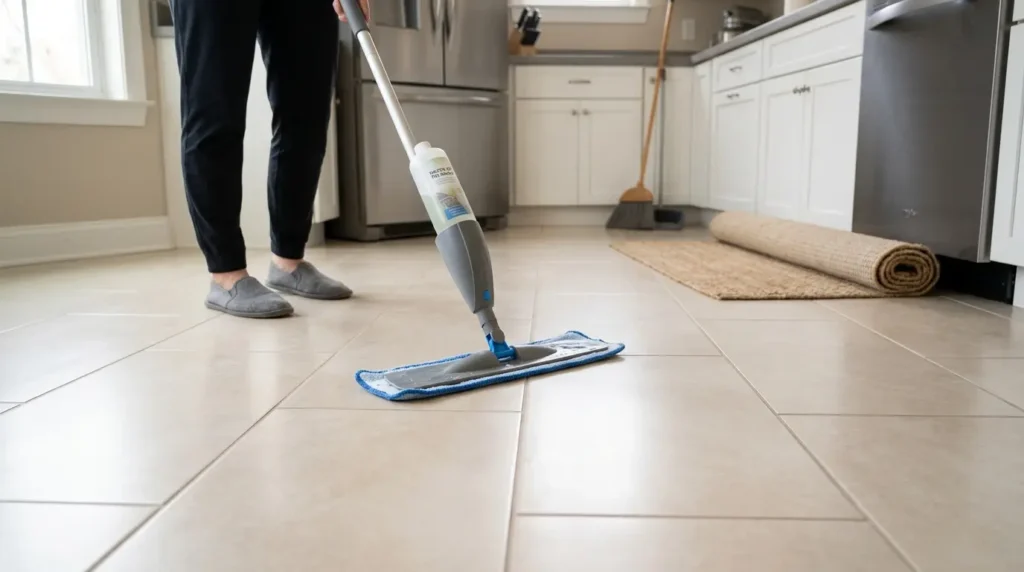
Professional cleaning can remove dirt, grease, soap film, and residue that regular mopping leaves behind. Once the floor looks clean again, the next goal is keeping that buildup from returning too soon.
The best way to maintain clean tile floors is to remove loose soil before mopping, use a suitable neutral cleaner, work with clean water, and dry the floor well. Entry mats, quick spill cleanup, and careful product use also help protect grout lines.
You do not need harsh chemicals or a complicated weekly routine. Small habits often make the biggest difference. This guide explains how Aurora homeowners can care for tile and grout after professional cleaning without leaving sticky residue or damaging the surface.
What Should You Do Right After Professional Tile Cleaning?
Follow the cleaner’s instructions and allow the floor to dry before returning furniture, rugs, or heavy foot traffic to the area.
Drying time can vary based on the floor, grout, room airflow, and whether sealing was applied. Do not assume every floor follows the same timeline. Ask the technician when the surface can be walked on and when mats or furniture can be returned.
While the floor dries:
- Keep children and pets away
- Run ceiling or room fans when appropriate
- Open doors to improve airflow
- Avoid placing towels over wet grout
- Do not apply another cleaner
- Keep shoes off the surface
- Follow all sealer instructions
Daltile recommends drying tile after rinsing by wiping, using a squeegee, or removing water with suitable equipment. It also warns that wet tile can be slippery.
What Is the Best Cleaner for Tile Floors?
The best cleaner for tile floors is one that matches the tile, grout, finish, and any sealer already on the surface.
For everyday ceramic and porcelain care, a neutral, pH-balanced cleaner is usually a safer starting point. Laticrete recommends a neutral cleaner made for ceramic tile, porcelain tile, and grout during routine maintenance.
A neutral cleaner can help remove light soil without relying on strong acid, bleach, or abrasive powder. It is still important to read the label and follow the dilution instructions.
Before using a product:
- Identify the tile material.
- Check whether the grout is sealed.
- Read the product label.
- Test a hidden section.
- Use only the recommended amount.
- Rinse if the instructions require it.
Natural stone needs separate care. Marble, limestone, travertine, slate, and granite should only be cleaned with products approved for that material.
Can Too Much Cleaner Make Tile Look Dirty?
Yes. Too much cleaner can leave a sticky or cloudy film. That film may attract new dust and make the floor look dull soon after mopping.
Grout can absorb soap as well as dirt. The Tile Council of North America warns that cleaners that are not rinsed properly can leave sticky residue that attracts more soil. Oil-based or wax-based products may also leave film inside grout.
Common signs of cleaner buildup include:
- Cloudy tile
- Sticky areas
- Footprints after drying
- Dark grout lines
- Streaks in bright light
- A floor that becomes dirty quickly
- Slippery patches
Do not add extra product because the floor looks dirty. Measure the cleaner carefully. When the label calls for rinsing, use clean water and remove it before it dries.
How Should You Mop Tile Floors?
The right answer to how to mop tile floors starts before the mop touches the surface. Remove grit, hair, crumbs, and dust first.
Dry soil can turn into dirty water when it becomes wet. That water may then settle into low grout joints.
Use this method:
Sweep or Vacuum First
Use a soft broom or a vacuum setting made for hard floors. Pay attention to corners, baseboards, and grout lines.
Laticrete recommends regular sweeping, dusting, or vacuuming because sand, soil, and grit can cause scratches, wear patterns, and grout discoloration.
Prepare the Cleaner Correctly
Mix a neutral cleaner according to its label. Do not guess the amount or make the solution stronger.
Prepare only enough water for the area you are cleaning.
Use a Clean Microfiber Mop
A clean microfiber mop can lift soil without pushing as much dirty water into the grout as a heavily soaked mop.
Rinse or replace the mop pad when it becomes visibly dirty. A used pad can spread old soil across the room.
Work in Small Sections
Clean one manageable area at a time. Do not cover the whole floor with cleaner and allow it to dry before you can rinse it.
Change Dirty Water
Once mop water becomes cloudy, it is no longer helping. Replace it before continuing.
Rinse When Needed
Follow the cleaner label. Daltile advises using fresh water and rinsing well to remove soap residue from ceramic and porcelain tile.
Dry the Floor
Use a dry microfiber mop, clean cloth, squeegee, or suitable wet vacuum. Do not leave standing water in grout lines.
How Often Should Tile Floors Be Mopped?
Mop based on soil and room use rather than following one fixed schedule.
A kitchen may need care sooner because of food, grease, and daily traffic. An entryway may collect outdoor grit. A guest bathroom may stay clean much longer.
Mop when:
- Spills have occurred
- Footprints are visible
- The floor feels sticky
- Fine dust has collected
- Kitchen grease is present
- Wet shoes have crossed the area
- Pet bowls have left residue
- Bathroom floors have soap or water marks
Sweeping or vacuuming may be needed more often than wet mopping. Removing loose soil early can prevent it from entering the grout.
For a deeper look at room use and professional-service timing, Steamrite’s guide on how often tile and grout should be professionally cleaned.
Why Is Drying Tile Floors Important?
Drying removes water that may otherwise leave cleaner film, mineral marks, or dirty residue behind.
Water can settle into grout joints, corners, textured tile, and areas beside cabinets. As it dries, minerals and fine soil may remain on the surface.
Drying also reduces slip risk. It is especially useful in:
- Bathrooms
- Kitchens
- Entryways
- Mudrooms
- Laundry rooms
- Commercial restrooms
- Textured tile areas
After mopping, inspect the floor in natural light. Wet streaks may be easy to miss under artificial lighting.
In bathrooms, use a squeegee on shower walls and floors. Laticrete recommends using a squeegee after wet-area use to reduce buildup.
How Can You Stop Grout From Becoming Dirty Again?
To keep grout clean after professional cleaning, control what reaches the joints and remove dirty water before it dries.
Grout is often rougher and more absorbent than glazed tile. Even when the tile face stays clean, the joints may hold soap, oils, mud, and mop water.
Helpful habits include:
- Vacuuming before wet cleaning
- Using clean mop pads
- Changing dirty water
- Measuring cleaner correctly
- Rinsing soap from the floor
- Drying low grout lines
- Wiping spills quickly
- Cleaning grease before it hardens
- Keeping pet bowls on washable mats
- Removing wet shoes at the door
Steamrite explains that soap and cleaning products can build up inside grout pores, creating a sticky surface that attracts more dirt. Its professional process includes inspection, cleaning, agitation, extraction, and optional sealing when suitable.
For more detail, why grout gets dirty again after cleaning.
Do Entry Mats Help Keep Tile and Grout Clean?
Yes. Entry mats catch some of the grit and moisture before it reaches the floor.
Use one mat outside the entrance and another inside when possible. Choose mats that are easy to vacuum or wash.
Mats work best when they are maintained. A mat filled with dirt can become another source of soil.
Clean them by:
- Vacuuming loose grit
- Shaking them outdoors
- Washing them when allowed
- Drying them fully
- Replacing damaged mats
- Cleaning the floor below them
Laticrete recommends mats or area rugs inside and outside entrances to reduce sand, dirt, and grit that can scratch tile or discolor grout.
Use a breathable, floor-safe backing. Avoid leaving a wet rubber-backed mat on tile for long periods, especially when the grout is still drying after professional service.
How Should Aurora Homeowners Handle Winter Floor Dirt?
Aurora entryways may receive wet grit and road-treatment residue during snowy weather. The City of Aurora uses liquid and granular deicer while clearing streets.
When this material enters a home, it can dry as a dull or gritty film. Fine particles may also settle into grout lines.
During winter:
- Place mats on both sides of busy doors.
- Remove wet shoes near the entrance.
- Let muddy residue dry when safe.
- Vacuum loose grit before mopping.
- Use fresh water and neutral cleaner.
- Rinse visible residue.
- Dry the floor fully.
Do not begin by wet-mopping a floor covered with loose grit. Water can spread that soil across the tile and into the grout.
Check areas near garage doors and mudrooms often. These locations may become dirty faster than the rest of the home.
How Should You Clean Kitchen Tile?
Kitchen floors need fast spill cleanup and careful grease control.
Wipe food, drinks, and cooking oil before they spread across grout lines. Use a tile-safe cleaner rather than allowing grease to build for several weeks.
Pay extra attention to:
- The stove area
- The sink
- The refrigerator
- The trash bin
- Pet food bowls
- The dining table
- The path from the garage
Vacuum crumbs before mopping. Replace dirty water early, since kitchen soil can quickly turn mop water cloudy.
Do not use oily soap or floor wax unless the flooring manufacturer recommends it. Film-producing products can make grout harder to maintain.
How Should You Care for Bathroom Tile?
Bathrooms need moisture control as well as cleaning.
After showers:
- Run the exhaust fan
- Squeegee tile walls
- Dry corners
- Move bottles away from grout
- Wipe soap spills
- Leave the shower open when suitable
- Fix dripping fixtures
- Check caulk for gaps
Use a neutral cleaner for routine care when it suits the surface. Avoid spraying strong acid across tile, grout, caulk, and metal trim.
A dark shower joint that returns after drying may not be a simple cleaning issue. It could involve failed caulk, poor ventilation, or water entering behind the tile.
Does Sealed Grout Still Need Cleaning?
Yes. Sealing can reduce stain absorption, but it does not stop surface buildup.
Daltile states that neither sealed grout nor epoxy grout guarantees that discoloration and surface buildup will not occur. Grout still needs periodic cleaning according to the grout maker’s instructions.
To care for sealed grout:
- Use compatible products
- Avoid harsh chemicals unless approved
- Clean spills quickly
- Do not scrub with metal brushes
- Watch for uneven water absorption
- Follow the sealer maker’s guidance
- Do not apply new sealer over dirty grout
If some joints darken quickly when wet, the protection may be uneven or worn. A professional can inspect the floor before more sealer is applied.
What Cleaning Products Should You Avoid?
Avoid any product that the tile, grout, or sealer maker does not approve.
Common risks include:
- Strong acids
- Frequent vinegar use
- Abrasive powders
- Metal brushes
- Oily soaps
- Floor wax
- Excess bleach
- Mixed cleaning chemicals
- Strongly dyed cleaners
- Products that leave shine coatings
Daltile warns that dirt and cleaner residue should be fully removed because they can affect slip resistance. It also recommends testing products in a small area before wider use.
Never mix cleaning products. A combination that looks stronger may release harmful fumes or damage the surface.
When Should You Schedule Another Professional Cleaning?
Call a professional when regular care stops improving the floor.
Warning signs include:
- Grout remains dark after mopping
- Tile has a sticky film
- Entryway lines look uneven
- Kitchen grout holds grease
- Shower residue keeps returning
- Several rooms need deep cleaning
- The floor has textured tile
- Cleaner buildup has become heavy
- You are unsure which product is safe
Professional cleaning may remove residue and embedded dirt that home tools leave behind. It cannot repair missing grout, loose tile, failed caulk, or etched stone.
Steamrite provides tile and grout cleaning in Aurora, CO. Its service process includes inspecting the surface, applying suitable cleaning products, cleaning the tile and grout, and extracting loosened dirt. Optional grout sealing is available when it fits the condition of the floor.
Keep Tile Floors Cleaner With Steamrite
The best way to maintain clean tile floors is to prevent residue from building again.
Vacuum before mopping. Use a neutral cleaner. Change dirty water. Rinse the floor when needed. Dry the tile and grout before placing mats or furniture back.
Aurora homeowners should also watch entry areas during winter. Mats and quick removal of wet grit can protect both the tile surface and grout lines.
When normal tile floor maintenance no longer gives an even result, Steamrite can inspect the area and recommend a suitable tile and grout cleaning Aurora CO service.
Frequently Asked Questions
What cleaner should I use after professional tile cleaning?
Use a neutral cleaner approved for the tile, grout, and sealer. Follow its dilution and rinsing instructions.
Should tile floors be rinsed after mopping?
Rinse when the cleaning-product label requires it. Rinsing can remove soap that might otherwise leave a sticky film.
Why does my tile look cloudy after cleaning?
Too much cleaner, dirty mop water, or poor rinsing may leave residue on the tile.
Should I dry tile floors after mopping?
Yes. Drying helps remove water, residue, and mineral marks. It also reduces the risk of slipping.
Can I use vinegar on tile floors?
Vinegar can wear cement grout and damage natural stone. Use a surface-approved neutral cleaner instead.
Do entry mats really protect grout?
They can reduce the amount of sand, dirt, and moisture carried onto the tile. Mats must also be cleaned often.
Does sealed grout still get dirty?
Yes. Sealing may reduce absorption, but soil and cleaner residue can still collect on the surface.
When should I call Steamrite?
Call when grout stays dark, cleaner film returns, large areas need deep cleaning, or you are unsure which products are safe.