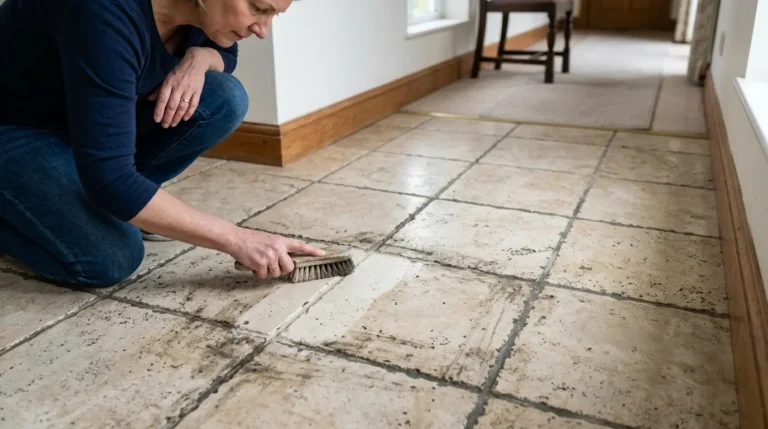
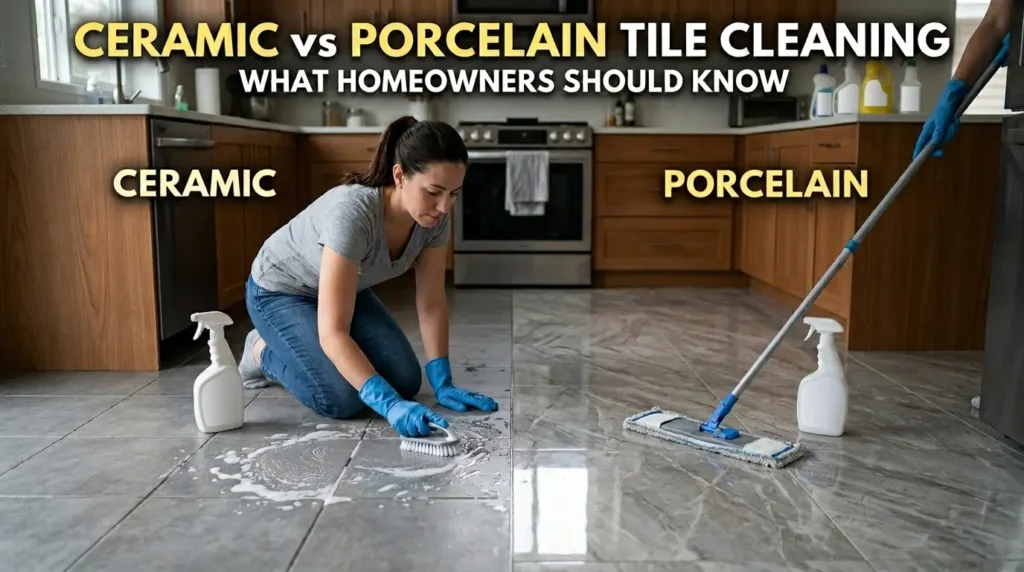
Ceramic and porcelain tile can look almost the same. Both may have smooth finishes, stone patterns, wood looks, or textured surfaces. Yet their bodies do not absorb water in the same way. Their finish can also affect how dirt, stains, and cleaner residue behave.
The key point in ceramic vs porcelain tile cleaning is that both materials often need a similar basic routine. Sweep first, use a tile-safe cleaner, rinse well, and remove dirty water. However, porcelain is denser and absorbs less water. The glaze, texture, polish, and grout condition may matter more during cleaning than the tile name alone.
This guide explains the main differences between ceramic and porcelain. It also covers stain resistance, moisture exposure, safe cleaning methods, and common mistakes that homeowners should avoid.
What Is the Difference Between Ceramic and Porcelain Tile?
Porcelain is a type of ceramic tile, but it is made to meet a stricter water-absorption standard. In everyday shopping, the word “ceramic” often means non-porcelain ceramic tile.
The Tile Council of North America defines porcelain as tile with water absorption of 0.5% or less. Non-porcelain tile absorbs more than 0.5%. Porcelain is therefore usually denser and less open to moisture entering the tile body.
This difference affects where each tile may be used. It can also affect how stains behave if the glaze or surface becomes damaged.
A simple comparison is:
| Feature | Ceramic Tile | Porcelain Tile |
| Tile family | Ceramic | A denser type of ceramic |
| Water absorption | More than porcelain | 0.5% or less by definition |
| Common use | Indoor floors, walls, backsplashes | Floors, showers, busy and wet areas |
| Cutting | Usually easier to cut | Usually harder and denser |
| Cleaning | Often simple with a suitable cleaner | Often simple, but finish matters |
| Main cleaning concern | Grout, glaze damage, residue | Grout, texture, polish, residue |
These are broad differences. Always check the tile maker’s instructions because products within each group can vary.
Is Porcelain Easier to Clean Than Ceramic?
Porcelain is not always easier to clean. Both glazed ceramic and glazed porcelain can have smooth, low-maintenance surfaces.
Glaze fills many of the small openings on the tile face. This often makes glazed tile easier to wipe than an unglazed or heavily textured surface. The Tile Council notes that glazed porcelain is usually easier to clean than unglazed porcelain because the glaze fills small surface openings.
A smooth ceramic wall tile may be easier to clean than a textured porcelain floor. A matte or slip-resistant porcelain surface may hold dirt inside its texture. Polished porcelain may show streaks, dust, and fine marks more clearly.
The surface finish often matters as much as the material:
- Smooth glazed tile releases dirt more easily.
- Textured tile may need a soft brush.
- Matte tile can hold cleaning film.
- Polished tile may show scratches and haze.
- Unglazed tile may need more careful stain treatment.
Do not choose a cleaning method based only on the words ceramic or porcelain. Look at the finish and room use too.
Can You Use the Same Cleaner on Ceramic and Porcelain?
A cleaner marked safe for ceramic tile installations can often be used on both ceramic and porcelain. It must also be safe for the grout and any nearby materials.
Daltile recommends removing loose dirt before mopping, using a soft or medium cleaning tool, following the cleaner’s dilution instructions, and rinsing with fresh water. It also warns against mopping with dirty water because this spreads soil across the floor and into grout lines.
The safest basic routine is:
- Sweep or vacuum loose grit.
- Check the product label.
- Dilute the cleaner correctly.
- Work in small sections.
- Use a microfiber mop or soft brush.
- Rinse with clean water.
- Remove extra water.
- Let the floor dry fully.
Avoid assuming that a stronger mix will clean better. Too much product may leave a sticky or dull film.
The grout can also react differently from the tile. A chemical that does not visibly harm glazed porcelain may still affect cement-based grout.
How Do You Clean Ceramic Tile?
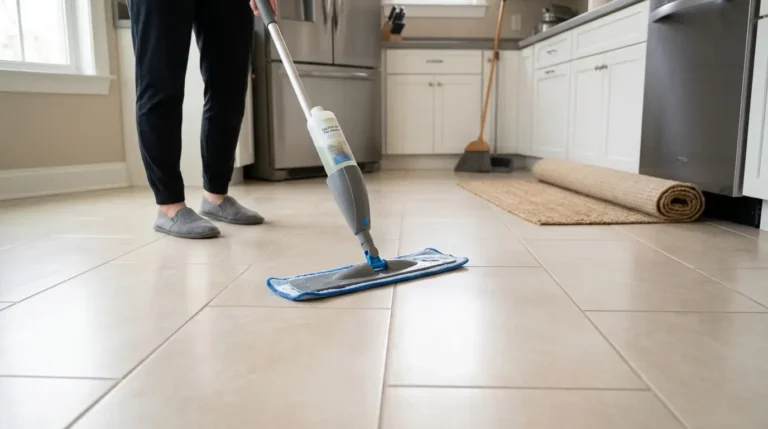
The best way to handle ceramic tile cleaning is to remove dry soil first and then use a mild, surface-safe cleaner.
Start by sweeping or vacuuming. Fine grit can scratch a worn or glossy finish when it is dragged across the floor by a mop.
Next, apply a cleaner approved for ceramic tile and grout. Use the amount listed on the label. Give it time to loosen the soil, but do not let it dry on the surface.
For smooth tile, a microfiber mop may be enough. For textured tile or dark grout lines, use a soft or medium nylon brush.
Finish with clean rinse water. Remove the water with a clean mop, cloth, squeegee, or suitable wet vacuum. Daltile advises rinsing and removing extra water so cleaner residue does not remain on the floor.
Watch for Damaged Glaze
Ceramic tile often has a glazed surface. Chips and cracks may expose the more absorbent tile body below.
Do not soak damaged sections or scrub sharp edges with heavy force. Dirt may enter the exposed area and become hard to remove.
A chipped tile may need repair or replacement rather than stronger cleaning.
How Do You Clean Porcelain Tile?
The basic method for porcelain tile cleaning is similar to ceramic tile care. Sweep, use a suitable cleaner, rinse well, and dry the surface.
The finish changes the details.
Glazed Porcelain
Glazed porcelain is usually simple to maintain. Use a microfiber mop and a tile-safe cleaner. Avoid letting soap or dirty water dry on the surface.
Textured Porcelain
Textured porcelain may need a soft brush because a flat mop can pass over small grooves and raised patterns.
Work in short sections. Agitate the surface gently, then remove the dirty solution. Do not allow loosened grit to settle back into the texture.
Polished Porcelain
Polished porcelain can show fine scratches, streaks, and cleaner haze more easily. Daltile advises removing dirt and cleaner residue carefully and testing products in a small area before wider use.
Use clean microfiber tools. Avoid abrasive powders and rough pads unless the tile maker approves them.
Unglazed Porcelain
Unglazed porcelain has no glaze coating over the surface. Although the tile body is dense, the texture may hold soil.
Use a suitable product and test a hidden area first. Stain treatment may depend on the type of spill and the tile maker’s instructions.
Which Tile Is More Stain Resistant?
Porcelain usually absorbs less liquid through its tile body. This can give it an advantage where moisture and spills are common.
However, everyday stain resistance also depends on the glaze and finish. A glazed ceramic surface can resist many stains very well. A textured or polished porcelain surface may still hold visible residue, oils, inks, or fine dirt.
Daltile describes both ceramic and porcelain as easy to maintain, while noting that porcelain is not damage-proof. Polished porcelain may need added care because fine scratches and stains can be more visible.
The grout is often the weakest point. Even when the tile face resists a spill, porous cement grout may absorb it.
Clean spills quickly, especially:
- Cooking oil
- Coffee
- Wine
- Pet urine
- Hair dye
- Makeup
- Muddy water
- Permanent ink
- Strongly colored food
Do not wait for a stain to dry simply because the floor is porcelain.
Is Porcelain Better for Moisture-Prone Areas?
Porcelain is often chosen for moisture-prone areas because of its low water absorption. Ceramic can also work well in kitchens, bathrooms, and showers when the product is rated for that use.
Daltile recommends both ceramic and porcelain for shower walls because they resist moisture and are easy to clean. It also notes that the shower still needs a proper moisture barrier or backing system behind the tile.
Tile and grout alone do not make a shower waterproof. The installation below the visible surface must manage water correctly.
In a wet area, check:
- Tile suitability
- Grout condition
- Corner caulk
- Shower base
- Drain area
- Wall backing
- Moisture barrier
- Ventilation
Porcelain’s low absorption cannot fix missing grout, failed caulk, or water entering behind the wall.
Does Moisture Affect Ceramic Tile More?
A glazed ceramic tile face may handle normal bathroom and kitchen moisture well. The main risk appears when water reaches unglazed edges, cracks, chips, or a tile that was not designed for the location.
Non-porcelain ceramic tile absorbs more water than porcelain through its body. That does not mean all ceramic tile is unsuitable for damp indoor rooms. It means the tile rating and installation should match the area.
For shower walls and bathroom backsplashes, follow the product’s approved-use guide.
For floors, also check slip resistance. A tile that is easy to clean may still be too slippery when wet.
Why Does Grout Get Dirty on Both Tile Types?
The grout between ceramic and porcelain tiles can collect the same dirt. The tile type does not protect the joints.
Grout often sits slightly below the tile surface. Dirty mop water, soap, grease, and fine soil can settle into those lines.
Steamrite’s current tile-and-grout service page explains that grout can absorb moisture and soap residue and that normal mopping may not pull deep dirt from the joints. The company uses inspection, cleaning solutions, agitation, and extraction for suitable tiled surfaces.
To reduce grout buildup:
- Vacuum before mopping.
- Change dirty mop water.
- Avoid excess soap.
- Rinse the floor.
- Remove standing water.
- Clean spills quickly.
- Dry bathroom corners.
- Use entrance mats.
Steamrite’s complete tile and grout cleaning guide for more detail on grout problems, cleaning methods, and professional care.
Can Vinegar Be Used on Ceramic or Porcelain Tile?
Vinegar should not be treated as a universal tile cleaner.
A small amount may not visibly affect some glazed ceramic or porcelain tile. However, acid can affect cement grout, sealers, metal trim, and some decorative finishes.
The safer choice is a cleaner approved for the full tile installation. That includes the tile, grout, caulk, and nearby materials.
Do not use vinegar when:
- Natural stone is also present
- Grout is cracked or weak
- The tile has a special coating
- The maker warns against acid
- Metal trim may be affected
- You are unsure about the surface
Always test a hidden section before using a new product.
How Does Aurora’s Water Affect Bathroom Tile?
Aurora’s water can leave visible mineral film in showers and around fixtures. The city’s 2026 water-quality data reports average hardness of 136 parts per million, with results ranging from 87 to 198 ppm.
Mineral film can appear on both ceramic and porcelain tile. It may show more clearly on dark, polished, or glossy finishes.
To reduce buildup:
- Squeegee shower walls.
- Dry dark polished tile.
- Wipe around fixtures.
- Do not let water spots build for weeks.
- Use a cleaner approved for the tile and grout.
- Avoid strong acid unless the manufacturer allows it.
Mineral deposits are different from soap scum. The safest treatment depends on the surface and the type of buildup.
How Does Aurora Winter Weather Affect Tile Floors?
Aurora entryways can collect wet grit and deicing residue during winter. The city uses liquid and granular deicer as part of its snow-clearing work.
This material can be carried indoors on shoes. Fine grit may scratch polished finishes, while dirty water can settle into grout.
Both ceramic and porcelain entry floors need dry soil removal before mopping.
During winter:
- Place mats outside and inside the door.
- Remove wet shoes near the entrance.
- Vacuum grit before adding water.
- Wipe wet residue quickly.
- Rinse the floor with clean water when needed.
- Dry the surface to prevent streaks.
Porcelain may absorb less moisture, but its grout still needs protection from dirty winter water.
What Cleaning Mistakes Should Homeowners Avoid?
Many tile problems come from the cleaning process rather than the tile material.
Avoid these common mistakes:
- Mopping without vacuuming first
- Using dirty mop water
- Adding too much cleaner
- Letting soap dry on the floor
- Using a metal brush
- Using abrasive powder on polished tile
- Mixing cleaning chemicals
- Applying acid without checking the grout
- Assuming every porcelain finish is the same
- Allowing standing water near cracks
- Ignoring loose or missing grout
Daltile advises using fresh water, rinsing well, removing extra water, and testing cleaning products in a small area. It also notes that some products can leave slick residue.
When Is Professional Tile Cleaning Useful?
Professional cleaning may help when the tile has deep texture, a large floor looks uneven, or dirty grout no longer responds to routine care.
Consider professional tile cleaning Aurora when:
- Grout stays dark after mopping
- Textured tile holds heavy soil
- Cleaner residue keeps returning
- Kitchen floors feel greasy
- Winter residue has built up near doors
- Shower tile has heavy mineral film
- Polished porcelain looks hazy
- The tile type is unclear
- Several rooms need even cleaning
- You are concerned about damaging the finish
A professional should inspect the finish, grout, cracks, coatings, and soil before choosing the method.
The professional tile cleaning versus DIY guide explains when household scrubbing may be enough and when extraction equipment may offer better results.
Get Ceramic or Porcelain Tile Cleaning From Steamrite
Both ceramic and porcelain floors can last well when the cleaning method matches the surface. The main difference is that porcelain has a denser body and lower water absorption. The daily cleaning routine is often similar for both.
The tile finish, grout, room use, and type of dirt should guide the cleaning plan.
Steamrite provides tile and grout cleaning in Aurora, CO for residential and commercial areas. Its service page states that the team inspects the tile and grout before using cleaning solutions, agitation, and extraction.
For ceramic vs porcelain tile cleaning, Steamrite can review the material, surface finish, and grout condition before recommending a suitable approach.
Frequently Asked Questions
Is porcelain tile easier to clean than ceramic tile?
Not always. Smooth glazed versions of both materials are often easy to clean. Texture, polish, and grout condition may make a bigger difference.
Can I use the same mop on ceramic and porcelain?
Yes, in many cases. Use a clean microfiber mop and a cleaner approved for the tile and grout. Do not mop with dirty water.
Which tile absorbs less water?
Porcelain absorbs less water. To meet the porcelain definition, its water absorption must be 0.5% or less.
Is porcelain tile completely stain-proof?
No. It is stain resistant, but spills, dyes, residue, and fine scratches can still affect the surface.
Can ceramic tile be used in a shower?
Many ceramic products are suitable for shower walls. Check the manufacturer’s approved-use guide and make sure the shower has proper moisture protection.
How do I clean textured porcelain?
Vacuum first, apply a suitable cleaner, and use a soft or medium nylon brush. Rinse and remove the dirty solution before it dries.
Why does porcelain tile look cloudy after mopping?
Too much cleaner, dirty water, or poor rinsing can leave a film. Rinse with fresh water and dry the surface.
Can professional cleaning repair chipped ceramic tile?
No. Cleaning removes soil and residue. Chips, cracks, loose tile, and failed grout may require repair.