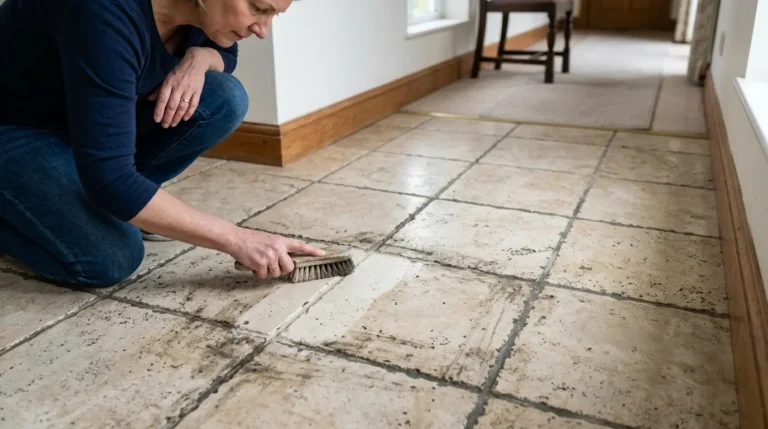
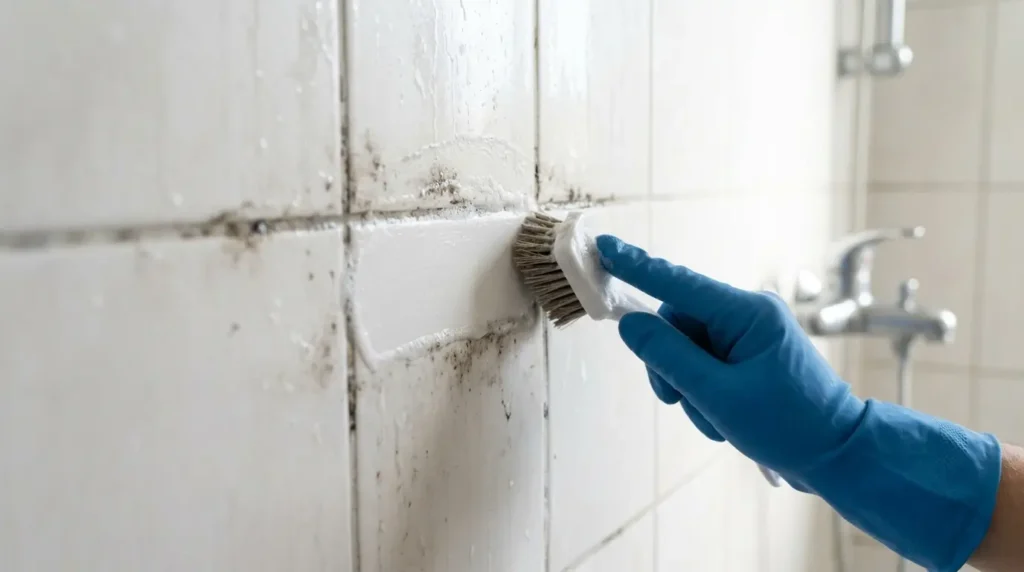
Dark grout lines can make a clean shower look dirty. The buildup often appears in corners, near the drain, behind bottles, or along the lower part of a shower wall. It may be caused by mold-like growth, soap residue, body oils, trapped moisture, or a mix of several problems.
To remove mold from shower grout, start with a tile-safe detergent, a nylon brush, clean rinse water, and full drying. You must also reduce the moisture that allowed the growth to appear. Cleaning alone will not give lasting results when a leak, failed caulk, or poor ventilation keeps the area wet.
This guide explains how to clean small areas safely. It also covers bleach, vinegar, ventilation, porous grout, and warning signs that the problem has moved beyond surface cleaning.
Why Does Mold Grow on Shower Grout?
Mold grows around shower grout because bathrooms provide moisture and material it can feed on. Soap film, body oils, dust, and shampoo residue can remain on damp grout after each shower.
Cement-based grout contains small pores. These openings can hold water and residue even after the tile face looks dry. Corners, shelves, and areas behind bottles often stay wet longer than open wall tile.
The EPA explains that moisture control is the key to controlling indoor mold. Cleaning visible growth without fixing leaks or humidity allows the problem to return.
Common causes include:
- A weak or unused exhaust fan
- A bathroom door that stays closed
- Water left on shower walls
- Soap scum inside grout lines
- Bottles covering wet corners
- Dripping fixtures
- Failed caulk
- Cracked grout
- A plumbing leak
- Water entering behind the tile
The first step is not choosing the strongest cleaner. It is finding out why the area stays damp.
Are Black Grout Lines Always Mold?
No. Black or dark grout does not always prove that mold is present. Dirt, old cleaner, hair dye, mineral film, soap scum, and permanent grout staining can create a similar appearance.
Dark buildup that feels slimy, spreads through damp areas, or returns quickly may be linked to moisture. Stained grout may remain dark even after it has been properly cleaned and dried.
Check the area after cleaning:
- Does the grout become lighter when dry?
- Is the dark area only near a leak?
- Does it return in the same corner?
- Is the caulk also discolored?
- Does the wall feel soft?
- Is there a musty odor?
- Are grout pieces missing?
You do not normally need to know the exact type of visible mold before dealing with it. The CDC advises removing visible mold and correcting the moisture problem rather than relying on home mold testing.
What Is the Safest Way to Remove Mold From Shower Grout?
For a small surface area on hard tile and sound grout, begin with detergent and water. Scrub gently, rinse away the dirty solution, and dry the shower completely.
The EPA recommends cleaning mold from hard surfaces with detergent and water. It also stresses complete drying after cleaning.
You will need:
- Protective gloves
- Eye protection
- A tile-safe detergent
- A soft or medium nylon brush
- Clean microfiber cloths
- Clean rinse water
- A squeegee
- Good bathroom airflow
People with asthma, mold allergies, breathing conditions, or weakened immune systems should avoid direct exposure and seek health advice when needed. The CDC recommends gloves and eye protection during mold cleanup and stronger protection for larger or more disruptive work.
How to Clean Mold From Shower Grout Step by Step
Step 1: Check the Size and Condition
First, confirm that the affected area is small and limited to the visible shower surface.
The EPA says homeowners can often handle areas smaller than about 10 square feet. Larger areas, major water damage, or hidden contamination may require professional remediation.
Do not begin normal scrubbing when:
- The affected area is larger than about 10 square feet
- The shower wall feels soft
- Tiles are loose
- Water damage is visible outside the shower
- Growth extends onto drywall
- There was sewage contamination
- A strong musty odor comes from behind the wall
These signs point to a larger moisture problem.
Step 2: Ventilate the Bathroom
Run the exhaust fan and open the door or window when possible.
Good airflow helps reduce cleaner fumes and allows the shower to dry faster. The CDC advises bringing in fresh air whenever household cleaning products are used.
Do not point a portable fan directly at dry, disturbed mold. This may spread particles through the room. Wet cleaning is better than aggressive dry brushing.
Step 3: Remove Shower Items
Move bottles, razors, soap trays, mats, and removable shelves.
Wash or replace items that also show dark buildup. Placing a clean bottle back onto wet, dirty grout can restart the problem.
Check below each item for failed caulk, cracks, or areas that remain damp.
Step 4: Apply a Tile-Safe Detergent
Apply a mild detergent or cleaner approved for the tile and grout.
Work on a small section. Follow the product label and do not let the cleaner dry on the wall.
A neutral cleaner is a safer starting point when the shower material is unclear. Marble, limestone, travertine, and other natural stone need special care. Avoid strong products until the material has been identified.
Step 5: Scrub Gently
Use a nylon grout brush. Scrub along the joint with short, controlled strokes.
Do not use:
- A wire brush
- A metal scraper
- Sandpaper
- A sharp blade
- Heavy pressure on loose grout
If grout powder or pieces come out, stop. The joint may need repair rather than more cleaning.
Step 6: Rinse Away the Dirty Solution
Rinse the area with clean water and wipe it with fresh microfiber cloths.
Do not allow the dirty solution to run into other grout lines and dry there. Change the rinse water once it becomes cloudy.
The goal is to remove both the loosened buildup and the cleaner. Soap left in porous grout can attract new dirt and make the lines look dark again.
Step 7: Dry the Shower Completely
Use a squeegee on the tile and a clean cloth around corners, shelves, and the drain.
Keep the exhaust fan running while the room dries. The EPA states that cleanup is not complete until the water or moisture problem has also been corrected.
Is Bleach Safe for Moldy Shower Grout?
Bleach may be used on some compatible hard surfaces, but it is not the best first choice for every shower or every grout type.
The EPA’s basic mold-cleanup guidance starts with detergent and water for hard surfaces. The CDC says bleach can be used in some situations, but users must follow product directions, provide ventilation, and protect their skin and eyes.
Bleach may create problems when:
- The grout is colored
- Natural stone is present
- Metal trim is nearby
- The shower has a delicate coating
- The grout is weak
- The product is used too strong
- The area is poorly ventilated
Never mix bleach with ammonia, vinegar, acid cleaners, or any other cleaning product. The CDC warns that mixing cleaners can release poisonous fumes.
When bleach is being considered, check the tile, grout, and cleaner manufacturers’ instructions first.
Can Vinegar Remove Mold From Shower Grout?
Vinegar is not a safe universal solution for shower grout.
Its acid may weaken cement-based grout over repeated use. It can also etch marble, limestone, travertine, and other acid-sensitive stone.
Even when the tile face appears unharmed, nearby grout, metal trim, caulk, or sealers may react differently.
Do not combine vinegar with bleach. Do not assume a homemade cleaner is safer simply because its ingredients are common household products.
For most showers, start with detergent or a tile-and-grout cleaner that clearly lists the surface as compatible.
Can Baking Soda Clean Moldy Grout?
Baking soda may help scrub light surface film, but it does not solve the moisture source. It can also be too abrasive for some polished, decorative, or coated tile.
Test it in a hidden area before use. Scrub gently with a nylon brush and rinse fully.
Do not mix baking soda with vinegar as a default grout treatment. The bubbling does not prove that deep contamination is being removed, and the acid may still affect grout or stone.
A labeled tile-safe product gives clearer guidance about surfaces, contact time, ventilation, and rinsing.
Why Does Mold Return After Cleaning?
Mold or mold-like buildup returns when the shower stays damp or still contains soap and body residue.
Cleaning removes visible surface growth. It does not repair a slow leak, improve a weak fan, replace failed caulk, or dry the space behind a wall.
Repeated growth often points to:
- Poor ventilation
- A fan that does not vent outdoors
- Wet towels left in the bathroom
- Water trapped behind bottles
- Standing water near the drain
- Failed silicone joints
- Cracked cement grout
- A dripping showerhead
- A plumbing leak
- Moisture behind tile
The EPA says there is no practical way to remove every mold spore from an indoor space. The effective way to control growth is to control moisture.
How Can You Improve Shower Ventilation?
Run the exhaust fan during the shower and leave it running until the bathroom feels dry.
Also:
- Open the bathroom door after showering
- Open a window when weather allows
- Keep the shower door partly open
- Spread out the curtain so it can dry
- Wipe water from walls
- Avoid drying wet towels in a closed bathroom
- Clean dust from the fan cover
- Check that the fan vents outdoors
A fan that is noisy but moves little air may need cleaning, repair, or replacement.
Aurora has a dry outdoor climate, but a closed bathroom can still hold high indoor moisture after a hot shower. Winter conditions may lead homeowners to keep windows and doors closed, making the exhaust fan more important.
Does Aurora Water Cause Shower Mold?
Water hardness does not directly cause mold, but mineral film can make shower cleaning more difficult. It may mix with soap and create rough deposits that hold moisture and residue.
Aurora’s 2026 water-quality report lists an average hardness level of 136 parts per million, with recorded levels ranging from 87 to 198 ppm.
Homeowners may notice:
- White film on dark tile
- Crust around fixtures
- Dull shower glass
- Deposits near grout lines
- Soap that is harder to rinse
Mineral film and mold need different treatments. Do not reach for a strong acid until you know the tile and grout can handle it.
Regular squeegee use and drying can reduce both mineral spots and the moisture that supports growth.
When Has Mold Penetrated Too Deep for Surface Cleaning?
Surface cleaning may not be enough when growth has entered damaged grout, failed caulk, wallboard, backing material, or another porous part of the shower.
The EPA warns that mold can enter the spaces inside porous materials, making complete cleaning difficult or impossible. Some contaminated materials may need to be removed and replaced.
Warning signs include:
- Grout that stays dark for days
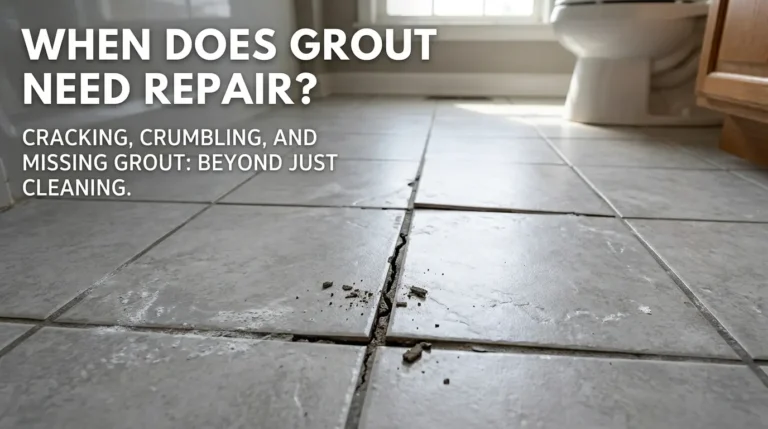
- Crumbling or missing grout
- Loose wall tile
- Soft drywall near the shower
- Swollen baseboards
- Peeling paint outside the shower
- Failed caulk with growth below it
- A musty odor behind the wall
- Repeated growth after careful cleaning
- Water stains on the ceiling below
- Affected areas larger than 10 square feet
Mold-stained silicone caulk may need replacement because growth can work into the flexible material. The old caulk should not simply be covered with a fresh layer.
A plumber, tile contractor, water-damage specialist, or qualified mold-remediation company may be needed depending on the cause.
Should Moldy Grout Be Repaired or Replaced?
Grout should be repaired or replaced when it is cracked, loose, missing, deeply stained, or no longer bonded to the tile edges.
Cleaning is suitable for sound joints with surface buildup. It cannot restore material that has broken away.
Consider repair when:
- Scrubbing releases grout particles
- Cracks continue across several tiles
- Water enters visible gaps
- Grout has separated from tile edges
- Deep discoloration remains after drying
- Old coatings prevent proper cleaning
Do not seal over active mold, wet grout, or dirty joints. The area must be cleaned, dried, inspected, and repaired when needed before sealing is considered.
Steamrite’s guide to grout cleaning versus grout sealing for a clear explanation of what each process can and cannot do.
How Can You Prevent Mold and Mildew From Returning?
The best prevention plan keeps the shower clean and helps it dry quickly.
After each shower:
- Run the exhaust fan
- Squeegee tile walls
- Dry corners and shelves
- Remove standing water
- Move bottles away from grout
- Spread out the shower curtain
- Leave the enclosure open when suitable
During routine cleaning:
- Remove soap film before it becomes thick
- Use a tile-safe cleaner
- Rinse away all product
- Inspect caulk and grout
- Fix dripping fixtures
- Wash shower mats
- Clean the exhaust-fan cover
Do not wait for the grout to turn black. Light, regular cleaning places less stress on the surface than repeated harsh treatments.
For a broader safe-cleaning process, see Steamrite’s guide on how to clean shower grout without damaging it.
When Should You Call a Professional?
Call a tile-cleaning professional when the affected area is limited to sound tile and grout, but safe household cleaning no longer removes the surface buildup.
Professional shower grout cleaning may be useful when:
- Soap scum is heavy
- Grout stays dark after safe cleaning
- A large shower needs even cleaning
- Dirty water remains inside the joints
- The tile material is unknown
- You want the surface inspected
- Natural stone needs careful treatment
Steamrite offers tile and grout cleaning in Aurora, CO. Its service may help remove suitable surface soil and residue after the tile and grout have been inspected.
However, routine tile cleaning is not the same as mold remediation. If growth is widespread, hidden behind tile, connected to major water damage, or larger than about 10 square feet, contact a qualified remediation or repair professional.
Final Answer: How Do You Remove Mold From Shower Grout?
To remove mold from shower grout, clean a small surface area with a tile-safe detergent, a nylon brush, and clean rinse water. Dry the shower fully and correct the moisture problem.
Avoid harsh chemicals until you know the tile and grout can handle them. Never mix bleach with another cleaner. Do not keep scrubbing grout that is loose, cracked, or crumbling.
When dark growth returns, the wall feels damp, or contamination appears to extend behind the tile, surface cleaning is no longer enough. Steamrite can help with suitable grout cleaning Aurora CO needs, while hidden mold and water damage should be handled by the correct remediation, plumbing, or tile-repair specialist.
Frequently Asked Questions
What is the safest cleaner for moldy shower grout?
Start with detergent and water or a product approved for the tile and grout. Scrub with a nylon brush, rinse well, and dry completely.
Can I use bleach on shower grout?
Bleach may be compatible with some hard surfaces, but it is not suitable for every tile, grout color, stone, or finish. Follow the label and never mix it with another cleaner.
Why does mold return after I clean the grout?
The shower may still have excess moisture, soap residue, poor ventilation, failed caulk, or a hidden leak.
Is black grout always black mold?
No. Dark lines may also be caused by soap, dirt, mineral film, old cleaner, dye, or permanent grout staining.
Can mold grow inside grout?
Cement grout is porous, so moisture and residue can enter it. Deep contamination in damaged joints or materials behind the tile may require removal or repair.
When is a mold problem too large for DIY cleaning?
The EPA advises seeking professional guidance when the affected area is larger than about 10 square feet or when major water damage is present.
Should moldy shower caulk be replaced?
Caulk may need replacement when dark growth has entered the material, it has separated from the surface, or water can pass through the joint.
Can Steamrite remove hidden mold behind shower tile?
Steamrite’s tile-and-grout service is suited to cleaning appropriate visible surfaces. Hidden mold, damaged backing, leaks, and widespread contamination require a qualified remediation or repair specialist.