

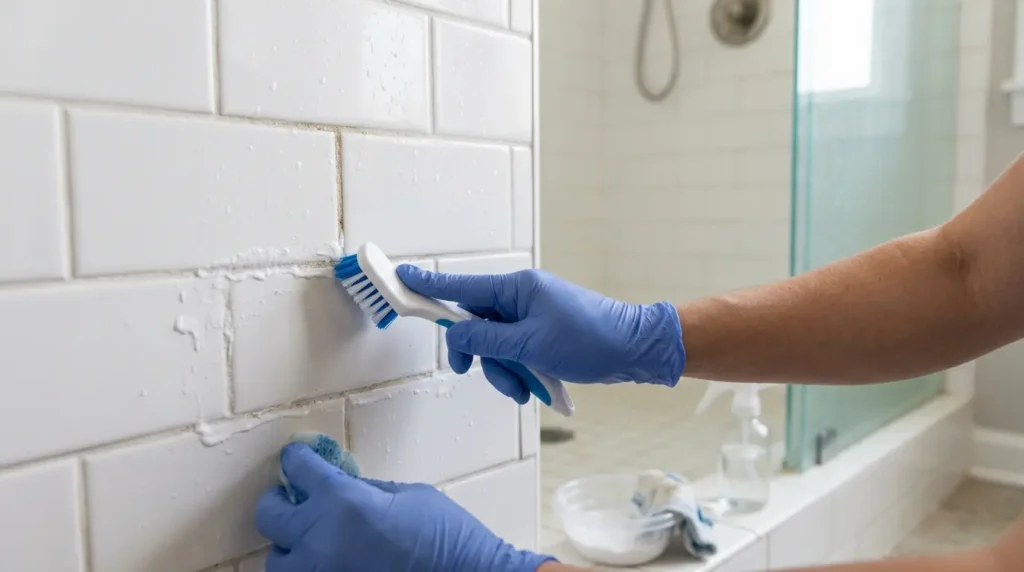
Shower grout can turn dull, yellow, brown, or dark over time. Soap, body oils, minerals, and moisture collect inside its rough surface. Normal rinsing may clean the tile face while leaving the grout lines unchanged.
Learning how to clean shower grout safely is important because stronger products do not always give better results. Acidic cleaners, metal brushes, and heavy pressure may wear grout or damage certain tile surfaces. The safest method starts with identifying the material, using a suitable cleaner, scrubbing gently, and rinsing away all residue.
This guide explains how homeowners can handle light soap scum and surface buildup. It also covers dark spots, mold concerns, natural stone, hard-water film, and signs that professional help is the safer choice.
What Is the Safest Way to Clean Shower Grout?
The safest basic method is to use a tile-safe neutral or mildly alkaline cleaner, a nylon brush, clean rinse water, and good drying.
Cement-based grout is porous. It can absorb stains, but it can also absorb cleaning products. The Tile Council of North America recommends alkaline or purpose-made tile and grout cleaners instead of acids. It also warns that cleaner left inside grout can form a sticky film that attracts more dirt.
A simple cleaning process includes:
- Identify the tile material.
- Ventilate the bathroom.
- Remove loose soap and surface dirt.
- Apply a suitable cleaner.
- Let it work as directed.
- Scrub with a nylon brush.
- Rinse with clean water.
- Remove the dirty water.
- Dry the shower fully.
Test every new cleaner in a hidden area first. Stop if the tile loses shine, the grout color changes, or loose material comes out of the joints.
Identify the Tile Before You Start
Do not assume every shower can handle the same cleaning product. Ceramic, porcelain, marble, limestone, travertine, and other materials have different care needs.
Ceramic and Porcelain Tile
Glazed ceramic and porcelain tile can usually handle a neutral or mildly alkaline tile cleaner. The grout may need more attention because it is rougher and often more absorbent than the tile.
Check the surface for decorative coatings, worn glaze, and small cracks before scrubbing.
Natural Stone Tile
Natural stone needs more caution. Marble, limestone, and travertine contain minerals that can react with acids. Vinegar, lemon juice, and acidic bathroom cleaners may dull or etch these surfaces.
The Natural Stone Institute recommends neutral cleaners, stone soap, or mild detergent for routine stone care. It also advises rinsing well and drying the surface with a soft cloth.
When you do not know the tile type, avoid experimenting with strong cleaners. Ask the installer, check old home records, or have the surface inspected.
What Supplies Do You Need?
Most light shower-grout cleaning jobs do not require a long list of products.
Gather:
- A neutral or suitable alkaline tile-and-grout cleaner
- A soft or medium nylon grout brush
- Clean microfiber cloths
- A bucket of clean water
- Gloves
- A small squeegee
- A fan or open door for airflow
- A wet vacuum, if available and safe to use
Do not use a metal brush. Steel or wire bristles may scratch tile, tear caulk, and wear the grout surface.
Avoid using an old kitchen sponge that holds grease or cleaner. Use clean tools so you do not move residue from another area into the shower.
Step-by-Step: How to Clean Shower Grout Safely
Ventilate the Bathroom
Run the exhaust fan and leave the bathroom door open when practical. Read the cleaner label and follow its ventilation instructions.
Never mix household cleaning products. Some combinations can create dangerous fumes. Use one product at a time, rinse it away fully, and store cleaners in their original containers.
Remove Bottles and Loose Items
Move shampoo bottles, soap trays, bath mats, razors, and other items out of the shower.
Pay attention to grout behind bottles and corner shelves. These areas stay wet longer and often collect more soap film.
Rinse the Surface
Use warm water to loosen fresh soap and surface residue. This first rinse will not deep-clean the grout, but it removes loose material that may block the cleaner.
Do not soak cracked joints. If water appears to enter a gap, stop and have the area inspected.
Apply a Suitable Cleaner
Apply the cleaner to a small section. Follow the label for mixing and contact time.
Do not let the cleaner dry on the tile. Work in sections that you can scrub and rinse before the surface dries.
Adding extra product does not always improve cleaning. Too much soap may leave a film and make the grout appear dirty again sooner. Both the Tile Council and Natural Stone Institute advise thorough rinsing to prevent residue.
Scrub With a Nylon Brush
Use short, controlled strokes along the grout line. Apply enough pressure to loosen buildup without digging into the joint.
Start gently. Increase pressure only if the grout feels firm and no material is coming loose.
Do not use a sharp scraper on the grout. It can remove the top layer or cut into the joint.
Rinse the Dirty Area
Rinse with clean water. Replace the water when it becomes cloudy or soapy.
Leaving dirty water on the wall or shower floor can move loosened soil back into the grout. The Tile Council states that lifting away the dirty solution, followed by removing clean rinse water, is an effective way to prevent soap and dirt from settling back into the joints.
A wet vacuum can help on a shower floor when the tool is suitable for wet use. On walls, wipe the surface with clean microfiber cloths.
Dry the Shower
Use a squeegee on tile walls and glass. Dry corners, grout lines, shelves, and the area around the drain.
Keep the fan running until the room is dry. Moisture control matters because cleaning dark buildup without solving the damp condition allows the problem to return.
How Do You Remove Soap Scum From Grout?
Soap scum is best removed with a non-acidic cleaner that is safe for the tile. Let the product soften the film before light brushing.
Soap scum forms when soap, body oils, and minerals remain on wet surfaces. It may look white, dull, gray, or slightly sticky.
For light buildup:
- Rinse the shower with warm water.
- Apply a tile-safe soap-scum cleaner.
- Wait for the label’s stated contact time.
- Brush the grout gently.
- Rinse more than once.
- Dry the surface.
Avoid adding more cleaner when the film does not disappear at once. Thick buildup may require repeated safe treatments instead of one harsh application.
Aurora’s 2026 water-quality data reports average hardness of 136 ppm, with readings ranging from 87 to 198 ppm. This mineral content can help explain why some Aurora showers develop visible film or deposits around tile, fixtures, and grout.
A mineral deposit is not always the same as soap scum. Do not use acid to remove it until you know the tile and grout can safely handle the product.
How Should You Clean Mold or Mildew-Like Spots?
Small areas of dark surface buildup on hard shower tile may often be scrubbed with detergent and water, followed by complete drying. You must also correct the moisture source.
The EPA states that mold control depends on moisture control. It advises cleaning mold from hard surfaces with detergent and water and drying the area fully. If the moisture problem is not fixed, the mold will likely return.
Wear gloves and avoid breathing material released during scrubbing. People with health concerns should speak with a medical professional before handling mold cleanup.
Check for:
- A dripping showerhead
- Failed caulk
- Poor bathroom airflow
- Water trapped behind bottles
- Damp corners
- A slow plumbing leak
- Grout cracks
- Loose tile
Cleaning cannot correct water entering from behind the shower wall.
The EPA says homeowners can usually handle a moldy area smaller than about 10 square feet, depending on the situation. Larger growth, heavy water damage, sewage exposure, or health concerns call for qualified professional help.
Is Bleach the Best Cleaner for Shower Grout?
Bleach should not be the automatic first choice for every dark grout line. It may lighten some surface staining, but it does not fix moisture, failed caulk, or deep damage.
A strong bleach product may also affect colored grout, metal fixtures, fabrics, and nearby materials. Natural stone requires special care.
Start with a suitable detergent or tile-and-grout cleaner. Follow the surface manufacturer’s advice. When a registered mold or mildew product is needed, follow its label exactly.
Never mix bleach with ammonia, acids, vinegar, or another cleaner. The Natural Stone Institute specifically warns that mixing bleach and ammonia creates toxic gas.
Can Vinegar Damage Shower Grout?
Yes. Regular use of vinegar can wear cement-based grout because the acid reacts with the cement portion of the joint.
The Tile Council explains that acids dissolve cement-based grout. It warns that strong acid cleaning can remove the upper grout layer and may lead to regrouting.
Vinegar may also etch marble, limestone, travertine, and other acid-sensitive stone. Even granite or other siliceous stone may contain acid-sensitive minerals, so the Natural Stone Institute does not recommend acidic cleaners for routine stone care.
Use a cleaner made for the exact tile and grout instead of relying on one homemade recipe for every shower.
Should You Use Baking Soda on Shower Grout?
Baking soda is mildly abrasive. It may help loosen light surface soil, but it is not suitable for every finish.
Do not scrub polished stone, decorative tile, or a coated surface with an abrasive paste until the manufacturer confirms it is safe. Fine scratches may dull the finish even when they are hard to see at first.
Never combine baking soda with vinegar as a “deep grout cleaner.” The bubbling reaction may look active, but the vinegar can still react with cement grout. It may also harm acid-sensitive stone.
A purpose-made cleaner gives clearer instructions about suitable materials, contact time, rinsing, and safety.
Can You Use a Steam Cleaner on Shower Grout?
Steam may loosen stubborn residue on grout that is firm and in good condition. It should not be used directly on loose grout, cracks, failed caulk, or unknown natural stone.
The Tile Council lists pressurized steam as an option for stains that do not respond to normal cleaners. However, steam is not a repair method.
Inspect the joints before using a home steamer. Keep the tool moving and follow its surface instructions.
Read Steamrite’s guide on whether steam cleaning can damage tile or grout before using a steam mop or detail nozzle.
Why Does Shower Grout Turn Dark Again?
Shower grout often turns dark again because soap, cleaner, body oils, and moisture remain inside or on top of the joint.
Common causes include:
- Cleaner that was not fully rinsed
- Poor airflow
- Water trapped in corners
- Dirty cleaning cloths
- Failed caulk
- A slow plumbing leak
- Open or worn grout
- Permanent grout discoloration
Dry grout may also look lighter than wet grout. If one section stays dark after the rest dries, it may still hold moisture.
Do not keep applying stronger chemicals to a repeated dark area. Check for cracks, failed seals, and hidden water.
The broader tile and grout cleaning guide for Aurora homeowners explains porous grout, common grout problems, cleaning methods, and sealing.
How Can You Keep Shower Grout Cleaner?
Daily moisture control is often more useful than frequent heavy scrubbing.
After showering:
- Run the exhaust fan
- Squeegee tile walls
- Dry lower corners
- Move bottles away from grout
- Leave the door open when suitable
- Wipe soap spills
- Repair dripping fixtures
- Wash shower mats regularly
Once a week, inspect the grout and remove light soap film before it becomes thick.
Sealing may improve the stain resistance of some cement grout. It does not make grout waterproof or maintenance-free. Grout should be cleaned and prepared correctly before a sealer is applied.
When Should You Call a Professional?
Professional help is useful when safe household cleaning no longer improves the shower or when the surface may be damaged.
Call a professional when:
- Grout remains dark after cleaning and drying
- Large areas have heavy buildup
- The shower contains natural stone
- Grout is cracked or missing
- Tiles feel loose
- Caulk has failed
- Mineral deposits are heavy
- Dark buildup covers more than a small area
- Stains return within a short time
- You suspect a leak behind the tile
- You are unsure which cleaner is safe
A cleaning company can address removable soil. It cannot repair every installation or moisture problem. Cracked joints, loose tile, damaged waterproofing, or plumbing leaks may require a different specialist.
Steamrite provides professional tile and grout cleaning in Aurora, CO. Its current process includes inspection, professional cleaning products, scrubbing, and extraction based on the condition of the surface.
Final Answer: How Should You Clean Shower Grout?
The safest answer to how to clean shower grout is to begin gently. Identify the tile, use a neutral or suitable alkaline cleaner, scrub with a nylon brush, rinse away all dirty water, and dry the shower fully.
Do not treat vinegar, bleach, baking soda, acid, or steam as a universal solution. The wrong method can wear cement grout, dull natural stone, scratch tile, or make existing cracks worse.
Regular drying helps prevent heavy soap and moisture buildup. When grout remains stained, the material is unknown, or the shower shows signs of damage, Steamrite can inspect the area and recommend a suitable cleaning approach.
Frequently Asked Questions
What is the best cleaner for shower grout?
Use a neutral or mildly alkaline cleaner made for the tile and grout type. Follow the label and test it in a hidden area first.
Can I clean shower grout with vinegar?
Vinegar may wear cement grout and etch natural stone. It is not a safe universal shower cleaner.
How do I remove soap scum from grout?
Apply a non-acidic tile-safe soap-scum cleaner, let it work as directed, brush gently, rinse well, and dry the area.
Can bleach remove dark grout stains?
It may lighten some surface stains, but it is not right for every grout or tile. It also does not fix the moisture source that causes repeated growth.
Why does grout stay dark after cleaning?
The grout may still be wet, deeply stained, coated with residue, or affected by a leak. Allow it to dry and inspect the area for damage.
Can I use a wire brush on grout?
No. Wire bristles may wear grout and scratch nearby tile. Use a soft or medium nylon brush.
How do I stop dark spots from returning?
Control moisture. Run the fan, dry wet surfaces, repair leaks, remove soap film, and replace failed caulk when appropriate.
Can professional cleaning repair cracked grout?
No. Cleaning removes soil and residue. Cracked, missing, or loose grout may require repair before deep cleaning.