


You scrub the tile, rinse the floor, and step back to admire the clean grout. A few days or weeks later, the lines begin to look dull again. Some areas may even appear darker than they did before. This can make it feel like all your work was wasted.
So, why does grout get dirty again after cleaning? The usual causes include surface-only cleaning, open grout pores, leftover soap, dirty mop water, moisture, and daily foot traffic. Cleaning may remove visible dirt without removing what is trapped deeper inside the joints.
This guide explains why grout becomes dirty so quickly and what you can do about it. You will also learn when sealing may help and when it is better to call a professional in Aurora, CO.
Why Does Grout Get Dirty Again So Quickly?
Grout gets dirty again because most home cleaning methods only clean its top surface. Dirt, oils, soap, and moisture can remain inside the grout or settle back into it while the floor dries.
Most standard grout is cement-based. Unlike smooth glazed tile, cement grout has many tiny openings. These spaces can hold stains and cleaning residue. The Tile Council of North America explains that cement grout is porous and can absorb stains. It also notes that poorly rinsed soap can leave a sticky film that attracts more dirt.
The problem often comes from several causes working together. For example, a mop may loosen surface soil but leave dirty water behind. That water settles into low grout lines. Soap residue then makes the surface slightly sticky, so fresh dust attaches faster.
Surface Cleaning Does Not Always Reach Deep Dirt
Surface cleaning improves the look of tile, but it may leave dirt inside the grout. A mop moves across the flat tile face. Grout lines often sit slightly lower, which makes them harder to reach.
A home mop may remove loose dust and recent spills. It may not pull out grease, old cleaner, or soil pressed into the joints by foot traffic. Scrubbing with a small brush can help, but the dirty solution still needs to be removed from the floor.
If that water is left to air-dry, some of the loosened grime can settle back into the grout. The grout may look cleaner while it is wet, then appear dark again once it dries.
Deep cleaning is different because it focuses on three steps:
- Loosening the soil
- Rinsing the grout
- Removing the dirty solution
The third step is often missing from DIY cleaning. The Tile Council recommends lifting dirty water away from the joints, followed by a clean-water rinse. This helps remove both soil and soap film instead of letting them dry on the floor.
Porous Grout Absorbs More Than Smooth Tile
Grout can act like a small network of open spaces. These spaces may absorb spills, mop water, body oils, cooking grease, and dirt from shoes.
This is why the tile may look clean while the lines around it remain dark. Glazed ceramic and porcelain tile often have smooth surfaces that release dirt more easily. The grout between those tiles may hold onto the same dirt.
The amount of absorption depends on the grout type and condition. Cement-based grout is usually more absorbent than epoxy grout. Older grout may also be more exposed if its sealer has worn down or was never applied.
Common materials that enter grout pores include:
- Mud and outdoor soil
- Cooking oil
- Coffee or food spills
- Soap and shampoo
- Pet accident residue
- Dust mixed with mop water
- Body oils in showers
- Cleaning product film
Once these materials settle below the surface, light mopping may not remove them. That is one reason dirty grout after cleaning can return so soon.
Soap Residue Can Attract Fresh Dirt
Too much cleaner can leave the floor dirtier over time. This may sound strange, but many floor products need careful measuring and rinsing.
When extra soap stays on the floor, it can form a thin film. The film may not be easy to see, but it can feel sticky under bare feet. Dust and fine soil then attach to it.
Grout can absorb some of that soap. Each new cleaning may add another layer if the floor is not rinsed. Over time, the grout may become dull even though it is cleaned often.
Oil-based or wax-based products can create a similar problem. The Tile Council warns that oily or waxy cleaners may leave film inside grout. Even a suitable cleaner can attract dirt when it is not rinsed well.
To reduce residue:
- Measure the cleaner as directed
- Do not add extra product for “more power”
- Use clean rinse water when required
- Change cloudy water during mopping
- Avoid waxy cleaners unless made for the surface
- Let the floor dry before judging the result
More soap does not always mean more cleaning. In many cases, it simply means more product left behind.
Dirty Mop Water Can Settle Into Grout Lines
A mop does not make dirt disappear. It lifts soil into the water. Once that water becomes gray or cloudy, continuing to mop can spread the soil across the floor.
Low grout lines may collect that dirty water. As the floor dries, fine particles remain inside the joints. The tile surface may still look acceptable because it is smooth, but the grout becomes darker.
This often happens in larger kitchens, entryways, and open tiled areas. A single bucket of water may become dirty long before the whole floor is finished.
A better mopping routine is simple:
- Vacuum or sweep the floor first.
- Use the correct amount of cleaner.
- Start with clean water.
- Change the water when it becomes cloudy.
- Rinse the mop head often.
- Remove standing water from low areas.
- Rinse the floor if the product requires it.
Microfiber pads should also be washed often. A pad that still holds grease or old cleaner can place that residue back on the tile.
Moisture Makes Bathroom Grout Look Dirty Faster
Bathroom grout faces a different problem than grout in a hallway or kitchen. It is exposed to water, soap, shampoo, skin oils, and warm air.
Moisture itself does not always create a stain. However, a damp surface can hold soap film and other material that supports dark surface growth. Shower corners, lower walls, and areas behind bottles often dry more slowly.
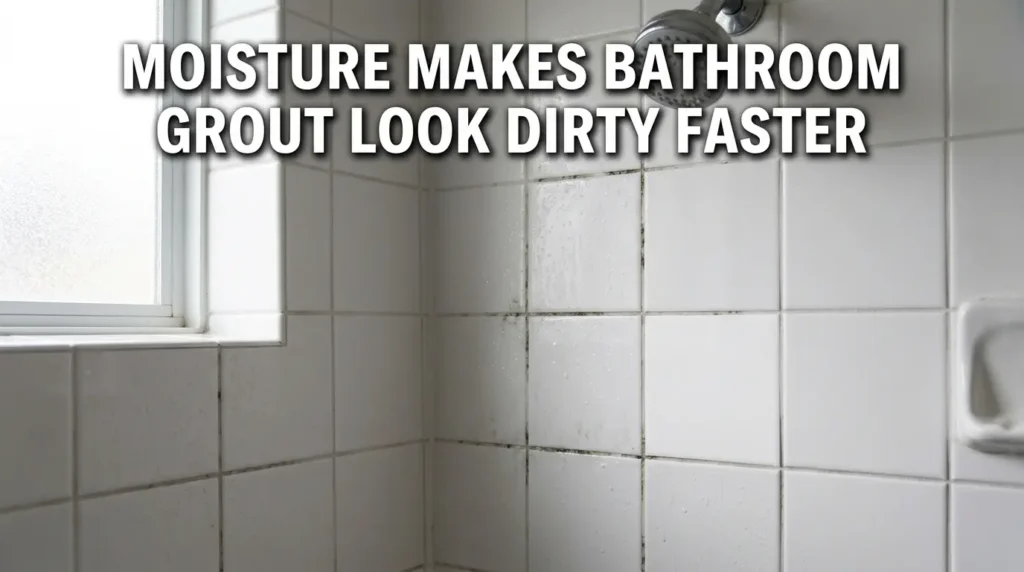
Custom Building Products explains that wet areas such as showers can develop mold or mildew when moisture and a food source, such as soap scum, are present. Regular cleaning and suitable sealing can make the buildup easier to manage.
You can reduce bathroom buildup by:
- Running the exhaust fan during and after showers
- Using a squeegee on tile walls
- Drying corners where water collects
- Fixing dripping faucets
- Removing soap film regularly
- Keeping bottles off wet grout lines
- Leaving the shower door open when suitable
If grout keeps turning dark in the same wet area, check for failed caulk, cracks, or a leak. Cleaning will not solve water entering from behind the tile.
Kitchen Grout Collects Grease and Food Residue
Kitchen grout often becomes dark because fine grease settles on the floor. The grease may come from cooking, spills, or food carried under shoes.
Grease is sticky. Once it reaches the grout, it holds dust and crumbs. Mopping with plain water may spread it instead of removing it.
Areas near the stove, sink, refrigerator, and trash bin often become dirty first. The grout may feel slightly tacky or look darker than the rest of the room.
Clean food and oil spills as soon as possible. Use a cleaner approved for your tile type, then remove the dirty solution. Avoid using harsh products without checking the surface, especially when the floor includes natural stone.
Why Do Aurora Entryway Grout Lines Get Dark?
Entryways receive more outdoor soil than most rooms. In Aurora, tile near a front door or garage may collect dry dust during warm weather and wet grit during snowy periods.
Shoes press this material into the joints. When the area is later mopped, the mixture of water and fine soil may sink deeper into unsealed grout.
Door mats can reduce the problem, but they must also be cleaned. A full mat can become another source of dirt. Place one mat outside and another inside when possible. Vacuum both often and remove wet shoes near the entrance.
These simple steps can slow down re-soiling:
- Sweep busy tile areas often
- Clean mats before they become packed with dirt
- Wipe wet shoe marks quickly
- Avoid letting salty or gritty water dry on the floor
- Use clean mop water on entry tile
- Protect grout after a proper deep clean when suitable
Local habits matter more than repeating the city name. The goal is to stop soil before it reaches the grout.
Does Grout Sealing Keep Grout Clean?
Sealing can make some grout more resistant to stains, but it does not make the grout maintenance-free. Spills and dirt still need to be cleaned.
A penetrating sealer enters the surface and helps reduce the amount of liquid absorbed by cement grout. A topical sealer creates a coating above the surface. Each type has different uses and limits.
The Tile Council explains that sealing is often a good choice for cement-based grout. It also notes that penetrating and topical sealers protect the surface in different ways.
A sealer may help when:
- Cement grout absorbs water quickly
- The grout is in a busy kitchen or entry
- Light grout stains easily
- The floor has just been deep cleaned
- The existing sealer has worn down
- A tile professional recommends it for the surface
However, no sealer blocks every stain. Custom Building Products states that no sealer can prevent all staining at all times. Spills should still be cleaned quickly.
Sealer should not be applied over dirty grout. Otherwise, it may lock in discoloration or residue. The grout must first be cleaned, rinsed, and allowed to reach the condition required by the sealer instructions.
How Can You Tell if Grout May Need Sealing?
A simple water test may give you a clue. Place a few drops of clean water on a dry grout line in a hidden area.
Watch what happens:
- If the water stays on top, the grout may still resist moisture.
- If it quickly darkens and absorbs the water, the grout may be open.
- If different sections react differently, the old sealer may be wearing unevenly.
This test does not tell you which sealer to use. Tile type, grout type, previous coatings, and moisture conditions still matter.
Do not seal grout when moisture is coming from below the tile. Trapping moisture can lead to other problems. Ask a professional when you see white deposits, repeated dampness, loose tiles, or cracks.
When Is Cleaning Not the Real Solution?
Some grout looks dirty because it is damaged, stained through, or uneven in color. More scrubbing may not fix these problems.
Cleaning is not the right repair for:
- Missing grout
- Deep cracks
- Loose tiles
- Failed shower caulk
- Water coming through the floor
- Permanent color loss
- Poor grout installation
- Stains locked under an old coating
Cracked grout may point to movement in the tile assembly or gaps left during installation. Cleaning can improve the surface, but it cannot restore missing material.
A professional cleaner should explain when the issue falls outside cleaning. You may need a tile repair contractor, plumber, or moisture specialist instead.
How Do You Keep Grout Clean After Deep Cleaning?
The best way to keep grout clean is to control soil, use less cleaning product, and remove dirty water before it dries.
Follow these steps:
- Sweep or vacuum before mopping
- Use a neutral cleaner made for the surface
- Measure the cleaner correctly
- Change dirty mop water
- Rinse when the label requires it
- Wipe spills quickly
- Dry shower corners
- Clean entry mats
- Avoid metal brushes
- Check grout for cracks
- Consider sealing when suitable
Do not wait until every grout line turns black. Light maintenance is easier than removing years of buildup.
You can also read the complete tile and grout cleaning guide for more information on tile types, cleaning methods, cost factors, and professional service.
When Should You Call a Professional Grout Cleaner?
Call a professional when the grout stays dark after correct cleaning, the area is too large to scrub evenly, or you do not know which cleaner is safe.
A professional tile and grout cleaning service can loosen buildup and remove dirty solution from the joints. This helps address the deeper soil that a home mop may leave behind.
Professional help may be useful when:
- Grout becomes dark again after each cleaning
- Soap film covers a shower
- Kitchen grout feels greasy
- The floor has years of buildup
- Previous products left residue
- The tile material is unknown
- Natural stone is present
- You want to prepare grout for sealing
- You are worried about damaging the surface
Steam Rite provides tile and grout cleaning in Aurora. Its service process includes inspection, cleaning solutions, scrubbing, extraction, and optional sealing based on the condition of the surface.
Get Tile and Grout Help From Steam Rite
If your grout keeps getting dirty, the answer may not be harder scrubbing. The floor may need better rinsing, residue removal, moisture control, or deep extraction.
Steam Rite serves homeowners and businesses in Aurora, CO. The team can inspect your tile type, grout condition, and main source of buildup before recommending a cleaning approach.
For help with grout cleaning Aurora CO, contact Steam Rite for an estimate. Mention whether the problem is in a shower, kitchen, entryway, bathroom floor, or commercial space. Photos of the area may also help explain the condition.
Frequently Asked Questions
Why does my grout look dirty again after mopping?
Dirty water, soap film, or soil below the surface may remain in the grout. As the floor dries, that material becomes visible again.
Can too much floor cleaner make grout dirty?
Yes. Extra cleaner can leave a sticky film when it is not rinsed away. Dust and soil then attach to that residue.
Does dirty mop water stain grout?
It can. Fine dirt in the water may settle into low or porous grout lines as the floor dries.
Why does bathroom grout keep turning black?
Soap film, moisture, and poor airflow can support dark surface buildup. Repeated staining may also point to failed caulk or a moisture issue.
Will grout sealer stop dirt completely?
No. A suitable sealer can improve stain resistance, but it cannot stop every stain. You still need to wipe spills and clean the floor.
Should I use vinegar to clean grout?
Acidic vinegar can react with cement-based grout and may wear its surface. It can also harm some stone. Use a cleaner approved for your tile and grout type.
Why does grout look darker when wet?
Porous grout can absorb water and temporarily darken. If only some areas darken, the sealer may be worn or uneven.
Can professional cleaning fix cracked grout?
No. Cleaning removes buildup but does not repair cracks or missing grout. Damaged joints may need repair or replacement.