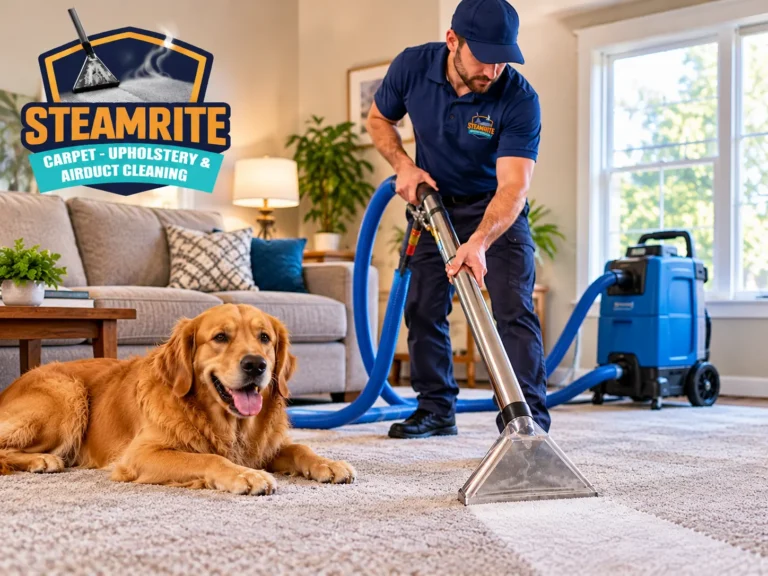
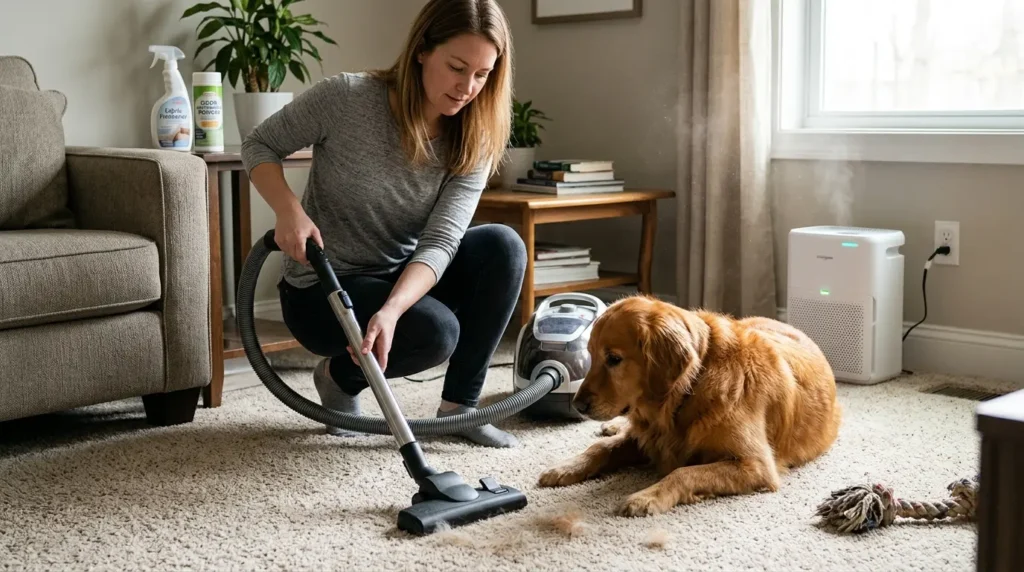
Pets bring companionship and energy into a home, but cats and dogs also bring hair, dander, tracked-in dirt, and occasional accidents. These materials do not always stay where you can see them. They can become trapped in carpet fibers, upholstery, pet beds, and household dust, and bad odors can linger beneath the surface.
Cleaning is particularly critical for Denver area pet owners. It’s a relatively dry climate with low humidity and light precipitation, and it can cause dust buildup indoors in Denver. Regular cleaning helps to prevent pet-related buildup from becoming a bigger cleanliness and comfort issue.
Pet Messes Go Further Than Fur
What you see is only a fraction of the mess pets can leave behind. Pet dander is made of small particles that are shed from the skin and other body parts of pets. Animal dander is listed as a biological contaminant by the EPA, which can be incorporated into household dust.
These particles stick to carpet, as well as dirt tracked in on paws. They can also be trapped in upholstery, blankets, rugs, and a pet’s bed.
The areas most likely to need regular attention include:
- Carpet and area rugs
- Pet beds and blankets
- Sofas and other upholstered furniture
- Entryways and high-traffic areas
- Spaces beneath furniture
- Floors around food and water bowls
Vacuuming will help to pick up loose debris, but it does not guarantee that all the debris has been removed from the carpet or surrounding fabrics.
Why Pet Odor Can Keep Coming Back
Unlike typical household odours, pet odours can be harder to remove as the source can lie below ground. A pet accident can stain the carpet and seep into the padding underneath. Only treating the visible area may lead to a subsequent reappearance of the odor.
That’s why it’s not always sufficient to cover up a pet smell with fragrance or baking soda. If odors persist, the material that has been contaminated has to be addressed.
Dog odor removal may involve different treatments for a single urine accident, wet-fur smell, or repeated marking. Selection of the right approach is dependent on the source, material affected, and the duration of contamination. If a smell continually comes back after the carpet cleaning, seek the source of the smell, not just the visible area on the carpet.
Pet Dander Can Become an Indoor Dust Problem
Pet dander is not limited to floors. It may hang on furniture, bedding, rugs, and other surfaces in the home, and then is released into the air when surfaces are disturbed. Regular cleaning is recommended by the EPA to decrease indoor dust and allergens, such as animal dander. Vacuuming carpets and furniture frequently is one practical step for controlling this buildup.
This should be combined with air filtration, but not as a substitute for surface cleaning. EPA points out that many larger particles (such as animal dander) stay on surfaces for extended periods and can be resuspended in the air when the surface is disturbed.
For effective pet dander removal, combine:
- Regular vacuuming with an appropriate high-efficiency filter.
- Carpet and upholstery cleaning when buildup becomes difficult to manage.
- Regular washing of pet bedding.
- Dusting with methods that do not simply redistribute settled particles.
- Proper HVAC filter maintenance according to the equipment manufacturer.
Create a Pet-Friendly Cleaning Routine
A pet-friendly cleaning program is not just a matter of using the most powerful domestic cleaners. It’s the proper selection of products and techniques for various surfaces and the ability to apply them according to the label directions, as well as the proper precautions regarding pets and keeping them out of wet or freshly treated surfaces if required.
As a pet owner, you need to be aware of the areas where your pet uses most. Clean areas where food and water are provided, wash bedding, vacuum favourite rest spots, and correct any accidents as soon as possible.
| Area | Useful routine |
| Carpet | Vacuum high-use areas regularly |
| Pet bedding | Wash removable covers and blankets |
| Upholstery | Remove hair and surface debris |
| Hard floors | Clean tracked-in dirt and residue |
| Entryways | Remove soil brought inside |
| HVAC | Check the air filter regularly |
No EPA-prescribed carpet cleaning program is the same for all homes. The agency advises following carpet manufacturer’s recommendations and taking carpet condition and use into consideration.
When Household Cleaning Is Not Enough
Regular vacuuming and surface cleaning are essential but in certain cases need to be addressed in more detail. If the stains, soiling, or odors keep coming back, or the carpet is visibly soiled or the stain is from a number of older accidents, then surface cleaning is not enough.
Be aware of homemade mixtures of household chemicals. Some of the popular remedies for getting rid of carpet smells, such as hydrogen peroxide, baking soda, vinegar, and others, may not work on every carpet fiber or backing material. Household cleaners can interact with one another to form unwanted chemical reactions.
For cleaning an accident, follow the manufacturer’s instructions for the carpet and the label for the cleaning product. When a foul odor persists and it is not known what the problem is or where it is coming from, a professional can help determine which items should be cleaned.
Professional carpet cleaning has the capability of going deeper into carpet than regular surface cleaning. The objective should be removing accumulated soil and odor sources rather than simply making the room smell fresher.
Denver Homes Benefit From a Whole-Home Approach
While carpet is a significant aspect of pet-related cleaning, it’s not the only area where dander and odor can build up. Frequently used surfaces like upholstery, rugs, pet bedding, and other surfaces can still be a source of dust in the home even after the carpet is cleaned.
That’s why Denver pet owners should consider more than one room. EPA suggests that there are several options to control biological contaminants in the home: source control, frequent cleaning, ventilation, and filtration. Denver’s dry climate also makes dust management an ongoing household task. Regular cleaning of high-traffic areas and quick removal of any pet accident can make regular upkeep easier.
For homeowners who need deeper carpet or pet odor care, Steamrite provides carpet cleaning, pet urine and odor removal, upholstery cleaning, and air duct cleaning in the Denver area.
Watch for These Signs of Pet-Related Buildup
Your home may require deeper cleaning services if your standard cleaning isn’t catching up. Look for:
- Pet odors that return shortly after cleaning
- Several old urine stains
- Carpet that looks dull despite frequent vacuuming
- Noticeable odor around pet bedding
- Heavy hair and dander accumulation
- Carpet that feels heavily soiled or sticky
- Increased dust around areas where pets spend most of their time
These symptoms are not necessarily associated with a serious indoor air quality issue. They simply suggest that the current cleaning routine may need to be adjusted.
Frequently Asked Questions
Does carpet cleaning help remove pet dander?
Yes. Carpets pick up household dust and animal dander, and frequent maintenance reduces this accumulation. The EPA actually suggests cleaning often as a way to keep indoor dust and allergens in check. When dust and particles get deep into the carpet fibers, a deep cleaning does more than your usual vacuuming.
What is the best way to control pet odors?
Take care of accidents right away, keep your pet’s bedding clean, vacuum spots your pet likes, and don’t just mask smells with fragrances. If an odor sticks around, it’s probably soaked through to the carpet padding or another absorbent spot, which calls for some focused treatment.
Can an air filter solve pet dander problems?
An air filter helps catch some airborne particles, but it’s no substitute for cleaning. Most allergens, including animal dander, settle on surfaces and only blow around when they’re disturbed. You need a mix of filtration, vacuuming, surface cleaning, and carpet care to properly manage it early.
Final Thoughts: Keep Pet Odor and Carpet Problems Under Control
Keeping your pet-friendly home truly clean means dealing with more than just visible fur. Pet odor and carpet cleaning should tackle dander, tracked-in dirt, urine stains, and hidden sources of odor that sink into carpet and other fabrics.
Regular vacuuming, clean pet bedding, prompt accident treatment, proper filtration, and periodic deep cleaning can make the home easier to maintain. When recurring odors or heavy buildup become difficult to control, Steamrite can help Denver-area pet owners address carpet, pet odor, upholstery, and related cleaning needs.