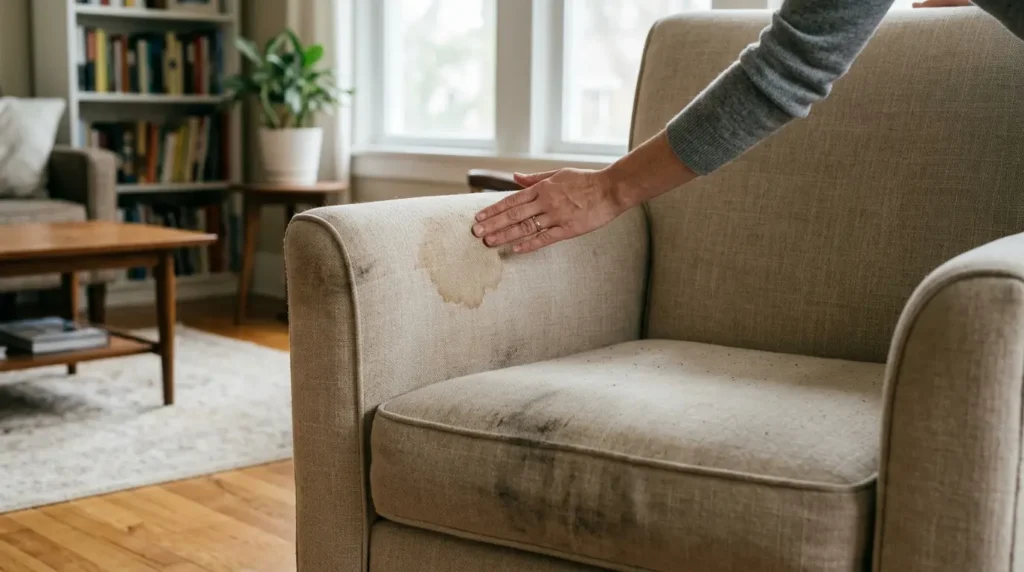
If you are deciding when to clean upholstery, look at its condition rather than relying on one fixed calendar. Professional upholstery cleaning becomes worth considering when a sofa or chair develops overall soil, dark high-use areas, body-oil buildup, persistent odors, repeated spills, pet-related buildup, or stains that no longer respond safely to routine care. The fabric label matters too. Some upholstery allows water-based spot cleaning, some requires solvent-based care, and Code X fabrics should not be cleaned with liquid products. La-Z-Boy advises professional furniture cleaning once an overall soiled condition has been reached.
The right time therefore depends on how the furniture is used, what fabric covers it, and whether normal vacuuming and safe spot care are still keeping it in good condition.
There Is No Single Cleaning Schedule for Every Sofa
People often ask how often to clean upholstery, but one interval cannot fit every sofa, chair, or household.
A sofa used every evening by a family with children and pets faces very different conditions from a formal chair that is used a few times each month. Fabric construction also changes what type of care is appropriate.
Furniture manufacturers place cleaning instructions on upholstery because different materials react differently to water, solvents, and cleaning products. La-Z-Boy specifically tells owners to identify the fabric and its cleaning code before treating it.
Instead of cleaning automatically after a set number of months, watch the furniture itself.
Important factors include:
- How often the furniture is used
- Whether pets sit on it
- Whether children use it regularly
- Food and drink spills
- Body-oil buildup
- Visible soil
- Odor
- Fabric type
- Manufacturer care instructions
- Previous spot treatments
These factors provide a more useful answer than an unsupported universal schedule.
The Fabric Looks Dull or Generally Soiled
One of the clearest signs upholstery needs cleaning is an overall change in appearance.
Upholstery does not always develop one obvious stain. Soil can build slowly across the entire piece.
You may notice that:
- The seat looks darker than the back
- Armrests look dull
- Headrest areas have changed color
- Cushion edges look dirty
- Frequently touched sections stand out
- The fabric no longer looks even
This type of buildup can happen gradually, which makes it easy to overlook when you see the furniture every day.
La-Z-Boy recommends regular vacuuming or light brushing to control normal dust and grime, then professional furniture cleaning once overall soiling has developed.
That is a useful practical boundary: routine care is for routine soil. Overall soiling is a reason to consider deeper professional attention.
Armrests and Headrests Have Darkened
Some parts of upholstered furniture receive much more direct contact than others.
Armrests, headrests, front cushion edges, and favorite seating positions repeatedly come into contact with hands, hair, clothing, and skin.
Over time, these high-touch areas can develop visible buildup.
Steamrite notes that upholstered furniture commonly collects body oils, pet hair, and food spills through normal daily use.
If vacuuming removes loose material but dark or greasy-looking areas remain, the problem has likely moved beyond simple dry-soil removal.
This is especially noticeable on lighter fabric, although darker furniture can hide buildup for longer.
Do not assume a darkened armrest is simply permanent discoloration. It may contain removable soil, but the fabric should be identified before choosing a cleaning method.
Vacuuming No Longer Improves the Appearance
Vacuuming is useful for loose dust, crumbs, pet hair, and other dry material.
It cannot address every type of upholstery soil.
When the furniture still looks dirty immediately after thorough vacuuming, embedded or bonded soil may be present.
The difference is important.
A sofa covered in loose pet hair may need better routine vacuuming. A sofa with oily high-use areas, dried spills, or broad discoloration may need a different type of care.
La-Z-Boy recommends frequent vacuuming or light brushing as preventive maintenance but distinguishes this from professional cleaning once the furniture is generally soiled.
Professional attention becomes more relevant when routine dry cleaning is no longer changing the condition of the fabric.
Spills Are Becoming Harder to Manage Safely
A fresh spill does not automatically mean an entire sofa needs professional cleaning.
Many upholstery labels allow limited spot care when the correct method is used.
The problem begins when:
- Several spills have accumulated
- A stain keeps spreading
- Water rings appear
- The same spot has been treated repeatedly
- Cleaning products have left residue
- You do not know which cleaner is safe
- The care tag limits the products you can use
Manufacturer guidance matters here.
Ashley and La-Z-Boy both use upholstery cleaning codes that tell owners whether water-based cleaners, dry-cleaning solvents, both, or neither should be used. For example, Code X furniture is generally limited to vacuuming or light brushing rather than liquid spot cleaning.
If you cannot safely treat the stain within the care instructions, continuing to experiment with household products can create a bigger problem.
Pet Hair and Pet Use Are Affecting the Furniture
Pets can change how quickly upholstery needs attention.
Hair is only one part of the issue.
A sofa frequently used by pets may also collect:
- Outdoor soil
- Body oils
- Saliva
- Dander
- Moisture from paws
- Small food particles
- Accident-related contamination
Loose pet hair can often be managed with vacuuming and washable covers. That does not mean every pet household needs constant professional cleaning.
The decision changes when routine care stops controlling the condition of the fabric.
If the furniture develops broad soil, persistent odor, repeated staining, or contamination that appears to have moved into cushions, professional assessment becomes more appropriate.
Pet urine is a separate problem from normal upholstery soil. It may penetrate deeper than the visible fabric, so a normal upholstery-cleaning decision should not be treated as a complete urine-treatment plan.
An Odor Keeps Returning
Odor is another useful signal, especially when normal source control no longer works.
Furniture can absorb material from food, pets, spills, and repeated use. Steamrite identifies odors and pet accidents as common upholstery concerns, while its service information notes that animal accidents may require targeted treatment rather than ordinary surface cleaning alone.
Start by checking removable sources such as:
- Pet blankets
- Cushion covers that are approved for washing
- Food debris
- Pet hair
- Loose soil
- Items trapped between cushions
If those sources are removed but the same odor keeps returning from the furniture, the cause may be deeper in the upholstery or cushion material.
Repeatedly adding fragrance does not tell you whether the source has been removed.
Children or Heavy Daily Use Create Faster Buildup
A heavily used family sofa usually changes condition faster than decorative furniture.
Children may eat on furniture, spill drinks, climb onto cushions with outdoor clothing, or use the same seating area every day.
Adults create high-use patterns too.
The point is not that homes with children need upholstery cleaned on a fixed schedule. It is that usage changes how quickly soil develops.
Watch the actual condition.
A busy household may need professional attention sooner when:
- Seat cushions remain visibly soiled
- Armrests darken
- Several spills overlap
- Food residue remains in seams
- Spot cleaning is becoming frequent
- The sofa has an overall dull appearance
A lightly used chair with none of these conditions may not need the same level of treatment at the same time.
The Care Label Limits DIY Cleaning
The furniture care label is one of the most important things to check before deciding what to do next.
Common upholstery codes include:
Code W
Water-based upholstery products may be permitted, but manufacturer instructions still need to be followed. La-Z-Boy warns against saturating its Code W fabrics and recommends pretesting in an inconspicuous area.
Code S
A water-free dry-cleaning solvent is required for spot cleaning. Water should not be used under La-Z-Boy’s Code S guidance.
Code W-S or WS
The fabric may permit certain water-based or solvent-based approaches, depending on the stain and manufacturer instructions.
Code X
Ashley and La-Z-Boy both state that Code X upholstery should not be treated with foam or liquid cleaners and should generally be vacuumed or lightly brushed.
The cleaning code does not tell you that a sofa is dirty. It tells you how careful you need to be when it is.
When the fabric is heavily soiled but the care label places strict limits on home treatment, that is a strong reason to stop experimenting.
You Are Not Sure What Fabric You Have
Furniture that looks similar can require very different care.
Steamrite states that it identifies upholstery fabric before choosing a cleaning method because materials do not all respond the same way to moisture, heat, and cleaning products.
If you do not know what the upholstery is made from, be cautious with liquid treatment.
This is especially important when:
- The care tag is missing
- The furniture is older
- The fabric has several colors
- The piece has already been cleaned unsuccessfully
- The upholstery feels delicate
- Previous moisture created rings
- You are unsure about colorfastness
More cleaning is not always the safest answer.
Sometimes the useful next step is simply identifying the material and understanding its care limits before anything else is applied.
Spot Cleaning Is Creating Rings or Color Changes
DIY spot care should stop when the treatment begins changing the fabric rather than improving the stain.
Warning signs include:
- Water rings
- Lightened areas
- Dark edges around the cleaned spot
- Color transfer onto a cloth
- Texture changes
- Stiff fabric
- A stain becoming larger
Manufacturers commonly advise pretesting upholstery cleaners in a small hidden area and avoiding oversaturation.
If the fabric is already reacting poorly, continuing with stronger products can make it harder to separate the original stain from cleaning-related damage.
At that point, stop adding products and keep a record of what has already been used.
That information can be useful if the furniture is later professionally assessed.
Several Small Problems Have Become One Overall Condition
Not every sofa reaches the professional-cleaning stage because of one dramatic stain.
More often, several smaller issues appear together:
- Slightly dark armrests
- Pet hair in seams
- A few old food spots
- Dull seat cushions
- Dust around the back
- Minor odor
- Soil along the front edge
Each problem may seem small on its own.
Together, they indicate that the furniture has moved from isolated spot care to overall soiling.
This is close to the practical standard given by La-Z-Boy, which recommends professional furniture cleaning once an overall soiled condition is reached.
It is a more sensible trigger than waiting until furniture becomes severely stained.
Should Upholstery Be Cleaned on a Fixed Schedule?
Not necessarily.
For how often to clean upholstery, condition and manufacturer guidance are more useful than a universal number.
A fixed “every 12 months” or “every 18 months” rule can ignore major differences between households and materials.
Instead, consider:
- Frequency of use
- Pets
- Children
- Food and drinks
- Visible soil
- Odor
- Spills
- Fabric type
- Cleaning code
- Manufacturer instructions
A sofa used daily may show meaningful soil much sooner than a rarely used guest-room chair.
Likewise, a delicate fabric with strict cleaning instructions should not be cleaned more aggressively just because a calendar says it is time.
When Should DIY Spot Cleaning Stop?
DIY care should stay within the furniture manufacturer’s instructions.
Stop repeated home treatment when:
- You cannot identify the cleaning code
- The label says X
- The stain is spreading
- Color is transferring
- Water rings have developed
- The fabric texture is changing
- Several products have already failed
- The whole piece is soiled rather than one small spot
- Odor keeps returning
- Pet contamination may extend into the cushion
The goal is not to turn every minor spot into a professional service call.
It is to recognize when further home cleaning is more likely to add moisture, residue, or fabric damage than solve the problem.
What About Fabric Protectors?
A fabric protector does not eliminate the need for normal maintenance.
Furniture may still collect loose soil, body oils, pet hair, food residue, and spills.
If a sofa was sold with a protector or treated later, follow the manufacturer or product instructions before using another chemical on top of it.
Do not assume that stain resistance means every substance will simply wipe away.
The underlying fabric and care code still matter.
Professional cleaning may also affect existing treatments depending on the material and product, so this should be discussed before service when relevant.
What Should Aurora Homeowners Consider?
The decision for professional upholstery cleaning Aurora homeowners face should still start with the furniture itself, not the city name.
Look at use, fabric, pets, spills, overall soil, and the care label.
Steamrite currently provides professional upholstery cleaning in Aurora, CO for sofas, fabric chairs, cushions, and other upholstered furniture, and states that it identifies the material before choosing a cleaning method.
Homeowners dealing with overall soiling rather than one small spot can use professional upholstery cleaning in Aurora, CO as the service option within Steamrite’s upholstery cluster.
If your question is about what actually happens once an appointment begins, the Aurora upholstery cleaning guide covers that separate topic.
A Simple Decision Checklist
If you are trying to decide when to professionally clean a sofa, use the condition of the furniture.
Routine care may still be enough when:
- Soil is mostly loose dust or pet hair
- Vacuuming improves the appearance
- There is one fresh, manageable spill
- The care label allows the treatment you plan to use
- The fabric has no broad discoloration or odor
Professional attention may make more sense when:
- The whole piece looks dull or soiled
- High-touch areas are dark
- Several stains have accumulated
- Pet use is affecting the fabric
- Odor keeps returning
- Vacuuming no longer improves the condition
- The cleaning code limits safe home treatment
- Spot cleaning has caused rings or texture changes
- You do not know the fabric type
- The furniture has several problems at once
This approach keeps the decision tied to the actual furniture rather than an arbitrary date.
Questions to Ask Before Professional Upholstery Cleaning
Once the furniture appears ready for professional attention, ask questions that protect the fabric and clarify the service.
Useful questions include:
- Will the fabric and care label be checked first?
- Is the cleaning method suitable for this material?
- How will existing stains be assessed?
- Should I stop using any spot products before the appointment?
- What should I do with removable cushions?
- Are pet-related areas treated differently?
- What information should I provide about previous cleaning attempts?
- Are there any stains or color changes that may be permanent?
These questions keep the conversation focused on material compatibility and realistic expectations.
Final Thoughts
Knowing when to clean upholstery is less about following a fixed calendar and more about watching how the furniture changes with use.
Routine vacuuming and careful spot treatment can handle normal day-to-day care. Professional cleaning becomes more relevant when the sofa or chair has developed overall soil, dark high-touch areas, repeated spills, pet-related buildup, persistent odor, or cleaning problems that exceed the limits of the fabric-care label.
The manufacturer instructions should always guide what can safely be applied to the material. Water, solvent, and Code X fabrics do not have the same cleaning requirements.
When those signs upholstery needs cleaning are present, Steamrite can assess the affected furniture through its professional upholstery cleaning in Aurora, CO service based on the fabric and condition of the piece.
FAQs
When does upholstery need professional cleaning?
Consider professional cleaning when furniture develops overall soil, dark high-use areas, persistent odor, repeated stains, pet-related buildup, or conditions that routine vacuuming and safe spot care no longer control. La-Z-Boy recommends professional cleaning once an overall soiled condition has developed.
How often should upholstery be professionally cleaned?
There is no single interval that fits every piece of furniture. Use, pets, children, spills, fabric type, visible soil, and manufacturer instructions should guide how often to clean upholstery.
What are the most common signs upholstery needs cleaning?
Common signs upholstery needs cleaning include dark armrests, dull seat cushions, overall soil, repeated stains, persistent odor, pet buildup, and fabric that no longer looks cleaner after vacuuming.
Does pet hair mean my sofa needs professional cleaning?
Not by itself. Loose hair can often be managed through routine vacuuming. Professional attention becomes more relevant when pet use also creates overall soil, odor, staining, or contamination that routine care cannot control.
What does Code X mean on upholstery?
Code X generally means liquid or foam cleaners should not be used. Ashley and La-Z-Boy advise vacuuming or light brushing for Code X upholstery.
Should I keep spot cleaning if a stain will not come out?
Stop if repeated treatment is causing rings, color changes, texture changes, or spreading. Check the manufacturer care code before applying additional products.
Should upholstery be cleaned when it starts to smell?
First remove obvious sources such as pet hair, washable covers, food debris, and other loose material. If the odor remains or keeps returning from the furniture, deeper cleaning or assessment may be appropriate.
Can every sofa be steam cleaned?
No. The fabric and manufacturer instructions determine which cleaning methods are suitable. For example, La-Z-Boy specifically states that hot water extraction or steam cleaning is not recommended for some Code W upholstery in its product guidance.