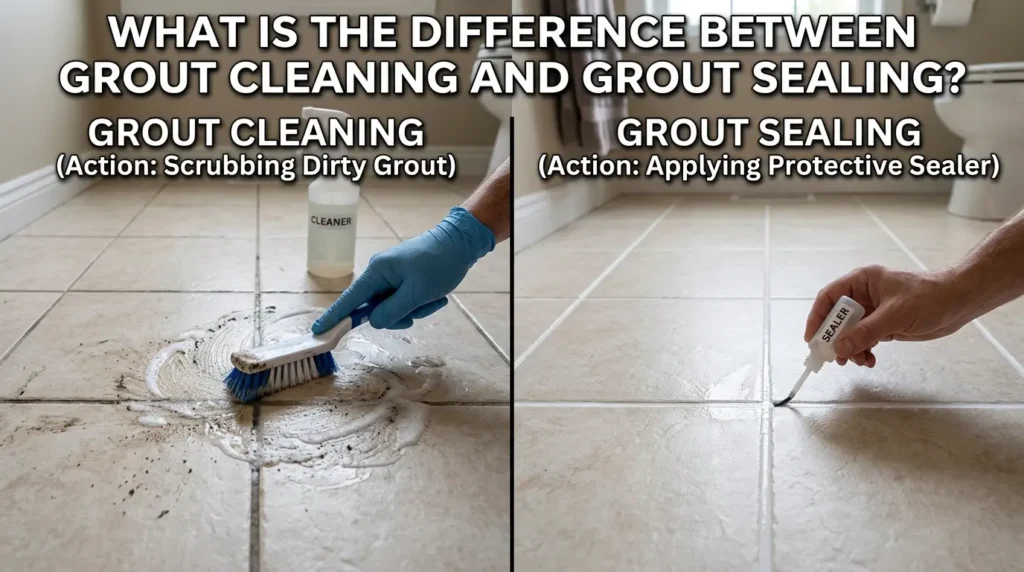
Grout cleaning and grout sealing are two different parts of tile care. Cleaning removes dirt, grease, soap, and residue that have built up on or inside the grout. Sealing adds a protective treatment that can slow down future staining and moisture absorption.
The main difference in grout cleaning vs grout sealing is simple: cleaning deals with the buildup that is already there, while sealing helps protect clean grout from new spills and soil. Sealing does not replace cleaning. It also cannot repair cracks, remove old stains, or make a tiled surface fully waterproof.
This guide explains how both processes work, when each one may be useful, and why grout should normally be cleaned before a sealer is applied. It also covers cement grout, epoxy grout, showers, kitchens, entryways, and tile floors in Aurora, CO.
What Is Grout Cleaning?
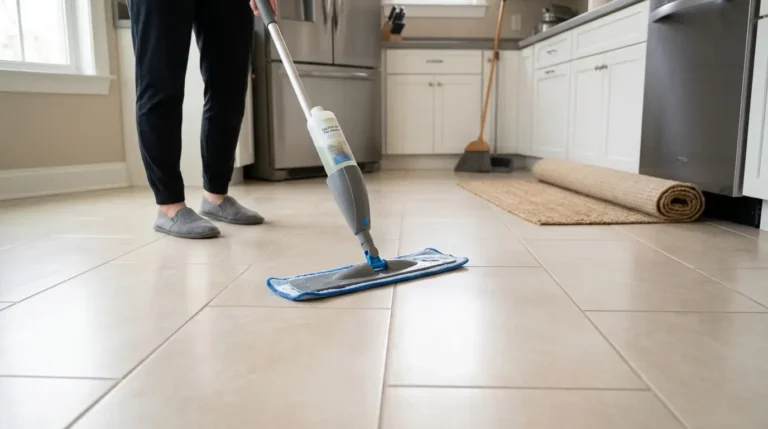
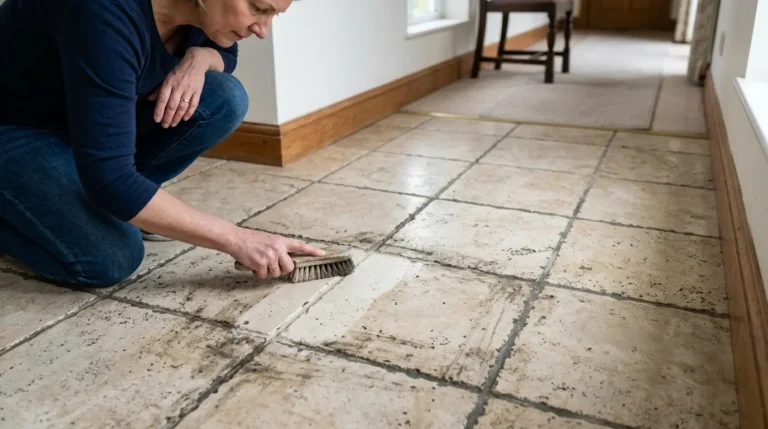
Grout cleaning removes soil and residue from the joints between tiles. It may address cooking grease, dirty mop water, soap film, tracked-in grit, pet residue, and other buildup.
Standard mopping often cleans the flat tile face better than the grout. Grout lines may sit lower than the tile, and cement-based grout contains small pores that can absorb stains. The Tile Council of North America explains that cement grout is porous and has a large surface area that can hold staining material.
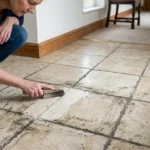
A basic grout-cleaning process may include:
- Removing loose dust and grit
- Applying a tile-safe cleaner
- Allowing time for the cleaner to loosen buildup
- Scrubbing the joints
- Rinsing the surface
- Removing dirty water and residue
- Letting the grout dry
The goal is to leave the grout as clean and residue-free as the material allows.
What Is Grout Sealing?
Grout sealing applies a protective product to suitable grout after it has been cleaned and prepared. The sealer can reduce how quickly water, oils, and stains enter porous joints.
Sealing does not place an unbreakable shield around the grout. Dirt can still collect on top. Spills still need to be wiped, and floors still need routine cleaning.
The Tile Council explains that many owners choose to seal cement-based grout because it absorbs stains. It describes penetrating sealers that bond within the grout and repel water-based stains, as well as topical sealers that form a coating over the surface.
A sealer may:
- Reduce fast liquid absorption
- Give spills more time to be wiped
- Make routine maintenance easier
- Help grout resist some stains
- Protect a freshly cleaned appearance
- Reduce uneven absorption in suitable grout
The exact result depends on the grout, tile, product, installation, and daily use.
Grout Cleaning vs Grout Sealing: Quick Comparison
| Factor | Grout Cleaning | Grout Sealing |
| Main purpose | Removes existing soil and residue | Adds future stain resistance |
| When it is done | When grout looks dirty or holds buildup | After suitable grout has been cleaned |
| Removes stains | May remove some stains | No |
| Fixes cracks | No | No |
| Makes grout waterproof | No | No |
| Changes maintenance needs | Restores a cleaner surface | May make later cleaning easier |
| Suitable for every grout | Method depends on grout and tile | Not every grout needs the same sealer |
| Ongoing care required | Yes | Yes |
Cleaning and sealing often work best as connected steps, but they should not be treated as the same service.
Should Grout Be Cleaned Before Sealing?
Yes. You should normally clean grout before sealing because a sealer is meant to protect a prepared surface, not cover dirt.
If grout contains soap, grease, old mop residue, or dark soil, applying sealer may leave that material trapped beneath or within the protective treatment. The result can look uneven and may be harder to correct later.
Grout should be:
- Free from loose dirt
- Properly cleaned
- Thoroughly rinsed
- Free from cleaner residue
- In sound condition
- Dry enough for the selected product
- Compatible with the sealer
Follow the sealer maker’s preparation and drying instructions. Different products have different needs, so a fixed waiting period should not be used for every floor.
Cleaning should also come first because it reveals the real grout condition. Once the soil is removed, cracks, missing joints, color loss, and uneven repairs may become easier to see.
Can You Seal Dirty Grout?
You can apply a product over dirty grout, but you should not expect a good result. Sealing dirty grout may lock in discoloration and residue.
A sealer does not dissolve grease or lift deep soil. It may even make later cleaning more difficult if the wrong product creates a coating over the buildup.
If the grout still looks dark after deep cleaning, determine why before sealing it. The dark color may come from:
- Permanent staining
- Moisture inside the joint
- Old topical coatings
- Worn grout color
- Mold-like surface buildup
- Mineral residue
- Failed caulk
- A leak below or behind the tile
Do not keep adding sealer to hide a moisture problem. The source should be inspected first.
Does Every Type of Grout Need Sealing?
No. The answer depends on the grout material and manufacturer’s instructions.
Cement-Based Grout
Traditional cement grout is porous and may benefit from a suitable sealer. The Tile Council generally describes sealing as a good option for cementitious grout because it can absorb stains.
This type is often found in older and newer kitchens, bathrooms, hallways, and tiled entryways.
Epoxy Grout
Epoxy grout is much less absorbent than standard cement grout. The Tile Council describes it as extremely durable and nearly stain-proof. It normally does not have the same sealing needs as porous cement grout, but the grout manufacturer’s care guidance should still be followed.
Pre-Sealed or Specialty Grout
Some modern grout products include stain-resistant technology or have special care rules. Applying another product without checking may change the appearance or create residue.
Always identify the grout before assuming it needs a sealer.
Should the Tile Be Sealed Too?
Not every tile should be sealed. The tile material and surface finish matter.
The Tile Council advises against coating glazed floor tile simply because the grout is being sealed. The glazed tile surface is already easier to clean than a coating placed over it. It also notes that some unglazed tile may benefit from sealing when the tile maker recommends it.
Natural stone may have separate sealing needs. Marble, travertine, limestone, slate, and granite should be checked based on the exact material, finish, installation, and stone-care guidance.
Do not spread grout sealer across the whole floor unless the product is approved for both the grout and tile. Some products may leave haze or change the tile’s finish.
What Are the Main Types of Grout Sealer?
There are two broad types: penetrating sealers and topical sealers.
Penetrating Grout Sealer
A penetrating sealer enters the grout and helps repel water or certain stains without creating a thick coating on top.
This type often keeps a more natural appearance. It may be useful for suitable cement grout on floors, walls, showers, kitchens, and entryways.
Topical Grout Sealer
A topical sealer forms a layer over the grout surface. It can provide broader surface protection, but it may change the look and can wear under foot traffic.
The Tile Council notes that topical sealers may give grout a plastic appearance and need attention as the coating wears.
Neither type is automatically best. The choice depends on:
- Grout material
- Tile surface
- Room use
- Moisture exposure
- Desired appearance
- Existing treatments
- Product instructions
A professional should explain which product is being considered and why it suits the floor.
What Are the Benefits of Grout Sealing?
The main grout sealing benefits relate to stain resistance and easier maintenance.
A suitable sealer may help reduce absorption from:
- Food spills
- Muddy water
- Cooking oils
- Soap residue
- Pet accidents
- Wet shoes
- Everyday dirt
This can be useful in light-colored grout or busy areas where spills happen often.
However, a sealer does not mean you can leave spills on the floor. It only adds protection. The Custom Building Products grout-sealer guidance describes sealing as a way to make grout easier to clean, rather than a way to end cleaning completely.
Regular sweeping, mopping, shower drying, and quick spill cleanup remain important.
Is Grout Sealer Waterproof?
No. Grout sealer should not be treated as waterproofing.
Tile and grout in a shower form the visible finish. The waterproofing system should be installed behind or beneath the tile assembly. A surface sealer cannot repair a failed shower membrane, plumbing leak, cracked base, or poor installation.
Sealer may reduce water absorption into some grout. It cannot guarantee that no water will enter the tiled system.
Watch for warning signs such as:
- Grout that stays dark
- Loose tiles
- Repeated cracks
- Failed corner caulk
- Water marks outside the shower
- Soft walls or flooring
- Musty odors
- White mineral deposits that return
These issues need inspection. Adding more sealer may hide the surface for a short time without solving the cause.
When Is Grout Sealing Useful?
Sealing may be useful after professional grout cleaning when the grout is porous, stable, and suitable for the chosen product.
Common situations include:
- Light cement grout that stains easily
- Busy kitchen floors
- Tiled entryways
- Bathroom floors
- Mudrooms
- Homes with pets or children
- Grout around dining areas
- Floors that absorb spills quickly
- Recently installed cement grout
- Grout whose older sealer has worn away
Sealing may offer less value when the grout is already damaged, permanently stained, covered by an old coating, or affected by moisture from below.
The best time to decide is after cleaning and inspection. That gives the homeowner a clear view of the joint condition.
How Can You Tell if Grout May Need Sealing?
A small water-drop test can offer a basic clue.
Place a few drops of clean water on dry grout in a hidden area. Watch the surface:
- Water that remains on top suggests some resistance.
- Grout that quickly darkens may be absorbing moisture.
- Uneven darkening may suggest worn or uneven protection.
This test does not identify the correct sealer. It also cannot find hidden moisture or tell you whether the existing surface has a topical coating.
Before applying anything, check:
- The grout product
- The tile type
- Past sealers
- Cracks or gaps
- Moisture conditions
- Product compatibility
When those details are unknown, professional inspection is safer than trying different coatings.
When Should Grout Not Be Sealed?
Do not seal grout simply because it looks bad. First identify the cause.
Sealing may need to wait when:
- Grout is dirty
- Cleaner residue remains
- The joints are damp
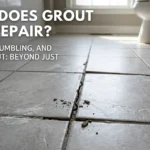
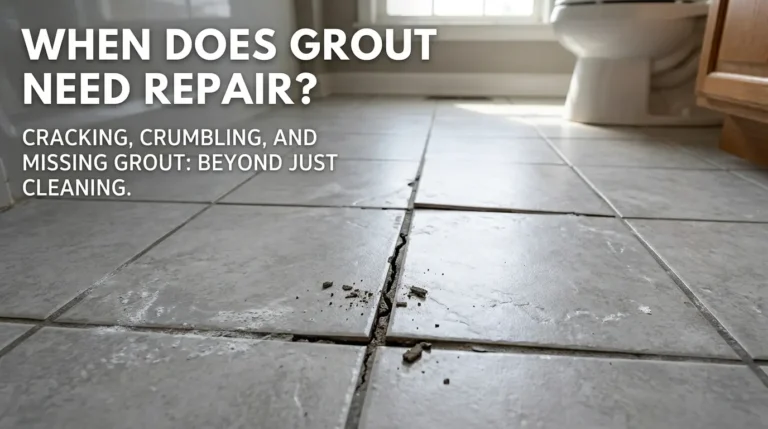
- Grout is cracked or crumbling
- Tiles are loose
- Shower caulk has failed
- There is an active leak
- White deposits keep returning
- An old coating must be removed
- The grout maker advises against it
Sealer cannot bond or perform well when the surface is not prepared. Damaged joints may require repair. Moisture problems may require a plumber, tile contractor, or water-damage specialist.
How Does Aurora’s Climate Affect Grout Care?
Aurora homes can face two different tile-care problems: mineral film in wet areas and tracked-in winter residue near entrances.
Aurora’s 2026 water-quality report lists average water hardness at 136 parts per million, with measured levels ranging from 87 to 198 ppm. Mineral content can contribute to visible film around shower tile, fixtures, and grout, though sealing alone will not remove those deposits.
During winter, wet soil and deicing material may be carried into tiled entrances on shoes. Aurora’s snow-control plans include liquid anti-icer and solid deicer use when conditions require them.
Aurora homeowners can reduce buildup by:
- Using mats outside and inside doors
- Removing wet shoes near the entrance
- Wiping winter residue promptly
- Drying shower surfaces
- Using clean mop water
- Avoiding excess floor soap
- Checking porous grout after deep cleaning
Sealing may support this routine, but it should not replace it.
How Long Does Grout Sealer Last?
There is no single lifespan for every grout sealer. Wear depends on the product, grout, cleaning method, foot traffic, moisture, and room use.
A busy entryway may lose protection faster than a guest bathroom wall. Harsh cleaners and abrasive brushes may also affect some treatments.
Instead of following a general number, check the product instructions and watch how the grout reacts to water and spills. Consider an inspection when:
- Water begins soaking in quickly
- Grout stains more easily
- Protection looks uneven
- Busy areas differ from hidden sections
- The manufacturer’s maintenance point has arrived
Do not apply new sealer automatically over an unknown old coating. The floor may need cleaning or product removal first.
Does Sealing Change the Grout Color?
Some sealers keep the grout close to its natural appearance. Others may slightly darken it, add shine, or create a coated look.
The result depends on the product and grout. Always test a hidden section before treating the whole room.
A color-enhancing sealer is different from a standard clear penetrating sealer. Grout colorant is also different. Colorant changes or renews the visible grout color, while a clear sealer mainly adds protection.
Ask what product is being used and whether it will affect:
- Grout shade
- Surface shine
- Tile finish
- Slip feel
- Future maintenance
Do not assume “clear” means no visible change on every material.
Cleaning, Sealing, or Repair: Which One Do You Need?
Choose the service based on the condition of the grout.
Choose Cleaning When:
- Grout contains soil or soap
- Kitchen joints feel greasy
- Mop residue has built up
- Entry grout looks dark
- The surface has removable stains
Consider Sealing When:
- Clean cement grout absorbs water
- Spills stain the joints quickly
- The grout is sound and dry
- The product suits the tile
- You want easier routine care
Choose Repair When:
- Grout is missing
- Joints are deeply cracked
- Material is crumbling
- Tiles move
- Shower corners have failed
- Water damage is suspected
Neither cleaning nor sealing can replace a needed repair.
Does Steamrite Offer Grout Sealing?
Yes. Steamrite’s current tile-and-grout service page lists optional sealing after inspection, cleaning, scrubbing, and extraction. This suggests sealing is considered based on the surface rather than applied automatically to every floor.
Steamrite can first inspect the tile and grout, remove suitable buildup, and then discuss whether sealing fits the grout type and condition.
Homeowners can also read Steamrite’s guide on why grout gets dirty again after cleaning to understand how soap, dirty mop water, and open pores affect grout.
For wider information on materials, cleaning methods, and common problems, complete tile and grout cleaning guide.
Book Tile and Grout Care With Steamrite
The choice between grout cleaning vs grout sealing does not need to be confusing. Start by looking at the condition of the joints.
Dirty grout needs cleaning. Clean, sound, porous grout may benefit from sealing. Cracked or loose grout may need repair instead.
Steamrite provides tile and grout cleaning in Aurora, CO, with optional sealing when it suits the surface. The team can inspect kitchens, bathrooms, showers, entryways, and other tiled areas before recommending the next step.
Frequently Asked Questions
What is the main difference between grout cleaning and sealing?
Cleaning removes existing dirt and residue. Sealing helps clean grout resist future liquid and stain absorption.
Should grout be cleaned before it is sealed?
Yes. Dirt, grease, soap, and cleaner residue should be removed before a suitable sealer is applied.
Does grout sealer keep grout clean forever?
No. Sealer may make maintenance easier, but the surface still needs routine cleaning and quick spill removal.
Does all grout need sealing?
No. Cement grout may benefit from sealing. Epoxy and specialty grout may have different requirements.
Can grout sealer fix dark stains?
No. A clear sealer does not remove stains. The grout should be cleaned and inspected before sealing.
Can you seal cracked grout?
Sealing is not a repair. Cracked, loose, or missing grout should be assessed and repaired first.
Is sealed grout waterproof?
No. Sealer may reduce absorption, but it does not replace the waterproofing system beneath a shower or tiled floor.
How do I know if grout needs resealing?
Water that quickly darkens or enters clean, dry cement grout may suggest reduced protection. Check the sealer maker’s guidance before applying another coat.