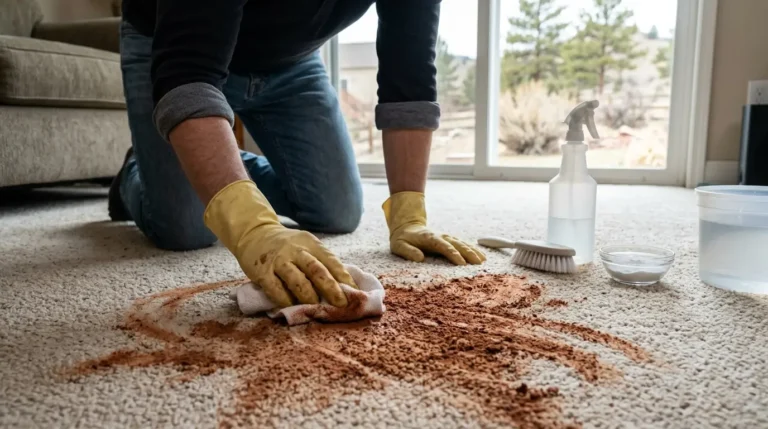

One muddy walk from the driveway to the living room can leave a reddish mark that stays visible long after the floor looks clean. In Parker, Colorado, tracked-in soil can become a stubborn carpet problem when moisture carries fine particles into the pile. Rubbing the spot or immediately reaching for a household cleaner may spread the stain instead of removing it.
If you’ve got red clay carpet stains in Parker, CO, then you should be a little patient. The main thing to remember is to get rid of all loose soil first, apply the right treatment to the remaining discoloration, and then don’t leave any excess moisture or cleaning residue behind.
Why Red Soil Leaves More Than a Dusty Footprint
Loose debris will usually be removed by regular vacuuming. Clay soil changes properties when wet: fine soil particles adhere to carpet fibers, fall between the fibers, and create a “patch” when the carpet dries out.
The U.S. Department of Agriculture’s soil survey and local geological records identify various soils in Colorado, including Douglas County, that are heavily influenced by redbed sandstone, shale, and conglomerate formations. These resulting soils often contain a high concentration of iron oxides and heavy clay. This provides useful local context for why reddish, iron-rich outdoor soil is physically and chemically much more difficult to remove than ordinary household dust.
Three things make these stains especially frustrating:
- Moisture: Wet clay is more easily spread when being stepped on or rubbed.
- Repeated foot traffic: Shoes press soil deeper into the carpet pile.
- Cleaning residue: Soap left behind can attract fresh dirt and make a previously treated area look dark again.
The First Decision: Is the Mud Still Wet?
The stain’s condition should determine the first step you take. If wet clay is treated as dry dust, the affected area will become bigger.
| What you see | Best initial response |
| Fresh, wet mud | Keep people off the area and lift away excess material carefully |
| Dry, crusted soil | Vacuum loose particles before applying moisture |
| A reddish mark after vacuuming | Test a suitable spot treatment |
| A dark patch that returns | Consider embedded soil, residue, or moisture-related wicking |
Don’t speed up the cleaning by scrubbing the carpet. Friction can force particles further down and cause damage to delicate fibres.
A Careful Cleanup Starts With Less Water
For a manageable stain, begin with the least aggressive method.
1. Remove loose material. If the clay is wet, use a spoon or other blunt object to remove excess clay without spreading it. If feasible, allow the rest of the soil to dry. Slowly vacuum-dry the material with a carpet attachment.
2. Test before treating. Check the carpet manufacturer’s care instructions. Test a small area of a carpet with a little of a carpet-friendly cleaner using the directions on the label. This will help you see if there are any color shifts or damage to the fibres prior to treating an area that has been visible.
3. Blot rather than rub. Use a clean white cloth to lift loosened soil. Work from the outside of the mark toward the center so the stain does not spread into clean carpet.
4. Remove cleaner residue. Rinse according to the manufacturer’s instructions. If water is okay for the carpet, use a little and blot it dry; don’t soak the backing.
5. Allow proper drying. Keep foot traffic away while the carpet dries. It helps to have good airflow, but do not use too much heat or equipment that is not intended for carpet care.
Dish soap is not necessarily the best option. Some formulations leave behind residue, and the wrong formulation can impact the carpet color or finish.
Why Some Red Marks Survive a DIY Attempt
A carpet can look better after surface cleaning while fine soil remains deeper in the pile. This is especially common in hallways, entryways, and other high-traffic areas where people walk over the same spot over and over.
There is another complication: stain wicking. As the carpet dries out, moisture can be drawn up with dissolved soil or cleaning residue. A spot that appeared to disappear may become visible again.
If the stain does not come out, do not repeat the treatment more than once. Every time you make this attempt, you’ll be adding moisture and possibly leaving behind more residue if you don’t remove the product correctly.
When Deep Extraction Becomes the Better Option
Professional carpet cleaning is worth considering when red dirt stains cover a broad traffic area, the soil remains embedded after careful spot treatment, or repeated home cleaning has left the carpet looking patchy. Steamrite can assess the affected carpet and determine whether targeted stain pretreatment and hot water extraction are appropriate for its fiber type and condition.
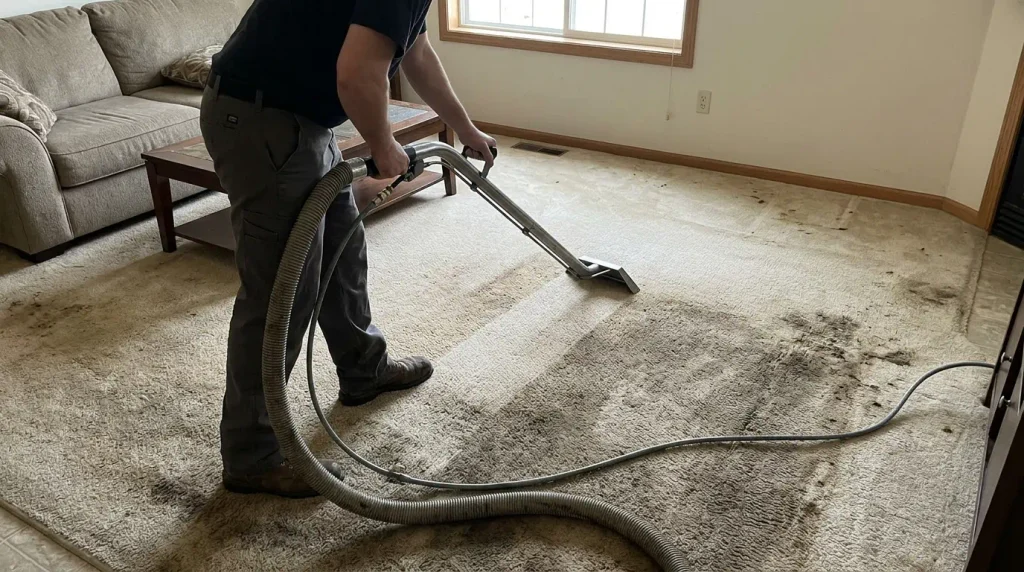
A professional cleaning process generally involves:
- Pre-vacuuming: Removing dry soil before adding moisture.
- Stain assessment: Checking the carpet fiber, dye stability, and severity of the discoloration.
- Pretreatment: Applying a suitable solution to help loosen remaining soil.
- Rinse extraction: Removing suspended soil and cleaning solution with appropriate equipment.
- Drying: Managing moisture so the carpet dries thoroughly.
Hot water extraction does not ensure all stains go away. The results may vary depending on the stain or previous dyeing, alteration, damaged fibers, or previous chemical processing. An assessment helps set realistic expectations before cleaning begins.
Parker’s Seasonal Mud Problem Needs a Prevention Plan
Douglas County’s soil conditions and Parker’s seasonal weather make it sensible to prepare for tracked-in dirt rather than wait for a large stain. The USDA describes local Rednun soil profiles as receiving their peak precipitation during spring and early summer, a period when outdoor moisture can make soil transfer more noticeable.
A few simple habits can reduce how much dirt reaches the carpet:
- Place sturdy mats at exterior entrances.
- Remove shoes before walking across carpeted rooms.
- Vacuum entryways and high-traffic areas regularly.
- Clean muddy paw prints before they are repeatedly walked over.
- Address fresh spills before they become compacted into the pile.
These steps will not eliminate all stains, but will minimize soil that needs to be cleaned on a regular basis.
Frequently Asked Questions
Can red clay permanently stain carpet?
It depends on the carpet fiber, the age of the stain, and previous cleaning attempts. Most soil marks get better with the right treatment, but sometimes you’re left with some discoloration if the dye or fiber is damaged. Don’t go overboard with scrubbing, and always test any cleaning product on an area that won’t be noticeable.
Should I use a carpet cleaner on wet red clay?
Try to get rid of any excess mud first, and don’t smear it around. Letting the rest dry makes it easier to vacuum up loose bits. Once all the dry clay is gone, you can use a carpet treatment if needed. Pouring a bunch of cleaner on wet clay only causes the stain to spread, making it tougher to remove.
Why does a red clay stain return after cleaning?
Stains can come back because there’s still some dirt or cleaning residue down in the carpet, and when things dry out, it works its way back up to the surface; that’s what people call wicking. Re-wetting the same spot over and over usually just makes it worse. Let the area dry out fully, and if the stain keeps coming back, consider getting it checked out.
Is professional carpet cleaning better for embedded clay?
Professional cleaning is often more effective when soil has settled deep into the pile or covers a large traffic area. A technician can choose suitable pretreatment and extraction methods for the carpet. Results depend on the material, stain history, and whether the discoloration is removable soil or permanent damage.
Final Thoughts: Keep Red Soil From Becoming a Lasting Carpet Problem
The smartest way to handle red clay is with careful, controlled cleaning, not by scrubbing it aggressively. Get rid of loose bits first, choose the right cleaning products, and let the carpet dry all the way before deciding if you need to do more.
When stubborn Colorado soil remains embedded or a treated stain keeps returning, Steamrite can help determine the appropriate professional carpet cleaning approach for your home.